
Top Dredging Equipment Suppliers: Your Guide to Reliable Dredging Solutions
2026-05-11
Finding the right dredging equipment supplier can make or break your project. With countless options on the market, how do you separate the truly reliable from the rest? Whether you're tackling maintenance dredging, land reclamation, or environmental restoration, you need partners that deliver performance, not promises. In this guide, we'll walk through what sets top suppliers apart — and why YaKai Dredger has become a name worth knowing in the industry.
What Sets Leading Dredging Equipment Providers Apart
Leading providers distinguish themselves through decades of engineering expertise, continually refining dredge designs to withstand harsh marine environments. Their equipment incorporates advanced automation and real-time monitoring, ensuring precise excavation and higher operational efficiency while reducing fuel consumption and downtime.
Beyond hardware, top-tier companies offer comprehensive lifecycle support—from feasibility studies and custom design to global aftermarket services. They tailor dredgers to project-specific needs, whether for deep-sea mining or environmental remediation, ensuring optimal performance in every deployment.
In an era of tightening environmental regulations, market leaders pioneer sustainable technologies such as hybrid propulsion and sediment recycling systems. These innovations not only minimize ecological impact but also help operators comply with stringent standards while maintaining productivity.
Key Machines That Power Modern Dredging Projects
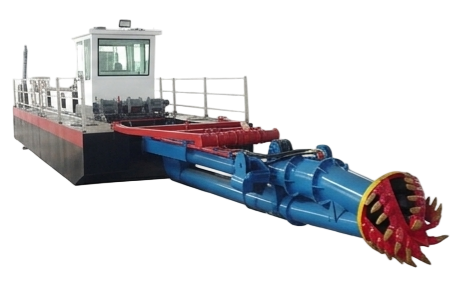
Modern dredging projects rely on a fleet of specialized vessels and machinery, each engineered to tackle specific underwater challenges. The centerpiece is often the cutter suction dredger, a workhorse equipped with a rotating cutter head that breaks up compacted sediment before it’s sucked through a pipeline. These machines excel in hard soils and rock, making them indispensable for deepening ports or creating new navigation channels. Alongside them, trailing suction hopper dredgers cruise open waters, trailing dragheads along the seabed to vacuum loose material into their hoppers—a setup ideal for beach nourishment and land reclamation, where precision and mobility matter most.
For projects demanding pinpoint accuracy, backhoe dredgers step in with their bucket-mounted arms, methodically scooping material from depth. Their hydraulic precision suits confined zones—think near bridge pilings or docks—where over-digging isn’t an option. Then there are water injection dredgers, which use high-pressure jets to fluidize sediment, letting natural currents carry it away. It’s a low-impact method that keeps ecosystems intact while maintaining waterway depths, a quiet alternative to traditional mechanical removal. Each machine brings a distinct advantage, shaped by site conditions and environmental constraints.
Supporting these titans are auxiliary assets like booster pumps that extend pipeline distances, and survey vessels lodging multibeam sonar to map depths in real time. Together, they form an integrated network where data and brawn combine, allowing operators to adjust tactics mid-project. The real art lies in matching the right machine to the right task—choosing a cutter suction for stubborn geology, or a trailing hopper for efficiency across miles of coastline. This synergy, honed through decades of engineering iteration, keeps modern dredging responsive to both commercial demands and ecological care.
How to Match Equipment to Your Project’s Unique Demands
Every project comes with its own set of demands that can easily be overlooked if you're not paying close attention. The first step is to break down exactly what you're trying to achieve—not just the big picture, but the small, annoying details that often trip you up later. Think about the physical constraints, the timeline, the skill level of the people using the equipment, and even the availability of power or water on site. A piece of gear might look perfect on paper, but if it can't fit through a standard doorway or requires a phase of electricity you don't have, you'll be scrambling to find a workaround.
After you've nailed down the requirements, it's tempting to just pick the most popular option or whatever you've used before. Resist that urge. What worked on a previous job might be overkill here, or worse, completely inadequate. Consider the environment: dusty, wet, or extreme temperatures can chew up equipment that's not built for those conditions. Also, think about how the equipment handles the unexpected—does it have a track record of holding up when things go sideways? Talk to people who've done similar work and ask what they really used, not just what's listed on the spec sheet. Often, you'll find that a less expensive, more specialized tool outperforms a general-purpose beast.
Finally, weigh the long-term value against the upfront costs. Renting might make sense if the equipment will sit idle for months, but if it's a core part of your operation, buying could pay off. Look beyond the purchase price: maintenance schedules, fuel efficiency, and resale value all add up. Sometimes, spending a little more now saves you from a cascade of downtime later. The key is to match the equipment not just to the job, but to how your team actually works—their habits, their frustrations, and what helps them do their best work without fighting the tools.
Maintenance Habits That Extend Dredger Lifespan
Keeping a dredger running smoothly for years often comes down to the little things done daily. It's not just about fixing what breaks; it's about the steady rhythm of checking fluid levels, listening for unusual sounds, and wiping down exposed hydraulic rods after each shift. Sediment and saltwater are relentless enemies, so rinsing critical components with fresh water might seem trivial, but it dramatically slows corrosion. Likewise, greasing pivot points and inspecting wear pads before they become too thin prevents metal-on-metal grinding that leads to costly downtime.
Another habit that pays off is treating the dredge pump with extra care. Operators who record suction and discharge pressure trends over time can spot efficiency drops long before a catastrophic failure. Opening the pump casing for a quick visual inspection every few hundred hours reveals impeller wear and tear that isn't always obvious from the outside. Replacing cutters and teeth on schedule, even when they don't look completely worn, keeps the digging force consistent and reduces strain on the entire drive train. These small, consistent actions build into a reliable routine that stretches the lifespan of a dredger far beyond its expected years.
Navigating Supplier Partnerships for Long-Term Value
Supplier relationships often begin with transactional clarity but must evolve into collaborative alliances to unlock sustained value. Rather than simply negotiating costs, forward-thinking companies treat these partnerships as extensions of their own capabilities, investing time in understanding a supplier’s long-term goals, operational constraints, and innovation potential. This shift from short-term wins to shared growth requires a deliberate strategy, where both sides align on metrics that go beyond price, such as quality consistency, responsiveness, and joint risk management.
One practical approach involves building feedback loops that turn everyday interactions into continuous improvement opportunities. Regular joint business reviews, when structured around open dialogue rather than performance policing, can surface hidden bottlenecks and co-developed solutions. It’s also critical to resist the urge to micromanage; giving suppliers the freedom to propose alternative materials or processes often leads to unexpected efficiencies. Trust grows when accountability is balanced with autonomy, and when both parties are willing to adapt as market conditions shift.
In the long run, the most resilient partnerships are those where risk and reward are transparently shared. For instance, tiered incentive programs tied to sustainability milestones or digital integration can motivate suppliers to invest in capabilities that benefit the entire supply chain. By viewing supplier partnerships not as static contracts but as dynamic ecosystems, organizations position themselves to navigate disruptions together, turning potential vulnerabilities into competitive strengths.
Real-World Examples of Challenging Dredging Jobs Done Right
Dredging is rarely straightforward, and some projects push the limits of engineering and logistics. Consider the expansion of the Panama Canal, where massive cutter suction dredgers worked around the clock to carve through hard rock and volcanic basalt. Equipment had to be specially reinforced, and crews faced constant challenges from unpredictable currents and narrow working spaces. The job wasn’t just about removing material—it demanded precise coordination with lock construction schedules and strict environmental controls to protect nearby ecosystems.
In the Netherlands, the Maasvlakte 2 port expansion turned the North Sea’s harsh conditions into a proving ground for advanced dredging techniques. Trailing suction hopper dredgers battled stormy weather while reclaiming land from the sea, using sand sourced from carefully mapped offshore borrow areas. The project balanced immense scale with ecological sensitivity, building new dunes and nature reserves alongside the industrial infrastructure. It’s a textbook case of how perseverance and smart engineering can turn a hostile marine environment into a functional, sustainable space.
Smaller waterways can be just as tricky. In Bangladesh, the capital dredging of the Mongla Port approach channel required navigating extremely soft, unstable silt that clogged up traditional equipment. Engineers had to adapt, deploying specialized shallow-draft dredgers and constantly adjusting methods to handle shifting sediment. Despite chronic sedimentation and monsoon disruptions, the team kept the channel open to keep trade flowing—proving that even in less high-profile locations, the right approach can overcome persistent natural obstacles.
FAQ
Look beyond the price tag. A reliable supplier offers proven equipment that matches your project’s scale, provides solid after-sales support, and has a track record in similar environments. Factor in spare parts availability and their willingness to customize solutions if needed.
Names like Damen, IHC, and Ellicott often come up, but smaller regional builders can also deliver excellent value. The key is checking how their machines perform in real-world conditions, not just on paper.
It depends on your project length and budget. Renting makes sense for short-term or specialized jobs, avoiding hefty upfront costs. Buying is worthwhile if you foresee continuous use and want full control over maintenance.
Reputable suppliers design equipment with low-turbidity features and may offer guidance on meeting local environmental standards. They can suggest modifications to minimize ecosystem disturbance during operations.
Vague job references, reluctance to share performance data, and limited warranty terms are red flags. Push for client testimonials and, if possible, demo the equipment before committing.
Many top suppliers offer tailored designs, from specialized cutter heads to automated control systems. Discuss your specific challenges early; customization often pays off in efficiency gains.
Beyond initial training, expect service contracts, readily available technical support teams, and quick dispatch of critical spare parts. Some even offer remote monitoring to preempt breakdowns.
Advances include GPS-guided precision dredging, hybrid power systems to cut fuel costs, and automated swing control. These innovations boost productivity and reduce environmental footprint.
Conclusion
Finding dependable dredging equipment suppliers goes beyond comparing price tags—it’s about recognizing partners who invest in robust engineering, offer a broad fleet of specialized machines like cutter suction dredgers and backhoe dredgers, and provide expert guidance to match each vessel’s capabilities with site-specific challenges such as sediment type, water depth, and disposal methods. The best providers stand out through their commitment to innovation, transparent communication, and a willingness to tailor solutions that precisely fit a project’s unique demands, ensuring you’re not forced to adapt your operation to off-the-shelf limitations. Whether you need a heavy-duty hopper dredger for port deepening or a nimble amphibious excavator for wetland restoration, informed matching prevents costly missteps. Proactive maintenance support—from genuine spare parts supply to remote diagnostics and scheduled service—further extends dredger lifespan, minimizing unscheduled downtime.
Long-term value hinges on the supplier relationship itself: those who share real-world case studies, offer hands-on training, and remain engaged well after delivery turn a transaction into a strategic partnership. Examining how they’ve tackled complex jobs—like dredging in ecologically sensitive areas or congested urban waterways—reveals their problem-solving depth and adaptive engineering. Regular joint reviews and collaborative problem-solving sessions keep your operations aligned with evolving project goals and regulatory shifts. Ultimately, choosing a supplier is about securing a reliable dredging solution that adapts as your needs evolve, backed by people who view your success as their own benchmark.
Contact Us
Contact Person: Nancy
Email: [email protected]
Tel/WhatsApp: (+86) 13869631558
Website: https://www.yakaidredger.com/