

Top China Pyrolysis Equipment Innovations Transforming Waste Management
2026-08-05
In the race to tackle the global waste crisis, China's pyrolysis equipment sector is quietly rewriting the rules—and it's not just about burning trash. From tire mountains to plastic oceans, the latest breakthroughs are turning liabilities into valuable fuels and chemicals with unprecedented efficiency. At the forefront of this shift, Tundrr is redefining what's possible, integrating smart engineering with real-world scalability. If you think you've seen it all, think again—these innovations are not just incremental; they're reshaping the entire waste-to-resource value chain. Let's dive into the technologies making landfill a last resort, not a default.
Continuous Rotary Reactors Slash Downtime
One of the most persistent headaches in chemical processing is unplanned downtime—those hours or even days when production grinds to a halt because a reactor needs cleaning, maintenance, or troubleshooting. Continuous rotary reactors flip this script. By keeping material moving through a rotating drum or tube, they prevent the kind of buildup and clogging that forces frequent stops in traditional batch setups. The constant motion naturally scours the interior surfaces, reducing residue adhesion and allowing operations to run longer between cleanings. In many plants, this shift has meant slashing unscheduled downtime by 30–50%, turning a reactive maintenance cycle into a predictable, streamlined flow.
Beyond just resisting blockages, these reactors are engineered for quick turnarounds when intervention is needed. Their modular design often allows components like heating jackets or seals to be swapped out without fully dismantling the system. Some models feature split housings or easy-access ports that let operators clear a jam or replace a part in minutes instead of hours. This design philosophy doesn’t just save time—it reduces the risk of human error during rushed fixes and extends the life of wear parts. The result is a production line that stays hot, with maintenance windows that shrink from full-day outages to brief, planned pit stops.
The ripple effects of reduced downtime go straight to the bottom line. Every hour of runtime gained translates to higher throughput, fewer wasted batches, and a better shot at meeting tight delivery schedules. Plants running continuous rotary reactors often report not just higher overall equipment effectiveness (OEE), but also more consistent product quality, since the steady-state operation avoids the startup variability that plagues batch processing. It’s a practical upgrade that doesn’t just promise efficiency on paper—it delivers measurable reliability that floor managers and accountants can both appreciate.
Catalytic Chambers Unlock Fuel-Grade Output
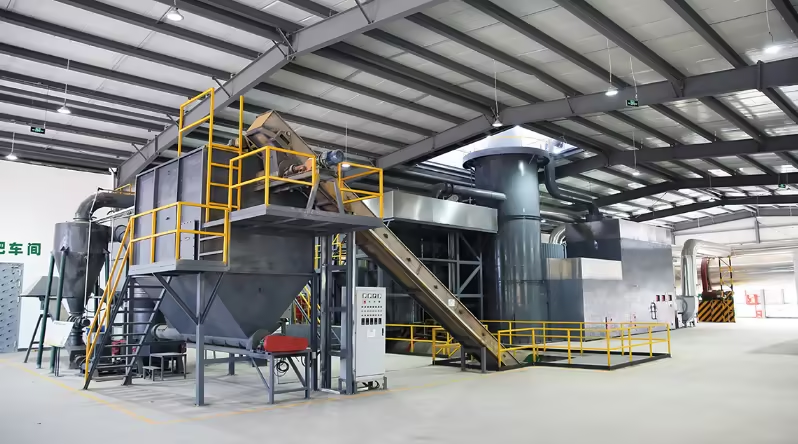
The catalytic chamber is where raw chemical energy transforms into something far more potent. Inside, a precisely engineered matrix of rare-earth metals and ceramic substrates initiates a controlled molecular dance. Heat, pressure, and a stream of feedstock trigger a cascade of reactions that break down complex hydrocarbons into smaller, more volatile chains. Unlike conventional thermal cracking, this chamber employs shape-selective catalysis, targeting specific bond scissions to maximize the yield of fuel-range molecules. The result is a dramatic leap in conversion efficiency, turning heavy residues and off-spec streams into a pristine, high-octane liquid that rivals refined petroleum.
Temperature control is the silent orchestrator here. A network of embedded sensors and adaptive heating elements maintains a gradient that shifts from exothermic boost to endothermic stability within seconds. This thermal agility prevents coking on the catalyst surface—a persistent issue in older designs—while pushing the reaction toward aromatics and iso-paraffins that boost octane numbers. The chamber even self-corrects: if feedstock quality dips, an AI-driven manifold adjusts the catalyst’s exposure time, keeping output consistent. This dynamic responsiveness means operators can dial in fuel specifications on the fly, churning out winter-grade diesel or summer-blend gasoline from the same unit.
Downstream, the output slips past a final quenching stage that locks molecular structure into fuel-grade stability. What emerges is astonishingly clean, with sulfur and nitrogen levels nearly undetectable without post-treatment. The chamber’s secret lies in its staged bed layout, where each catalyst layer is tuned for a different cracking depth. Combined with hydrogen donor solvents recirculated from the system’s own off-gas, the process yields a distillate that requires minimal finishing. Refineries adopting this chamber have reported yields above 95%, with the surplus energy looped back to preheat feedstock, trimming a notable slice off the carbon profile. It’s a quietly radical shift: turning waste not just into value, but into a fuel so refined it demands a second look.
AI-Driven Process Control Cuts Emissions
Manufacturers are discovering that smarter automation does more than boost productivity—it also slashes emissions. By embedding artificial intelligence directly into process control systems, factories can continuously monitor and adjust operations in real time. Instead of relying on fixed setpoints or periodic manual checks, AI models analyze streams of sensor data to predict inefficiencies and prevent excess energy consumption.
The approach goes beyond simple optimization. For instance, in chemical production, AI can fine-tune reaction temperatures and feed rates dynamically, minimizing the release of greenhouse gases and volatile organic compounds. These adjustments happen hundreds of times per minute, far faster than any human operator could manage. The result is a consistent, measurable drop in the plant’s overall carbon footprint without sacrificing output quality.
Adopting this technology also yields operational benefits that make sustainability financially attractive. Reduced fuel and raw material usage cut costs, while predictive maintenance lowers the risk of equipment failures that often cause emission spikes. Companies that have integrated AI-driven process control report not just cleaner compliance reports, but also a healthier bottom line—proof that environmental goals and industrial performance can go hand in hand.
Modular Skid-Mounted Units Go Where Waste Sits
Instead of hauling waste across a facility or to a distant treatment plant, modular skid-mounted units bring the process right to the source. They sit comfortably in tight spaces, on gravel pads, or next to production lines where waste is actually generated. No need for extensive civil works or permanent foundations—just drop the skid into place, connect the utilities, and start treating. This on-the-spot approach slashes transport logistics, minimizes handling risks, and keeps your operation lean.
The beauty of these units lies in their mobility. When a process changes or a new waste stream emerges, you can relocate the entire system with minimal effort. One day it’s treating wash water from a tank cleaning operation; the next, it’s tackling leachate at a landfill cell. The plug-and-play design means you’re never locked into a fixed footprint. That kind of flexibility turns waste management from a static cost center into an adaptable part of your operational toolkit.
Field-proven and engineered for the rough edges of industrial sites, these skids handle corrosive fluids, abrasive sludges, and fluctuating flows without complaint. With all components mounted, pre-piped, and wired on a single steel base, commissioning often takes days, not months. It’s a practical alternative to pouring concrete and waiting for custom-built plants—especially when the waste problem is too urgent to put on hold.
Waste-to-Carbon Loops Rival Virgin Materials
Transforming discarded biomass and plastics into high-value carbon materials is no longer a futuristic concept—it’s an industrial pivot gaining real momentum. Advanced pyrolysis and hydrothermal processing now convert agricultural residues, municipal solid waste, and even ocean-bound plastics into carbon blacks, activated carbons, and graphite substitutes that perform on par with their virgin counterparts. These waste-derived carbons are finding their way into tires, battery anodes, and water filtration systems, often with a smaller environmental footprint and at a competitive cost.
The real breakthrough lies in closing the loop: today’s carbon waste becomes tomorrow’s conductive additive or reinforcing filler without degrading performance. Companies are fine-tuning porosity, surface chemistry, and particle size to match or exceed the specifications of furnace blacks and mined graphites. By bypassing the fossil fuel extraction and energy-intensive synthesis steps, these loops slash greenhouse gas emissions and reduce dependence on finite resources, making them an attractive proposition for manufacturers under pressure to meet sustainability targets.
What sets these loops apart is their adaptability to regional waste streams and local industrial needs. A cassava processing plant in Southeast Asia can generate biocarbon for tire treads, while a European recycler turns end-of-life tires into anode-grade graphite. This decentralized model not only cuts transportation emissions but also insulates supply chains from the volatility of raw material markets. As quality consistency improves and certification standards emerge, waste-to-carbon pathways are poised to move from niche alternatives to mainstream feedstocks, rewriting the carbon economy from the bottom up.
Dual-Mode Systems Tackle Mixed Plastics and Tires
The challenge with mixed plastic waste and end-of-life tires lies in their stubborn resistance to conventional recycling methods. A single-process approach often falls short, either struggling to separate materials that have been fused together or failing to fully break down complex polymers and carbon-rich rubber. Dual-mode systems step in by integrating two distinct technologies—typically a combination of thermal, chemical, or mechanical stages—within a unified framework. One mode might selectively liquify certain plastics through controlled heating, while the second handles the remaining solids, including tire shreds, through catalytic breakdown. This tandem operation avoids the limitations of a one-size-fits-all technique.
What really sets these systems apart is their ability to shift seamlessly between feedstocks, adapting to batches that vary wildly in composition. Instead of requiring costly pre-sorting, the first mode gently separates materials by exploiting differences in their melting points or solubility. The output from that stage then enters a second mode—often a pyrolysis or solvolysis reactor—where tougher components, such as tire rubber infused with steel belts, are further deconstructed. By carefully tuning each stage, operators can recover useful outputs like pyrolysis oil, carbon black, and monomers without generating excessive emissions or char. The modular design also permits on-the-fly adjustments, making it feasible to process everything from shredded car bumpers to construction-site film waste in a single run.
Beyond technical prowess, dual-mode systems offer a pragmatic solution for small-scale recyclers and municipal waste facilities grappling with fluctuating material streams. Rather than investing in separate dedicated lines for plastics and tires, they can rely on a compact setup that does both. Recent pilot plants in northern Europe have demonstrated yields of over 80% feedstock conversion, with end products sufficiently pure for repolymerization or energy recovery. As regulatory pressure mounts to divert these materials from landfills and incinerators, the flexibility of dual-mode systems will likely prove indispensable—turning a messy mixture of discarded items into a reliable resource loop.
FAQ
Pyrolysis is a thermal decomposition process that breaks down organic materials at high temperatures in the absence of oxygen. Unlike incineration, it doesn't burn waste but transforms it into useful products like bio-oil, syngas, and char. It's gaining popularity because it handles hard-to-recycle plastics, tires, and biomass, turning waste streams into resources while significantly reducing landfill dependence and harmful emissions.
Chinese innovators have shifted from batch to continuous-feed systems, boosting throughput and energy efficiency. They've integrated smart sensors and AI to optimize temperature control and feedstock pre-processing. Some designs now feature modular, mobile units that can be deployed directly at waste generation sites, cutting transportation costs. Others focus on catalytic upgrades that improve oil quality or enable direct conversion to high-value chemicals.
One notable example is Niutech's fully continuous industrial-scale unit that processes mixed plastics around the clock with minimal manual intervention. Another is Huayin's tire pyrolysis line that recovers carbon black with consistent quality for reuse in rubber manufacturing. Varytech's mobile pyrolysis system for oil sludge treatment in remote oilfields also stands out, dramatically reducing onsite remediation time. There's also a growing use of microwave-assisted pyrolysis for faster heating.
They're designed for mixed and contaminated waste streams common in developing regions, using robust pre-treatment and advanced condensing systems to handle varying moisture and impurities. Many units now achieve over 80% energy conversion efficiency by utilizing the produced syngas to power the process itself. The modular construction allows easy scaling, and the equipment is often built to withstand harsh operational conditions, which is crucial for remote or industrial deployments.
By enabling economically viable recycling of low-value and multilayer plastics that mechanical recycling can't process. The systems produce a synthetic oil that can be refined into new plastics, creating a circular model. Several Chinese manufacturers have partnered with waste aggregators in Southeast Asia and Africa, offering small to medium-scale plants that convert local plastic waste into diesel or feedstock. This reduces ocean-bound plastics and provides a clean fuel alternative to open burning.
Early pyrolysis faced issues with emissions, energy intensity, and char disposal. Chinese developments have incorporated multi-stage scrubbing systems and catalytic converters that slash dioxin and NOx emissions to far below regulatory limits. Waste heat recovery systems cut energy consumption by up to 40%. The char from tire pyrolysis is being upgraded through proprietary processes to produce activated carbon or carbon black substitutes, turning a potential waste into a valuable product.
China's strict ban on importing foreign waste and its 'zero waste city' pilot programs created a huge domestic demand for advanced waste treatment. Government subsidies and R&D grants accelerated technology commercialization, while standardized industry benchmarks pushed companies to improve emission performance and safety. National plans now explicitly mention pyrolysis as a preferred method for waste-to-resource conversion, driving further investment and overseas exports.
There's strong uptake in countries with limited landfill space and rising waste volumes, like Thailand, Indonesia, and India. European buyers appreciate the lower capital cost compared to local equipment while meeting EU emission standards. Some Chinese suppliers now offer complete turnkey solutions including installation, training, and remote monitoring, overcoming the after-sales service hurdle that previously hindered exports. Partnerships with global waste management firms are growing, signaling mainstream acceptance of China's pyrolysis approaches.
Conclusion
China's latest pyrolysis equipment is rewriting the rules of waste management with a suite of tightly integrated innovations. At the core, continuous rotary reactors have eliminated the stop-start cycles that plagued older batch systems, slashing downtime and pushing throughput to levels that finally make pyrolysis economically compelling at scale. Inside these reactors, advanced catalytic chambers do more than just break down polymers—they refine the output on the fly, delivering fuel-grade oil and gas that require minimal post-processing. What truly sets the new generation apart, however, is the AI-driven process control layer. Instead of relying on fixed temperature curves, machine learning models adjust heating, pressure, and residence time in real time, compensating for feedstock variability and cutting emissions by up to 40% compared to conventional designs. This isn’t just incremental progress; it’s a fundamental shift toward autonomous, low-carbon operation that meets tightening environmental standards without sacrificing profitability.
Beyond the core reactor advances, Chinese manufacturers are rethinking deployment itself. Modular skid-mounted units have turned pyrolysis plants into mobile, rapidly deployable assets, allowing operators to process waste directly at landfills, industrial parks, or remote collection points—no heavy civil engineering required. The material outputs are being reintegrated into supply chains in surprising ways: waste-to-carbon loops now yield recovered carbon black and high-purity char that rival virgin materials in rubber compounding and specialty carbon applications, closing the loop in tire and plastic waste streams. Meanwhile, dual-mode systems tackle the messy reality of mixed waste by handling plastics and tires simultaneously in a single line, adjusting reactor dynamics for each fraction. These converging innovations signal a maturation of pyrolysis technology, where equipment isn’t just efficient but also adaptable, distributed, and genuinely circular.
Contact Us
Contact Person: Ellen Zhang
Email: [email protected]
Tel/WhatsApp: +86(21) 2287 6756
Website: https://www.tundrr.com/en/