

Top 10 Hot-Dip Galvanized Round Pipe Suppliers Worth Considering
2026-11-03
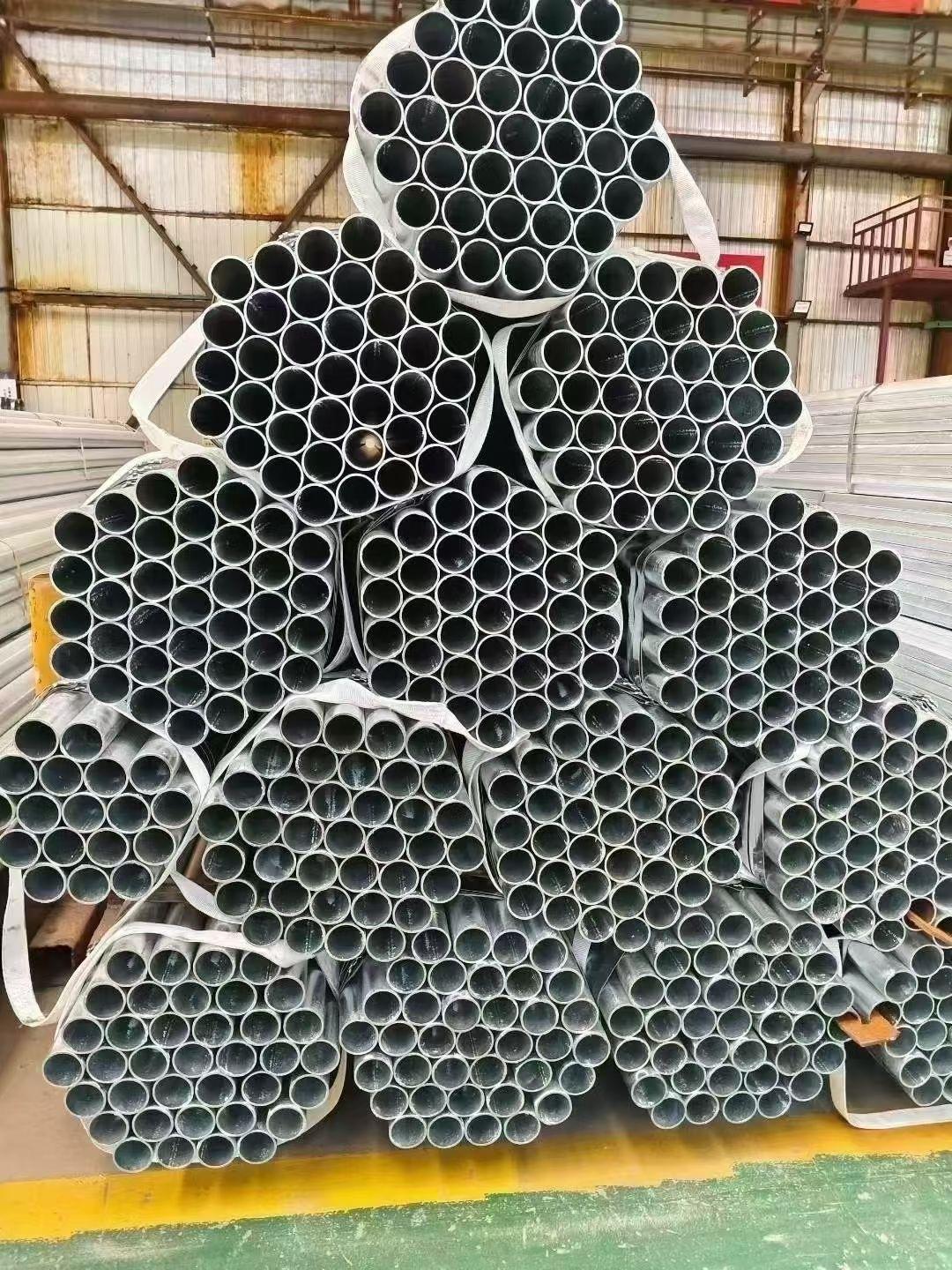
Finding a reliable hot-dip galvanized round pipe supplier can feel like searching for a needle in a haystack—especially when quality, coating thickness, and delivery consistency are non-negotiable. To save you time and costly trial-and-error, we’ve narrowed down the market to ten standout names, each with proven track records in corrosion-resistant piping. Among them, Shunchen steel deserves a close look for its strict adherence to ASTM and EN standards and its willingness to customize zinc coating weights. Whether you’re sourcing for structural frameworks, fencing, or fluid transport, this list gives you a practical starting point—not just a directory, but a shortlist of suppliers that actually deliver on their promises.
How Coating Thickness Impacts Longevity in Outdoor Installations
A heavier coating often seems like the obvious choice for durability, but the relationship between thickness and lifespan outdoors is far from linear. While a thicker layer can resist abrasion and slow moisture ingress, it also introduces stresses during curing that may lead to cracking or delamination under temperature swings. For installations exposed to UV, salt spray, or freeze-thaw cycles, the sweet spot is usually a balance: enough film to block corrosive agents, yet thin enough to stay flexible as the substrate expands and contracts.
On metal structures, coating thickness directly influences the time it takes for oxygen and water to reach the surface and initiate rust. A well-applied 200-micron barrier can comfortably outlast a 75-micron one in coastal environments, but only if adhesion remains intact at edges and fasteners, where thinning naturally occurs. Field inspectors often find that premature failures happen not because the overall film was too shallow, but because sharp corners or weld seams were coated below the recommended minimum, turning those spots into corrosion hotbeds years before the rest of the surface shows wear.
Temperature cycling adds another layer of complexity. A coating that is too thick may trap solvents or cure unevenly, leaving pockets of weakness that split open after a few harsh winters. Conversely, a film that barely meets the minimum specification leaves little room for erosion from wind-driven rain or sand. The most dependable outdoor finishes come from following the manufacturer's tested range of dry film thickness, verifying it with a gauge in multiple locations rather than trusting a single spot measurement, and accepting that a slightly thinner, well-adhered coat often outperforms a thicker one that has hidden stress fractures.
Factory Capabilities That Separate Reliable Mills from the Rest
Walk into a truly dependable mill and you'll notice the difference before a single machine starts running. It's in the way raw material batches are logged with exact moisture content and tensile specs, not just a vendor's word. It's in the shadow boards where every gauge and torque wrench has a numbered slot and a calibration sticker that's still weeks away from expiring. These mills treat variability as an enemy to be hunted down, not an acceptable margin of error. They run first-article inspections on every new coil, and they don't wait for a customer complaint to pull a suspect lot from the line.
Beyond the paperwork, reliable mills invest in equipment most buyers never see: in-line laser measurement systems that flag thickness drift in real time, automated deburring stations that eliminate hand-finish inconsistency, and tooling libraries with dedicated racks for each client's die set instead of a shared bin of worn-out punches. Their maintenance logs aren't a formality; they show predictive work orders based on vibration analysis and oil condition, not just breakdown repairs. That kind of capability means the mill can hold a tolerance of plus or minus 0.05 mm on a Friday afternoon just as easily as on a Tuesday morning.
Finally, a reliable mill's capacity extends into how it communicates. When a production hiccup occurs—and it always does somewhere—their team doesn't hide behind vague emails. Instead, you get a photo of the actual defect under magnification, a root-cause summary from the shift supervisor, and a concrete recovery plan with hours, not weeks, attached. Their engineers will suggest a material substitution that saves you money without being asked, because they've tracked your order history and know your downstream process. That level of proactive, detail-obsessed capability is what turns a one-time order into a decade-long partnership.
Certifications Worth Checking Before You Commit to a Supplier
A supplier's wall may be covered in certificates, but the real question is whether those documents still hold up. Before you sign anything, ask for the certificate numbers and verify them directly with the issuing body. Many certifications lapse quietly or cover only a narrow product line, not the one you're buying. Look for the scope, the expiration date, and any surveillance audit reports that show the certifier has been back recently.
The certifications that matter depend on your industry, but a few carry weight almost everywhere. ISO 9001 tells you the supplier has a basic quality management system, though it won't guarantee great products on its own. If you're buying electronics, check for RoHS and REACH compliance; for medical or food-grade materials, look for FDA registration or equivalent local approvals. Automotive work usually demands IATF 16949, while aerospace suppliers should hold AS9100. Don't accept a generic "CE" mark without the technical file behind it—CE is a self-declaration in many cases, not a third-party seal.
Certifications are a starting point, not a finish line. Use them to filter out the obviously unprepared, then dig deeper with a trial order, a factory visit, or at least a video walkthrough. A supplier that hesitates to share current audit reports or gets defensive about verification is telling you something louder than any framed certificate ever could.
Why Custom Lengths and End Finishes Matter More Than You Think
Most people assume stock lengths and standard end finishes will suit their project. That assumption often falls apart the moment real-world constraints appear. A handrail that is an inch too long forces awkward cuts on site, and a plain cut end can leave sharp edges or a visually unfinished look. Custom lengths eliminate guesswork—you get exactly what the installation demands, without improvisation.
End finishes are rarely just decorative. A chamfered or rounded edge changes how the piece feels underhand, while a flat, clean cut might be hidden inside a connector. Choosing the wrong finish can mean visible burrs, mismatched joints, or even safety hazards on exposed edges. When you specify both dimensions and end treatment, you control the final fit and the tactile quality.
There is also a hidden cost in settling for generic options. Extra time spent measuring, trimming, or refinishing adds labor that custom work would have avoided. And if a standard piece arrives with a finish that clashes with the surrounding hardware, the entire installation can look off. Paying attention to these details upfront keeps the project smoother and the result more professional.
Logistics and Lead Times: What Top Suppliers Do Differently
Top suppliers rarely hand you a single delivery date and hope for the best. They break the timeline into stages—material sourcing, production windows, quality checks, shipping, and customs—and push updates at each step before you have to ask. If a delay is likely, you hear about it with options already on the table, not an apology after the fact.
What separates them further is the prep work done long before an order ships. They keep buffer stock of fast-moving components in regional warehouses close to your main markets, which turns weeks of transit into days. They also study their own past delays and build realistic lead times into quotes, plus clear compensation clauses for non-force majeure misses—so accountability is written down, not argued about later.
The best ones go a step further by integrating logistics data with their customers' internal systems. That means your planning team sees the same shipment milestones as theirs, in real time. Lead time stops being a marketing promise and becomes a measurable, improvable number you can rely on.
Beyond Price: Evaluating Total Cost of Ownership for Round Pipes
Initial purchase price often dominates the conversation, but for round pipes the real financial picture emerges only when you map out every stage of the asset's life. Installation costs can swing dramatically based on wall thickness, joining method, and whether the pipe needs special handling or welding versus a simpler mechanical connection. A pipe that seems 15% cheaper on the invoice may require more expensive fittings, more frequent supports, or longer labor hours on site, wiping out the savings before the system ever carries a load.
Then there's the long-term behavior. Corrosion resistance, internal surface smoothness, and abrasion tolerance directly affect maintenance intervals, pumping energy, and unplanned downtime. A round pipe with a smoother bore keeps friction losses lower year after year, which quietly trims operating costs. Meanwhile, a material that pits or scales can reduce flow capacity, demand chemical treatment, and eventually force early replacement. Smart buyers weigh these factors against expected service life, factoring in lost production during shutdowns and the cost of scaffolding or excavation if a buried or elevated line fails.
Finally, end-of-life value deserves a line in the calculation. Some round pipes can be recycled or repurposed, returning a portion of the original investment, while others become disposal liabilities. Comparing total cost of ownership means treating the pipe not as a single purchase but as a multi-decade commitment that includes energy, labor, repairs, and residuals.
FAQ
Hot-dip means the steel tube is fully submerged in a molten zinc bath, so the coating fuses to both the inside and outside walls. Pre-galvanized material is zinc-coated at the strip stage before forming, which leaves the weld seam and cut ends more exposed. For round pipes that will carry water or sit outdoors, hot-dip is almost always the safer bet.
Ignore the marketing noise and ask for three things: a recent mill test certificate, a copy of their ISO 9001 or equivalent quality audit, and references from buyers in your own region. A supplier that hesitates on any of these is usually a trading company without real production control. Also compare zinc coating weight—anything below 300 g/m² on both sides is a downgrade for harsh environments.
For volume and price, yes, especially mills in Tianjin and Hebei. Names like Youfa and Kingland have improved consistency a lot over the past decade. But if your order is small or you need fast turnaround, a Turkish or Indian supplier may land cheaper after freight and tariffs. The top 10 lists tend to shift based on your importing country.
At minimum, ask for ISO 9001, a coating thickness test report (ASTM A123 or ISO 1461 is common), and a material certificate like EN 10219 or ASTM A53. For projects in the EU, also check for CE marking under CPR. For water contact, a hygiene certificate from NSF/ANSI 61 or equivalent is a major plus. Don't accept a generic “we meet all standards” email—ask for the actual PDF.
Sometimes, if they specialize in a single product line and have a modern galvanizing line. But consistency is the real issue. A smaller mill may run one good batch and then struggle with zinc adhesion on the next. Larger top-tier suppliers have automated bath temperature controls, better flux management, and more frequent third-party inspections. If you go regional, start with a 5-tonne trial order and test the coating at random points.
For standard sizes like 2-inch or 3-inch schedule 40, most export-oriented mills keep stock and can ship within 15–25 days. Custom diameters or thin-wall tubes often move to 30–45 days because they might roll the coil specifically for your order. Add another 2–3 weeks for ocean freight to North America or Europe, plus customs clearance. The biggest delay is usually booking vessel space during peak season, not the production itself.
Most do, but it moves you from “stock sale” to “processing order,” which adds cost and lead time. Common options are plain end, beveled end, grooved end, and threaded end. If you need precise lengths under 6 meters, ask for cut-to-length with a tolerance of ±2 mm. Be clear about packaging—bundling with steel straps and end caps is standard, but some suppliers try to save money with flimsy plastic wrap.
It depends on the application. For structural framing where the pipe gets painted or hidden inside walls, a mid-tier mill with good batch reports is fine. For exposed handrails, agricultural water lines, or coastal installations, the premium buys you peace of mind on zinc thickness and surface finish. Top brands also tend to have cleaner weld seams, which matters if you need a smooth powder-coat finish later.
Conclusion
When narrowing down the top 10 hot-dip galvanized round pipe suppliers, the first things worth scrutinizing are coating thickness and factory discipline. A uniform zinc layer of at least 85 microns, applied after proper surface prep, dramatically slows rust in outdoor installations—thin spots near weld seams or thread ends are where failures usually start. Reliable mills stand out because they run in-house galvanizing lines with tight bath temperature controls and post-galvanizing quenching, rather than outsourcing this step. Before committing, check for ISO 1461 compliance, ISO 9001 quality management, and any regional certifications like CE or UL listings. A supplier that can show batch-specific test reports for adhesion and coating mass is far more trustworthy than one that only quotes a price.
Custom lengths and end finishes often get overlooked until the pipe arrives on site and requires extra cutting or threading. The best suppliers offer exact cut-to-length tolerances, grooved, threaded, or plain ends, and even pre-fabricated holes if needed. Logistics matter just as much: top mills maintain buffer stock for common diameters, use weather-protected bundling, and give realistic lead times instead of optimistic promises. Beyond the initial quote, total cost of ownership includes freight for heavy galvanized steel, potential rework from damaged threads, and replacement cycles. A pipe that costs 10% less but lasts half as long outdoors ends up far more expensive. The ten suppliers worth considering are those that blend consistent coating quality, flexible finishing, and honest scheduling into one package.
Contact Us
Contact Person: Max Zhou
Email: [email protected]
Tel/WhatsApp: +86 15712216177
Website: https://www.shunchensteelmaterial.com/