

Silicon Steel Manufacturer Explains Why Grain Oriented Steel Matters for Transformer Efficiency
2026-09-04
Transformer efficiency often hinges on a single, overlooked variable: the steel core. Grain oriented steel, with its precisely aligned crystals, can mean the difference between wasted watts and peak performance. Jiangsu Baowu New Materials, a silicon steel manufacturer with deep expertise in this field, breaks down why this material isn't just a detail—it's the foundation of modern grid reliability.
The Core Reason Transformers Lose Less Energy
A transformer transfers power through magnetic coupling rather than mechanical motion. The primary winding drives a changing magnetic field in the core, and the secondary winding picks that field up almost immediately. Since there are no rotating parts, there is no friction or windage loss to drain away input energy, which removes a whole category of waste common in motors and generators.
The losses that do remain are mostly confined to the core and the copper windings. Core losses are kept low by building the core from thin laminations of silicon steel. These layers restrict the loops available to eddy currents, reducing unwanted circulating currents. The silicon also raises resistivity and lowers hysteresis loss, so the core can reverse magnetization many times each second without shedding much energy as heat.
Copper losses depend on winding resistance and load current, but they are predictable and can be reduced with larger conductors or improved materials. Compared with systems that depend on physical contact or moving parts, a well-designed transformer holds onto a very high fraction of the input power, which is why efficiency ratings above 98% are common in larger units.
Why Grain Structure Dictates Magnetic Performance
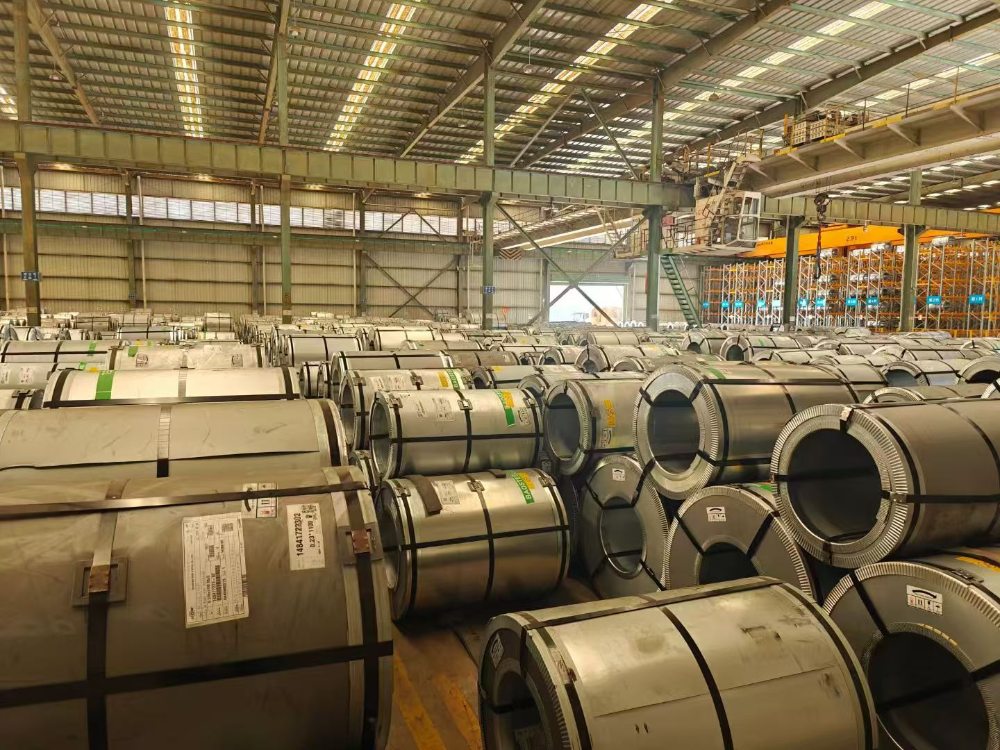
In magnetic materials, the internal arrangement of grains—tiny crystalline regions separated by boundaries—is not a passive backdrop but the primary lever controlling how domains respond to external fields. Each grain carries a preferred magnetization direction, and when these orientations are randomly scattered, the material demands more energy to align domains, resulting in higher coercivity and lower permeability. Conversely, a coarse-grained structure with strong crystallographic texture lets domain walls sweep through with minimal resistance, pushing performance toward that of an ideal single crystal.
The size and shape of grains further dictate loss behavior at high frequencies. Fine grains introduce a dense network of boundaries that pin domain walls, increasing hysteresis loss but often reducing eddy current loss due to shorter conductive paths. Engineers exploit this trade-off: for transformer cores operating at 50 or 60 Hz, large grains with sharp Goss texture minimize hysteresis, while for high-speed motor laminations, sub-micron grains or even amorphous structures slash eddy current heating. The boundary itself is a zone of broken symmetry, strain, and impurity segregation, all of which disturb local anisotropy and can either trap or release domain walls depending on thermal history and impurity control.
Grain structure also determines how a material ages under cyclic loading and temperature swings. Boundaries act as sinks for interstitials and dislocations, gradually degrading magnetic softness if the structure is too fine or too contaminated. On the other hand, a well-engineered grain size distribution—often achieved through controlled rolling and annealing—can lock in stable domain patterns that resist demagnetization. Thus, every specification on a magnet's datasheet, from remanence to core loss, traces back to decisions made at the grain scale, where subtle changes in boundary density or orientation spread can shift performance by double-digit percentages.
Inside the Manufacturing Choices That Shape Efficiency
Efficiency in manufacturing rarely comes from a single breakthrough. It accumulates through dozens of quiet decisions made on the floor, in the design room, and during supplier negotiations. The choice between a cast part and a machined part, for example, may look trivial on a bill of materials, but it ripples through cycle times, tool wear, and rework rates. A foundry that pours near-net shapes can shave minutes off every unit, while a machine shop chasing tight tolerances might spend hours on fixtures alone. Neither approach is universally wrong—the real error is treating these choices as interchangeable.
Material selection often gets more attention than it deserves, while process sequencing stays overlooked. Yet the order in which holes are drilled, welds are laid, or coatings are cured can determine whether a line runs at sixty percent or ninety percent of its theoretical capacity. Take a simple bracket: if you bend it before punching, you might avoid a secondary clamping operation. If you punch first, the bend can distort the holes. Experienced engineers carry these cause-and-effect maps in their heads, but few plants manage to document them well enough to train new hires or adjust when a machine goes down.
The push toward automation adds another layer. A robot can load a press faster than a human, but only if the incoming blanks are consistently square and debris-free. That consistency depends on upstream choices—blade sharpening schedules, conveyor speeds, even the humidity in the storage area. Manufacturers who chase efficiency by bolting on automation without revisiting these upstream variables often end up with expensive downtime and frustrated operators. The plants that improve steadily are the ones that treat every manufacturing choice as a lever, not a checkbox.
How Oriented Steel Cuts Waste Heat in Real Loads
Real transformers rarely sit at full load, and that's where waste heat quietly piles up. Oriented steel doesn't just perform well on paper at a fixed flux density; it keeps its cool when the load swings. The grain alignment in the steel lets magnetic flux follow a lower-resistance path, so even at partial loads—where core losses can dominate the thermal budget—the material sheds less energy as heat. In practice, a distribution transformer that runs mostly at 60% of rated capacity will see a disproportionate drop in core temperature compared to conventional steel, simply because the hysteresis loop stays narrower under those everyday conditions.
Part of the trick is that oriented steel's magnetostriction is tamer under real, messy waveforms. Loads are rarely clean sine waves; harmonics from rectifiers or variable-speed drives push extra flux into the core. With non-oriented grades, those harmonic ripples translate into audible hum and extra eddy-current heating that maintenance crews feel as hot spots on the tank. Oriented steel, cut and stacked to align with the main field direction, keeps those stray losses from spiraling. The result isn't just a slightly cooler core—it's a transformer that handles overloads and distorted currents without pushing the oil temperature into accelerated aging territory.
The real-world payoff shows up in thermal scans after a month of normal service. Units built with oriented steel tend to have a flatter temperature profile across the core limbs, with fewer localized hot zones near the joints. That matters because waste heat isn't just wasted energy; it's a slow killer of insulation. By keeping the average winding temperature a few degrees lower under actual load patterns—not just the nameplate rating—oriented steel extends the interval between oil tests and reduces the risk of unexpected failures. Operators notice the difference in electric bills and in the fact that cooling fans cycle on less often, even when the factory next door is running three shifts.
The Cost Logic Behind Premium Core Materials
Raw material scarcity often sets the floor price, but it's rarely the whole story. Take aerospace-grade titanium: the ore itself isn't outrageously rare, yet the specific alloy formulation and the multi-stage vacuum melting required to eliminate inclusions push costs up by a factor of ten compared to commercial grade. Suppliers also face strict traceability demands — every batch must be linked to a certified heat number, and that documentation chain adds labor hours that never show up on a bill of materials.
Processing yields are another quiet cost driver. When a lens blank for a high-end camera is ground and polished, over half the starting glass can end up as swarf because optical homogeneity tolerances are measured in nanometers. The same logic applies to single-crystal turbine blades: a single microscopic grain boundary defect during directional solidification sends the entire part to scrap. Unlike commodity materials, these components can't be re-melted and re-cast without losing the very properties you paid for, so the waste is absolute.
Then there's the validation burden. A premium core material rarely enters a product without years of accelerated aging tests, thermal cycling, and chemical exposure trials. For something like a medical-grade silicone used in long-term implants, the manufacturer must document biocompatibility across multiple production lots, and each lot requires separate testing. Those fixed costs get spread over relatively small volumes — a specialty polymer might ship only a few tons per year — so the unit price inevitably reflects an R&D amortization schedule rather than just raw inputs.
What Happens When Transformers Skip Grain Orientation
When grain-oriented silicon steel is replaced with non-oriented or improperly processed material, the transformer loses its carefully aligned magnetic pathway. The crystals no longer steer flux along a single low-reluctance direction, so the field zigzags across boundaries and wastes energy as heat. That extra heat quietly pushes operating temperatures higher, shortening insulation life and pushing maintenance windows earlier than planned.
The audible signature also changes. Without uniform grain alignment, magnetostriction becomes less predictable and often louder, turning what should be a low hum into a sharper buzz. Load losses climb, especially at partial load, and transformers that once met efficiency targets can fall out of spec without any visible sign of damage.
In severe cases, the loss of grain orientation forces designers to derate the unit or accept hotter winding temperatures. The core simply cannot deliver the same flux density without drawing extra current, so the transformer works harder for the same output. Over time, that invisible inefficiency erodes both reliability and operating budget.
FAQ
Grain oriented steel is a type of silicon steel where the metal's crystal grains are aligned in a specific direction during rolling and heat treatment. This alignment dramatically reduces magnetic losses when the material is magnetized along that preferred direction. Regular silicon steel, often called non-oriented steel, has randomly oriented grains, so it performs the same in all directions but with higher overall core loss. For transformer cores where flux flows in a single path, that directional advantage makes grain oriented steel far more efficient.
Transformer cores experience magnetic flux that alternates along a fixed axis, so the steel needs to excel in one direction rather than all directions equally. Grain orientation arranges the iron crystals so their easy magnetization axis lines up with that flux path. This reduces the energy needed to magnetize the core and lowers hysteresis loss significantly. Without that alignment, the core would require more excitation current and generate more heat for the same output.
There are two main loss components in a transformer core: hysteresis loss and eddy current loss. Grain oriented steel cuts hysteresis loss by making the magnetic domains switch direction more easily along the rolling direction. The thin gauge and surface insulation also reduce eddy currents. Combined, a well-made grain oriented core can cut total core loss by 30 to 50 percent compared to non-oriented steel of similar thickness, which directly translates to lower operating costs and cooler running temperatures.
Silicon is added to steel mainly to increase electrical resistivity, which reduces eddy current losses. In grain oriented steel, typical silicon content ranges from about 2.8 to 3.2 percent. Higher silicon improves resistivity but makes the steel more brittle and harder to roll. Manufacturers balance the silicon level to get the lowest core loss without sacrificing the mechanical workability needed to produce thin, precisely oriented strips. Too little silicon and eddy currents rise; too much and the steel cracks during processing.
It starts with a carefully controlled melt and hot rolling to a thick strip, followed by cold rolling to final thickness in multiple passes. The key step is a high-temperature anneal in a controlled atmosphere, often with sulfur or nitrogen additions, which promotes abnormal grain growth. During this secondary recrystallization, grains with a specific crystallographic orientation—called the Goss texture—grow and consume the others. Then a final coating of insulation is applied. This multi-step process is what locks in the directional magnetic performance.
The core would still work, but it would be far less efficient. Non-oriented steel has higher hysteresis and eddy current losses in the flux direction a transformer needs. That means more input power is wasted as heat, requiring larger cooling systems or derating the transformer. In distribution transformers that run 24/7, even a small efficiency drop adds up to significant energy waste over the equipment's lifespan. For high-voltage power transformers, using non-oriented steel would make the unit unnecessarily bulky and expensive to operate.
Grain oriented steel is more expensive to produce than non-oriented steel because of the extra processing steps and tighter controls. It is also anisotropic, so it performs poorly if flux flows across the rolling direction. That limits its use to transformer cores and a few other devices with unidirectional flux. In rotating machines like motors, where flux direction constantly changes, grain oriented steel is not suitable. Additionally, the thin gauge and brittleness mean manufacturers must handle it carefully during core stacking to avoid edge damage that could raise losses.
They should first determine the required flux density and allowable no-load loss budget for the transformer design. Then look at the steel's guaranteed core loss at that induction level, typically measured in watts per kilogram at 1.5 or 1.7 Tesla. For distribution transformers that prioritize low losses at moderate flux, a high-permeability, low-loss grade makes sense even if it costs more. For large power transformers where physical size is also a constraint, they might choose a grade with slightly higher loss but better stacking factor or mechanical strength. It is always a balance between initial cost, efficiency targets, and manufacturing constraints.
Conclusion
Transformer efficiency hinges on the magnetic behavior of its core, and grain oriented silicon steel is the material that makes low-loss performance possible. In standard non-oriented steel, the crystal lattice is random, so magnetic domains must expend extra energy to realign with each cycle of alternating current. Oriented steel solves this by aligning nearly all grains along the rolling direction during a carefully controlled sequence of cold rolling and high-temperature annealing. This creates a sharp Goss texture, which dramatically reduces hysteresis loss and also lowers eddy current losses because the steel is produced in thin laminations with an insulating coating. The result is a core that magnetizes and demagnetizes far more easily, meaning less energy is wasted as heat. Under real-world loads, especially partial load conditions common in distribution networks, this difference becomes even more pronounced: oriented steel keeps waste heat lower, reduces thermal stress, and allows transformers to run cooler without oversizing cooling systems.
From a manufacturer's standpoint, the cost argument for grain oriented steel is not about upfront price per kilogram but about lifetime operating economics. Premium core material carries a higher initial cost, yet it typically pays for itself through lower no-load and load losses over a transformer's 25- to 40-year service life. Utilities and industrial users increasingly evaluate total cost of ownership, and a core that saves even a fraction of a percent in efficiency avoids substantial cumulative energy costs. When transformers skip grain orientation and use cheaper non-oriented steel, the penalties are immediate: higher core losses, hotter operation, louder noise from magnetostriction, and the need for extra cooling or derating. Efficiency regulations and sustainability targets leave little room for such compromises. Choosing oriented steel is thus less about material preference and more about designing a transformer that meets modern performance standards without hidden operating penalties.
Contact Us
Contact Person: Zoe Liang
Email: [email protected]
Tel/WhatsApp: 86 189 2128 6299
Website: https://www.baowuchina.com