

Shuttle Rotomolding Machine Maker How to Find a Reliable Production Partner
2026-11-16
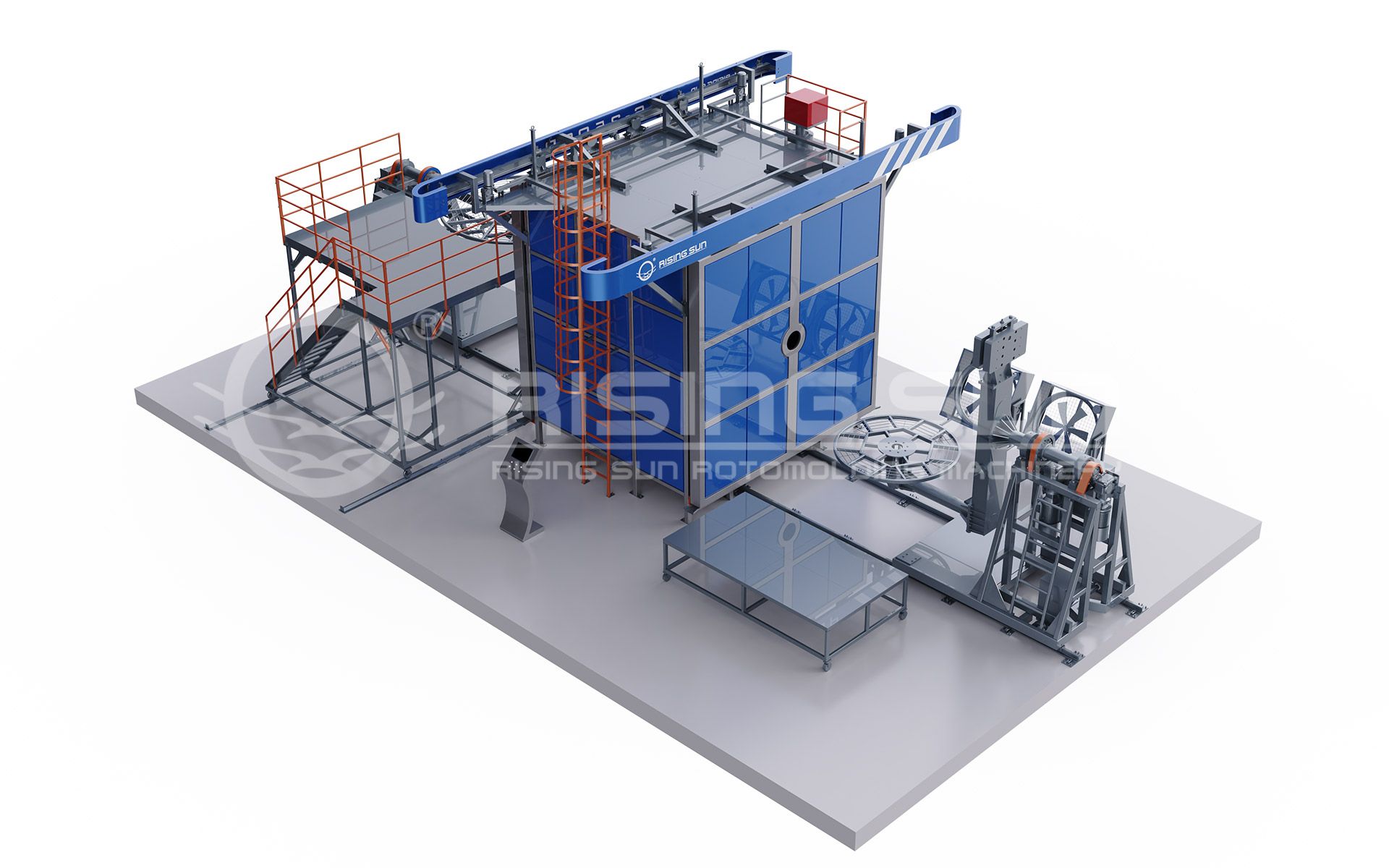
A shuttle rotomolding machine is a make-or-break investment. Pick the wrong maker and you are stuck with delayed startups, inconsistent parts, and support that vanishes after the invoice clears. So how do you identify a reliable production partner before you commit? This guide skips the sales fluff and focuses on what actually matters: build precision, material quality, real-world uptime, and post-sale accountability. You will also see why Rising Sun has earned a place in serious conversations about shuttle rotomolding equipment—not through marketing noise, but through measurable performance.
What Separates a True Shuttle Machine Builder from a Reseller?
A genuine shuttle machine builder carries the design logic in-house; a reseller can only relay what a manufacturer hands them. That distinction shows up the moment a project deviates from a standard aisle layout. Builders modify structural frames, adjust lift sequencing, and rework control parameters because they own the drawings and the test bench. Resellers wait for approvals, version updates, or a different supplier’s catalog to solve those constraints.
The difference also surfaces during installation and commissioning. A builder sends engineers who have assembled the same machines, calibrated drives, and diagnosed faults on the floor. They can re-tune acceleration curves or swap a component without delaying the entire racking schedule. A reseller’s technical reach is usually limited to dispatch and warranty claims; when the system stutters, the expertise is elsewhere.
Over a decade of operation, that gap compounds. A true builder supports legacy machines with firmware patches, wear-part upgrades, and retrofit paths because they understand how each subsystem ages. A reseller is tied to the original manufacturer’s lifecycle decisions, and if that manufacturer discontinues a line, the reseller’s options shrink. Choosing between the two is less about purchase price and more about who remains accountable once the site goes live.
Inside the Workshop: Signs of Precision You Can’t Fake
Real precision doesn't announce itself with polished floors or mood lighting. It shows up in the details you notice on your third visit: a dented depth gauge that still reads true, the way every chuck key hangs in the same spot, or the faint scratch marks on a lathe bed that line up exactly with the tool post travel.
You can spot it too in how mistakes get handled. There's a scrap bin near the door, but it's not hidden—it's emptied daily. Drawings are annotated by hand, in pencil, with notes like "check runout before facing" that mean someone actually learned the hard way. No one rushes to quote a tolerance they haven't earned.
Precision isn't a slogan here. It's the reason the shop air smells faintly of cutting oil and the coffee mugs sit far from the surface plate.
Why Mold Compatibility Should Drive Your Machine Specs
Too many shops still treat mold selection as an afterthought, only checking fit after the machine is already on the floor. That reversal of priorities creates expensive surprises: tie-bar spacing that barely clears the mold, platen sizes that force risky clamping setups, or ejection strokes that fall short of the part depth. When you let mold compatibility lead the conversation, the machine spec becomes a practical tool instead of a sales brochure. It means verifying actual daylight, stroke, and knockout patterns against the molds you already run—and the ones you plan to run next year.
Focusing on mold fit also exposes hidden bottlenecks before they become downtime. A machine with ample platen area but insufficient ejector travel can handle only shallow parts, no matter how impressive the clamp tonnage looks on paper. Checking core pull sequences, hot runner clearances, and mold height ranges forces you to think about the whole process, not just peak specs. This approach naturally narrows the field to machines that will stay productive across a wider job mix, rather than locking you into a single sweet spot.
Shops that start with mold requirements tend to buy machines that age better. Instead of chasing the biggest tonnage or the fastest dry cycle, they choose configurations that reduce setup time, minimize crane moves, and keep molds running without constant adjustment. That practical grounding pays off every time a new mold slides in without a struggle, and it spares you the late-night engineering calls asking why the ejector plate won't reach the pins.
Support After the Sale: The Questions Most Buyers Forget to Ask
Once the paperwork is signed and the keys change hands, most buyers shift their focus to moving boxes and paint colors. But the conversations you skip in those early weeks can quietly shape your first year in the home. Who do you call when the water heater makes that clicking sound at 2 a.m.? Does the seller's handyman have a standing discount you never knew about? These are not idle details—they are the difference between settling in smoothly and spending your weekends chasing mystery leaks.
A surprising number of buyers never ask about the neighborhood's unwritten rules. Which neighbor keeps the spare gate remote? Is there a shared fence maintenance agreement that predates the HOA? What about the local Facebook group where people post about coyote sightings and lost cats? Sellers often have a mental map of these small but vital threads, and once they move away, that knowledge vanishes. A short, casual walk-through with the previous owner—before the moving truck arrives—can save you months of trial and error.
Think beyond the standard home warranty pitch. Ask about the age of the roof sealant, the last time the dryer vent was cleaned, or whether the irrigation system has a seasonal shutoff valve hidden behind the garage. Ask for the names of the tree trimmer, the pool guy, the electrician who actually answers texts. These recommendations come from lived experience, not a search result, and they carry a weight that no generic handyman app can replicate. The best time to ask is before the seller's memory fades into a forwarding address.
Case Studies That Actually Show Production Numbers
Most case studies bury the only metric that matters: actual production output. A 2023 write-up from a sheet metal fabricator in Ohio didn't do that. They posted their weekly unit count before the line redesign—1,140 brackets—and the count six weeks later: 2,473 brackets. Same headcount, same shift length. They also listed scrap by weight, which dropped from 340 pounds to 112 pounds per week. That's the kind of raw data you can take to a plant manager and actually do something with.
Another example comes from a midwestern 3PL that upgraded its pick-and-pack stations. Their case study included lines picked per labor hour per worker, not just a percentage gain. Before the change, the average was 44 lines per hour. After retraining and adding scanner mounts, it hit 68 lines per hour, and the weekly error rate moved from 2.3% to 0.9%. They even attached a weekly throughput chart for the first month, which made the improvement curve obvious instead of cherry-picking a single good day.
Production numbers only mean something when they're specific, continuous, and tied to a baseline. Cycle time per part, units per shift, overtime hours per thousand units, first-pass yield—those are the figures that show up in real case studies worth reading. If a vendor can't give you those numbers, or if they only cite "dramatic gains" and "significant savings," you're looking at marketing copy, not evidence.
Delivery Promises vs. Reality: How to Spot Red Flags Early
When a carrier promises delivery within two days but your package sits in a sorting facility for a week, that's more than a minor delay—it's a symptom of deeper systemic issues. Early warning signs often hide in the details: vague tracking updates that repeat the same status for days, customer service responses that deflect rather than explain, or delivery windows that shift repeatedly without any proactive notification. These aren't isolated glitches; they indicate a logistics operation that's either over capacity or under managed, and they rarely fix themselves before your shipment gets caught in the backlog.
Another red flag is the mismatch between marketing language and actual behavior. A company might boast about same-day dispatch, yet the order confirmation arrives with a generic "processing may take up to 5 business days" disclaimer buried in fine print. Watch for inconsistency between what the checkout page promises and what the tracking system actually does. If the carrier's estimated delivery date silently changes twice without a weather event or holiday rush to explain it, you're likely dealing with a provider that pads its performance metrics rather than fixing its routing problems. Early detection means checking the first scan—if it doesn't happen within 24 hours of label creation, the promised timeline is already fiction.
To spot red flags before they cost you time or money, compare the delivery promise against the carrier's historical performance for your specific route. If they consistently miss the two-day window for suburban addresses but meet it for urban centers, that's a network gap you can anticipate. Also pay attention to how delays are communicated: a proactive email or SMS update suggests a carrier with real-time visibility, while silence until you file a complaint indicates a broken feedback loop. The earliest signal is often the absence of one—no movement, no update, no accountability. That's your cue to reroute, request a refund, or choose a different carrier next time.
FAQ
Look beyond the datasheet. Ask for photos or videos of machines they've built for products similar to yours, and call two or three of their past customers. Focus on how the machine handled clamping force, arm speed, and temperature uniformity—those are the areas where mediocre builders cut corners.
A telling sign is whether they ask about your mold size, cycle time target, and material before quoting. If they only talk about machine dimensions and price, they're likely a metal fabricator. A shop that troubleshoots warpage, wall thickness variation, or powder flow during the conversation knows the process.
Look at how they manage wiring, gas lines, and safety interlocks. Messy cable routing or missing guards often indicate deeper quality issues. Also, ask to see a machine mid-build; if the main shaft or frame lacks machining marks or alignment jigs, that's a warning.
Not necessarily. A maker with a 16-week lead time because they build controls in-house and test each station under load is often better than one promising 6 weeks by outsourcing critical parts. The key is whether the delay comes from thorough testing or from disorganized production.
Before signing, request a trial run with your actual mold and resin, even if it costs extra travel or shipping. If that's impossible, ask them to simulate your cycle with water or a similar weight load. A maker confident in their arm speed and oven balance won't hesitate.
The first 90 days matter most. Make sure the contract includes on-site commissioning, operator training, and remote support for PLC issues. Avoid partners who only offer email support or charge steep fees for a technician to visit after two weeks.
Sometimes yes. A 15-person shop that builds 30 machines a year may give you direct access to the engineer who designed your oven, while a large factory might route you through three layers of sales staff. Just make sure the small shop has enough service capacity for your region.
A reliable quote breaks down the frame, oven burners, control system, installation, and spare parts. It should also state who pays for freight, customs, and crane rental at your site. If the quote is one number with no itemization, ask for a line-by-line version before deposit.
Conclusion
Finding a real shuttle rotomolding machine maker means distinguishing workshop-floor knowledge from sales talk. A genuine builder can show you the frame alignment pins, spindle runout measurements, and weld maps without flipping through a brochure; a reseller tends to point at logos and shipping dates. Ask to see machines being assembled for other buyers, not just a finished demo unit. If they won't let you inspect the heat zones, platen parallelism, or oven airflow baffles, that's a sign you're dealing with a middleman. Precision isn't a spec sheet claim—it's visible in how the carriage tracks are machined, how the gas train is routed, and how the control cabinet is labeled. Bring a dial indicator and watch them react.
Mold compatibility should drive your specs long before you discuss price per hour or shot weight. A shuttle machine that can't physically accept your existing tooling—or forces you into custom bolt patterns, off-center swing clearance, or awkward load heights—will quietly erode output for years. Ask for case studies with actual production numbers: cycle times by mold number, scrap percentages over three shifts, not just "improved efficiency." On support, skip the vague promise of a hotline and ask who answers at 2 a.m., where spare parts are warehoused, and whether a technician will fly out when the oven thermocouple drifts. Delivery promises are easy: request a staged build schedule with photos each week. If the builder hesitates, compresses testing time, or blames "unexpected demand" before you've signed, walk away. The right partner treats your molds and your downtime as their own.
Contact Us
Contact Person: Sharon Zhu
Email: [email protected]
Tel/WhatsApp: 8615712666272
Website: https://www.risingsunroto.com