

Shelving System Factory: Engineering Smart Storage for Every Industry
2026-08-05
In an era where efficiency shapes the backbone of industry, storage isn't just about space—it’s about strategy. Every square foot matters, and every retrieval counts. From warehouses humming with automation to bustling retail backrooms, the demand for intelligent shelving has never been greater. Meet Lanyuda, a shelving system factory that engineers smart storage solutions for every sector, redefining how industries organize, access, and optimize their operations. This isn’t one-size-fits-all manufacturing; it’s precision engineering built around your unique workflow. Curious how a well-designed shelf can transform your entire facility? Let’s explore the science behind truly intelligent storage.
Adapting Shelving Designs to Unique Industry Demands
Every industry carries a distinct set of operational rhythms and spatial constraints, which means shelving can never be a one-size-fits-all solution. In retail, for instance, the focus often lands on creating visual allure—adjustable arms and floating platforms allow merchandise to breathe while pulling shoppers deeper into the aisle. Meanwhile, in food service, hygiene regulations and heavy loads demand surfaces that shrug off moisture and resist corrosion, often steering the design toward stainless steel wire shelves with reinforced cross-bracing. The real skill lies not in picking a shelf from a catalog, but in listening to how a space actually functions day by day before designing its backbone.
Warehouses and manufacturing floors tell an entirely different story, where density and weight capacity dominate the conversation. Here, the shelving adapts not just to the product but to the movement around it—boltless rivet systems, cantilevered arms for elongated materials, or flow racks that rotate stock on first-in, first-out principles. Even the depth of a shelf unit can be recalibrated to match forklift turning radii or the reach of a picker’s arm, cutting seconds off every retrieval. What might seem like a minor tweak in beam placement can ripple across thousands of daily operations, turning a storage system into a quiet engine of efficiency.
Specialized environments push the concept even further. Laboratories and cleanrooms, for example, require shelving that resists chemical spills and sheds particles, often leading to sealed, non-porous surfaces with integrated grounding to prevent electrostatic discharge. In archival settings, acid-free coatings and vibration-dampening construction become non-negotiable to preserve fragile documents over decades. These adaptations aren’t about adding bells and whistles; they are a direct response to the very real consequences of getting it wrong—contaminated samples, damaged inventory, or safety hazards. When every detail of a shelf aligns with the pressures of its surrounding industry, it stops being mere furniture and becomes a crucial tool.
The Engineering Behind Weight Distribution and Load Safety
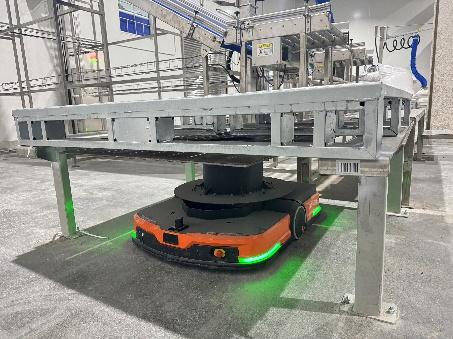
Weight distribution isn’t just about balancing numbers on a scale—it’s a dynamic interplay of physics that keeps a vehicle stable, responsive, and safe. When a load shifts during transit, even slightly, the center of gravity moves, altering how brakes grip, how tires hold the road, and how the suspension absorbs shocks. Engineers account for this by designing load-bearing structures that channel forces along deliberate paths, turning chaotic momentum into predictable behavior.
Modern load safety leans heavily on the concept of load paths: the invisible lines along which forces travel from the cargo to the vehicle frame. Every strap, anchor point, and bulkhead is placed to manage tension, compression, and shear without allowing a single point of failure. For instance, in rollover scenarios, a properly secured load doesn’t just stay put—it actually contributes to the vehicle’s structural resistance, working with crumple zones instead of against them. This integration turns the cargo from a passive rider into an active part of the safety system.
The materials used in tie-downs and restraints have evolved far beyond simple chains. High-tensile webbing that stretches just enough to absorb sudden jolts, friction-enhancing coatings on contact surfaces, and corrosion-resistant ratchets are all refined through thousands of hours of vibration testing. These aren’t arbitrary upgrades; each tweak addresses a specific real-world failure mode, whether it’s a strap fraying from constant micro-movement or a hook unclipping under dynamic load. The result is a subtle but crucial layer of reliability that drivers rarely notice—until the moment it saves a life.
Material Choices that Redefine Shelf Longevity
The shift toward composite multilayer films has quietly reshaped how long products stay fresh. By fusing polymers with ultra-thin barriers like aluminum oxide or silicon dioxide, these materials block oxygen and moisture at levels single-layer plastics simply can't match. The result isn't just incremental—it’s a leap in reliability that keeps sensitive foods and pharmaceuticals stable for months longer, often without preservatives.
Active packaging pushes boundaries even further. Embedded oxygen scavengers or ethylene absorbers, for instance, don’t just seal out the environment—they actively modify the internal atmosphere. A package becomes a protective microclimate, adjusting in real time to extend freshness beyond what passive barriers achieve. This approach has turned fragile products like leafy greens and fresh pasta into viable long-distance items, fundamentally rewriting supply chain logic.
Monolayers of plant-based polymers, enhanced via nano-scale cellulose crystals, offer another quiet revolution. Far from being just “eco-friendly,” these structures deliver impressive water vapor resistance while remaining compostable. Their real magic lies in degrading on cue—after use, not during storage—giving brands a way to reconcile durability with end-of-life disposal without compromise.
How Smart Layouts Transform Warehouse Efficiency
A warehouse floor crammed with inventory doesn’t automatically mean high output—often, it’s the opposite. Smart layouts flip that equation by analyzing real movement patterns instead of assuming every bay should be identical. When fast-moving SKUs sit near pack stations and slower items retreat to the back, pickers shave seconds off every trip. Multiply that across a shift, and you’re suddenly running a tighter ship without hiring more hands.
The ripple effects show up in unexpected places. Racks angled to reduce forklift turning radius, cross-aisles placed where actual traffic bottlenecks form, and even lighting positioned to match workflow rhythms—these tweaks add breathing room to operations that felt maxed out. One facility found that simply flipping a receiving zone to the opposite end of the building cut daily congestion by nearly a third, freeing supervisors to focus on exceptions rather than constant firefighting.
It’s easy to dismiss layout changes as cosmetic until you watch a seasoned crew navigate a space designed around their habits. Shelf heights aligned with order profiles, label placement that matches natural sightlines, and staging areas that flex with seasonal spikes turn a chaotic floor into something almost self-sorting. The transformation isn’t flashy, but it’s the kind of quiet overhaul that keeps carts moving and order accuracy climbing long after the consultants leave.
Integrating Modular Shelving for Evolving Spaces
Spaces rarely stay the same for long, and your storage should keep up. Modular shelving is built for change—whether you’re rearranging a home office into a guest room or turning a corner of the living room into a reading nook. Because the units can be reconfigured, expanded, or even mounted differently, you’re not locked into a single layout. It’s about shaping the system to the moment, not the other way around.
Part of the appeal lies in how personal the setup can become. Shelves, cabinets, and open cubbies all clip together, letting you mix closed storage with display areas exactly where you need them. Swap out a shelf for a hanging rod in a wardrobe system, or add a desk extension for a temporary work surface. The hardware is designed to be intuitive, so a Saturday afternoon and a single tool are often all it takes to reinvent an entire wall.
Over time, the shelving earns its keep by adapting to life’s shifts. A child’s room that once held picture books and toys transitions seamlessly to holding textbooks and sports gear—just by adjusting shelf heights and swapping a few components. Because the system is built on sturdy, standardized parts, what starts as a modest setup can grow into a comprehensive storage solution without waste or regret. It’s furniture that stays useful precisely because it’s never quite finished.
Sustainability Practices in Modern Shelf Manufacturing
Modern shelf manufacturing has moved far beyond simply cutting wood and welding metal. Today, sustainability is woven into every stage of production, starting with the careful selection of raw materials. Many manufacturers now prioritize FSC-certified timber, reclaimed wood, or rapidly renewable alternatives like bamboo. For metal shelving, recycled steel and aluminum are increasingly common, slashing the carbon footprint before a single shelf even takes shape. This shift isn’t just about ticking an eco-box—it’s a response to a market that sees durability and source transparency as genuine added value.
On the factory floor, the focus shifts to energy efficiency and waste reduction. Smart manufacturing systems optimize cutting patterns to minimize offcuts, while dust collection setups turn wood shavings into pellet fuel or compost. Finishing processes are being overhauled, with low-VOC and water-based coatings replacing solvent-heavy lacquers. Some facilities have closed the loop completely, capturing heat from machinery to warm workspaces or pre-dry timber, making the production line itself a model of resourcefulness rather than a drain.
The final piece of the puzzle is designing shelves for a longer, more useful life. Modular systems that can be reconfigured or repaired with standard components keep products out of landfills. Take-back programs, where old units are refurbished or harvested for parts, are quietly becoming an industry norm. Even packaging has slimmed down—molded pulp trays and reusable strapping have replaced mountains of plastic and styrofoam. Far from a niche trend, these practices are reshaping expectations, proving that functional storage doesn’t have to come at the planet’s expense.
FAQ
We design systems that address everything from maximizing vertical space in small warehouses to organizing heavy industrial parts. Our engineers look at your inventory flow, weight distribution, and access frequency to build a layout that actually works for your daily operations.
It’s not about gimmicks—it means shelves that adapt. We integrate modular components so you can adjust shelf heights without tools, add pull-out drawers for small items, or incorporate RFID tracking slots. The real smarts are in how quickly you can reconfigure as your needs shift.
We’ve built systems for cold storage facilities, automotive parts dealers, museum archives, and even vertical farms. If you’ve got something that needs storing, we’ve probably seen a similar challenge before and can tailor the weight ratings, corrosion resistance, or accessibility to match.
After an initial site assessment, we usually deliver a 3D plan within a week. Manufacturing takes about two to three weeks, and installation for a medium-sized facility is often done in a couple of days. We try to minimize disruption to your operations.
Retrofits are a big part of our work. We assess your current layout, structural limits, and what isn’t working. Often we can reuse some existing components while upgrading others, saving you cost and downtime.
Our heavy-duty ranges easily handle 2,000 pounds per shelf and up, with reinforced frames and decking. We’ve done systems for steel mills and engine storage where point loads matter, so we can calculate exactly what you need.
Conclusion
A shelving system factory that truly engineers smart storage for every industry begins by deeply understanding the unique demands of each sector. From pharmaceutical cleanrooms requiring corrosion-resistant surfaces to heavy manufacturing floors built for bulky loads, adapting shelving designs is a meticulous process. Engineers focus on weight distribution and load safety, using advanced modeling to ensure every beam and bracket can handle dynamic stresses, not just static weight. The choice of materials plays a pivotal role here—high-strength steel alloys, aluminum composites, or reinforced plastics are selected based on the environment and lifespan needed, effectively redefining shelf longevity. These decisions are never one-size-fits-all; a food storage facility needs hygienic, non-porous surfaces, while a data center may prioritize vibration damping, showing how material science directly serves industry-specific longevity.
Beyond individual shelving units, the real transformation happens when smart layouts reshape entire warehouse workflows. By analyzing traffic patterns, picking frequencies, and vertical clearances, factories design systems that minimize travel time and maximize cubic footage. This often integrates modular shelving, which allows businesses to reconfigure spaces as needs evolve—growing from small rack rows to mezzanine-level storage without discarding existing components. Sustainability is woven into these practices, with modern manufacturing embracing recycled metals, low-VOC powder coatings, and design-for-disassembly principles that extend product lifecycles. The result is a holistic approach where engineering, material science, and spatial planning converge, delivering storage solutions that are not only robust and safe but also inherently adaptive and environmentally responsible.
Contact Us
Contact Person: Johnny
Email: [email protected]
Tel/WhatsApp: +86 18151010686
Website: https://lydstorage.com