

Professional Landing Craft Barge Essentials: Design, Applications, and Advantages
2026-07-27
When it comes to marine projects that demand rugged versatility, nothing beats a well-designed landing craft barge. These workhorses blend clever engineering with raw power to handle everything from beach landings to heavy equipment transport. At Allheart, we’ve spent years refining the essentials—design tweaks that boost stability, smart layouts that maximize deck space, and hull forms that laugh at choppy waters. But what really sets a professional landing craft apart isn’t just the hardware; it’s how those design choices translate into real-world advantages. In this deep dive, we’ll unpack the core design philosophies, explore surprising applications beyond the obvious, and reveal the tangible benefits that make a landing craft barge an unbeatable asset. Whether you’re a seasoned operator or just curious about these muscular vessels, there’s plenty here to spark your imagination—and maybe even change how you think about marine logistics.
The Backbone of Marine Construction: A Closer Look at Barge Design
Barges might not grab headlines like towering cranes or massive drillships, but they are the unsung workhorses that make nearly every offshore project possible. Their design is a quiet triumph of practicality over glamour, engineered to carry staggering loads across unpredictable waters while providing a stable platform for delicate operations. Unlike sleek vessels built for speed, a barge’s flat-bottomed hull and boxy silhouette are purposeful concessions to capacity and stability, allowing them to haul everything from steel pilings to entire bridge sections without flinching.
What separates a forgettable barge from a legendary one lies in the details that often go unnoticed. The integration of moon pools for subsea equipment, the strategic placement of spud legs that anchor the vessel in shifting currents, and the use of high-tensile steel to resist flexing under extreme loads all reflect a design philosophy rooted in resilience. Even something as mundane as deck reinforcement patterns is calculated to a millimeter’s precision, ensuring that weight distribution does not compromise buoyancy or maneuverability during critical lifts.
Modern barge design is also a study in adaptability, with modular configurations allowing a single vessel to morph between roles. A deck can be cleared for wind turbine components one week and outfitted with accommodation blocks for a hundred workers the next. Below the waterline, hull forms are being reimagined to cut fuel consumption without sacrificing the brute strength that makes these platforms indispensable. In an industry where downtime can cost millions, the barge’s quiet reliability remains the foundation upon which ocean progress is built.
Why Shallow Drafts and Flat Decks Are Game-Changers
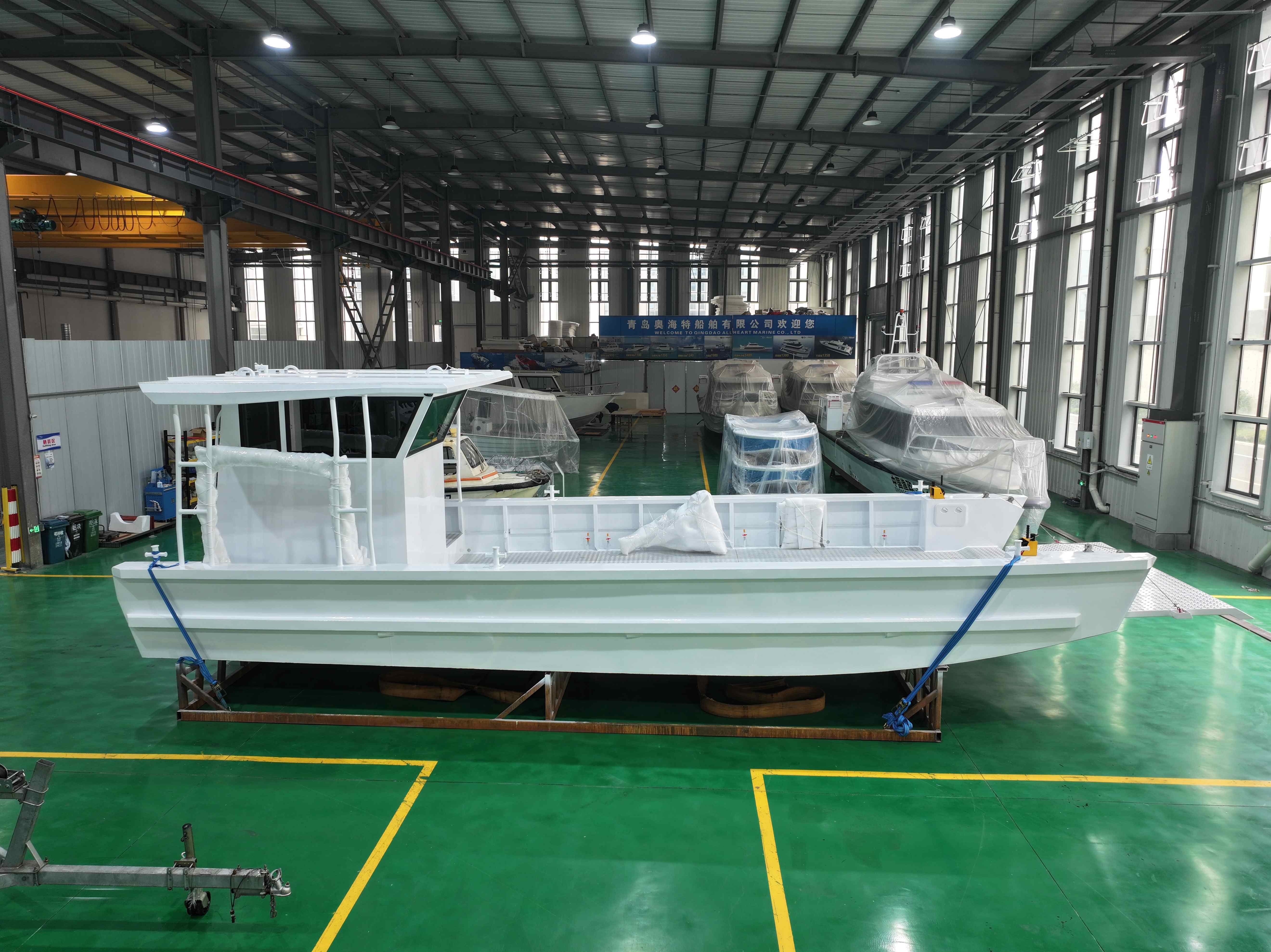
Imagine gliding across waters that others wouldn’t dare—that’s the quiet magic of a shallow draft. It removes the constant fear of running aground, opening up secret coves, skinny rivers, and backwater channels that deep-keel boats can only dream of. Suddenly, the map isn’t a set of forbidden zones; it’s an invitation. You anchor closer to shore, explore further inland, and find solitude in places where crowds simply can’t follow.
Then there’s the flat deck, often overlooked until you’re hauling gear or entertaining friends. A level, open layout completely changes how you move and live on the water. No more tripping over raised hatches or squeezing past awkward cabin trunks—just a smooth, usable surface that turns the boat into a floating patio. It gives you room to stretch out, cast a line without obstacles, or carry paddleboards and coolers without a second thought.
Together, these two features redefine what’s possible. Shallow draft and flat deck designs strip away the unnecessary, making boating feel less like a complicated hobby and more like a natural extension of your curiosity. They let you follow your whims instead of the depth charts, blending freedom with practicality in a way that truly changes how you experience the water.
Loading, Unloading, and Everything In Between: Operational Flexibility
The true test of any piece of material handling equipment lies not just in its lifting capacity, but in how seamlessly it adapts to the rhythm of a busy worksite. Operational flexibility in loading and unloading means a machine that can easily switch between palletized goods and bulk materials, or maneuver confidently in tight spaces without sacrificing speed. It’s about having the ability to handle a variety of attachments—forks, buckets, grapples—so that one piece of equipment can do the work of many. This kind of versatility keeps projects moving and reduces the need for multiple machines, saving both time and valuable real estate on site.
Beyond the hardware, true flexibility shows up in the way an operator can transition between tasks with minimal downtime. Quick couplers, intuitive controls, and clear sightlines all contribute to a workflow that feels less like a series of separate jobs and more like a continuous, efficient process. Whether it's loading trucks at a busy distribution center or delicately placing materials on a crowded construction site, the machine should respond as intuitively as an extension of the operator. That connection between human and machine is where productivity truly thrives.
In an industry where no two days are the same, operational flexibility also means being ready for the unexpected. It’s the ability to handle a sudden change in material type, a shift in ground conditions, or a last-minute request that falls outside the normal routine. Equipment that can adapt without requiring a complete reset or extensive recalibration becomes a real asset. Ultimately, the machines that keep you moving are the ones designed to handle not just the planned tasks, but everything in between.
From Oil Spills to Wind Farms: Unexpected Uses for Landing Craft
Landing craft have long shed their strictly military skin, turning up in places few would expect. Their shallow draft and bow ramp—originally meant for storming beaches—now make them ideal for reaching oil-soaked marshes and mangroves during spill responses. Deploying booms and skimmers right where the slick meets the shore, they slide over barely submerged sandbars that would strand conventional workboats.
Offshore wind developers have also caught on. Getting massive turbine blades and tower sections to shallow-water construction sites used to be a puzzle, but landing craft handle it with ease. They nose onto the seabed at low tide, lower the ramp, and heavy equipment rolls straight onto the site—no port upgrades needed. It’s a straightforward, cost-effective solution born from a design that was never meant for renewables.
Beyond spills and turbines, these boats find work supplying remote islands, acting as floating clinics, or even ferrying tourists to surf breaks. Their simplicity is their strength: they ask for little infrastructure, adapt to whatever cargo comes their way, and keep running where fancier vessels dare not go.
Built to Last: Materials and Methods That Endure Harsh Seas
Salt spray, relentless waves, and corrosive humidity—these are the everyday realities for any structure facing the open ocean. Choosing the right materials is less about aesthetics and more about survival. Marine-grade stainless steel, particularly 316L, has become a cornerstone for builders who understand that minor rust spots can become structural nightmares. Its molybdenum content fights pitting corrosion long after standard grades give up. Meanwhile, fiberglass-reinforced polymer composites steadily replace traditional metals in high-impact zones; they absorb vibration without fatigue, stay inert against electrolysis, and can be molded into seamless forms that leave no crevice for salt crystals to wedge into.
Material alone won’t carry the day—application method seals the deal. One overlooked practice is passivation, a chemical treatment that strips iron contaminants from stainless steel surfaces post-welding, restoring the protective oxide layer that fabrication destroys. For aluminum components, anodizing not only thickens this layer but hardens it beyond the raw metal’s capability, crucial where sand abrasion meets splashing brine. In composite work, vacuum infusion has overtaken hand lay-up; by pulling resin through dry fiber under airtight conditions, it eliminates the bubble-rich matrix that becomes a highway for water ingress. Small workshops still try shortcuts—skip the post-cure bake, use generic epoxy—and you can trace those choices straight to delamination reports within three seasons.
Beyond the lab specs and workshop disciplines, real longevity often hinges on observed craft. Clever detailing keeps water moving rather than pooling: inclined surfaces, drip edges under rails, elongated scupper openings that self-flush. Maintenance access is forethought, not afterthought—every weld and fastener placed where it can be inspected without dismantling half the assembly. Some of the most resilient vessels and offshore platforms use deliberately sacrificial anodes, a few zinc or aluminum blocks mounted below the waterline, destined to waste away while the hull stays intact. It’s this blend of chemistry, physics, and unglamorous periodic care that makes the difference between a ten-year lifespan and a craft that’s still earning its keep after a generation of hard service.
The Hidden Cost Benefits of Choosing a Landing Craft Barge
When evaluating marine logistics options, the upfront price tag often steals the spotlight, but it’s the quieter, long-term economics that really separate a landing craft barge from conventional vessels. These workhorses don’t just carry cargo; they eliminate the need for costly port infrastructure. Without the requirement for deep-water docks or crane-equipped terminals, operators can load and unload directly onto undeveloped shorelines, riverbanks, or beaches. That single capability slashes project timelines and virtually erases the line item for port fees, wharfage charges, and the expensive delays associated with waiting for berth availability. In remote or disaster-stricken areas, this isn’t just convenient—it’s a budget-saving superpower.
Dig a little deeper and you’ll find that the savings extend into maintenance and crew requirements. A steel landing craft with its simple, flat deck and robust bow ramp has far fewer moving parts than a complex container ship or a specialised heavy-lift vessel. There are no intricate hatch covers, no cargo-handling cranes that require constant certification, and the engine systems tend to be straightforward, reliable diesels. This mechanical simplicity translates directly into lower dry-docking bills and fewer hours billed by marine engineers. Moreover, many landing craft can operate with a smaller crew complement, often under less stringent manning regulations compared to larger commercial ships, which compounds payroll savings voyage after voyage.
Finally, consider the versatility dividend. A barge that can carry bulldozers one day and humanitarian supplies the next avoids the costly repositioning trips that plague single-purpose vessels. The ability to switch between project cargo, bulk materials, and even vehicles without reconfiguration means you’re not haemorrhaging money on idle days or ballast voyages. Add in the fuel efficiency of moving heavy loads at displacement speeds rather than high-speed transits, and the cost-per-tonne-mile paints a compelling picture. For long-term construction projects or recurring supply runs, this adaptive efficiency isn’t just a perk—it quietly reshapes the entire project budget, turning what looked like a basic, blunt-nosed boat into the smartest financial decision on the water.
FAQ
A professional landing craft barge features a flat bottom and a robust bow ramp, allowing it to approach undeveloped shorelines and offload cargo directly onto the beach. The hull is typically made of heavy-duty marine-grade steel, with a reinforced double bottom and multiple watertight compartments to enhance damage survivability. The deck is open and unobstructed to accommodate varying cargo sizes, and many designs include ballast tanks for precise trim and list control during operations. Propulsion often comes from twin or triple engine setups with shallow-draft propellers or waterjets to maintain performance in minimal water depths.
Landing craft barges are widely used in military logistics for amphibious assaults and humanitarian missions. In the civilian sector, they support offshore oil and gas projects by transporting drilling equipment, pipelines, and prefabricated modules to remote coastal sites. Construction and mining companies rely on them to move heavy machinery and aggregates to areas with limited port infrastructure. Additionally, they serve in disaster relief efforts, delivering emergency supplies to flood-stricken or earthquake-affected regions where conventional vessels cannot operate. Some are also employed in aquaculture and marine salvage tasks.
The key advantage is the ability to operate in very shallow water and land directly on beaches or riverbanks, eliminating the need for port facilities and reducing the time and cost of cargo transfer. Their open deck layout allows for versatile cargo configurations, including roll-on/roll-off operations for wheeled and tracked vehicles. Compared to conventional barges, they are self-propelled and highly maneuverable, enabling quick repositioning without tug assistance. The rugged construction handles groundings and impacts better than standard hulls, and the rapid loading/unloading via the bow ramp cuts turnaround times significantly.
Higher load capacity means fewer trips are needed to move the same volume of materials, directly compressing project schedules. A barge capable of carrying 500 tons or more can transport an excavator, bulldozer, and several containers in a single voyage, avoiding piecemeal deliveries. This reduces fuel consumption and crew hours over the project lifecycle. Moreover, the ability to carry oversized or indivisible loads without disassembly minimizes preparation time at the origin and reassembly at the destination. Efficient cargo stowage and rapid discharge also cut idle time for on-site equipment, keeping construction or drilling teams productive.
Regular hull inspections are essential to detect corrosion, abrasion from beaching, and damage to the protective coatings. The bow ramp hinges, hydraulic systems, and locking mechanisms require frequent lubrication and seal checks to prevent failures during deployment. Engines and propulsion components should follow strict service intervals, especially cooling systems that can ingest sand or debris in shallow waters. Sacrificial anodes need replacement as they deplete, and electrical systems must be protected from moisture ingress. Dry-docking every two to three years for thorough plate thickness measurements and repainting is a standard industry practice to combat rust and ensure structural integrity.
Yes, customization is common to adapt the vessels for unique tasks. For military use, additions may include armor plating, communications suites, and helicopter landing pads. In the oil and gas sector, cranes with high lifting capacities, accommodation modules for crew, and tankage for fuel or fresh water are frequently installed. Research missions might require laboratory spaces, moon pools, or stabilization systems. For heavy lift applications, the deck can be reinforced with stronger lashing points and a stern ramp can be added to enable drive-through capability. Some operators also opt for ice-class strengthening for Arctic or sub-Arctic operations.
Conclusion
The genius of a professional landing craft barge lies in its no-nonsense design, where a shallow draft and expansive flat deck aren't just features—they're the whole reason these vessels thrive where others can't. By skimming over sandbars and nosing onto unprepared shores, they bypass the need for deep-water ports, turning any coastline into a workable site. This simplicity is backed by rugged construction: welded steel hulls reinforced with abrasion-resistant plating shrug off repeated groundings, while corrosion-treated surfaces laugh at salt spray. It's a platform born from decades of punishment in marine construction and logistics, refined to a point where its very shape dictates its versatility. The deck, unobstructed and level, becomes a blank canvas for cranes, excavators, or modular equipment, and the bow ramp—often hydraulically operated with watertight seals—ensures that transition from sea to land is seamless, not a moment of precarious balancing.
Beyond the obvious role of hauling bulk materials, these barges slip into surprising niches: spilling containment booms across a slick, ferrying turbine blades to offshore wind farms, or serving as a floating stage for pile-driving rigs. Their operational flexibility is a quiet economic argument—the ability to self-load and discharge without shore-side infrastructure slashes mobilisation costs and project timelines. In remote or disaster-struck areas, they morph into temporary docks, supply hubs, or even emergency bridges. The real advantage, however, is how they spread risk. Investing in a single, multi-role platform that can pivot from aggregate transport to heavy lift support means fewer specialised assets sitting idle between contracts. It's this blend of brute durability and adaptable utility that makes the landing craft barge not just a tool, but a strategic asset for anyone working at the water's edge.
Contact Us
Contact Person: Benny Hu
Email: [email protected]
Tel/WhatsApp: +8618354225697
Website: https://www.allheartmarine.com/