

Private Label Residual Current Transformer Solutions: What You Need to Know
2026-08-16
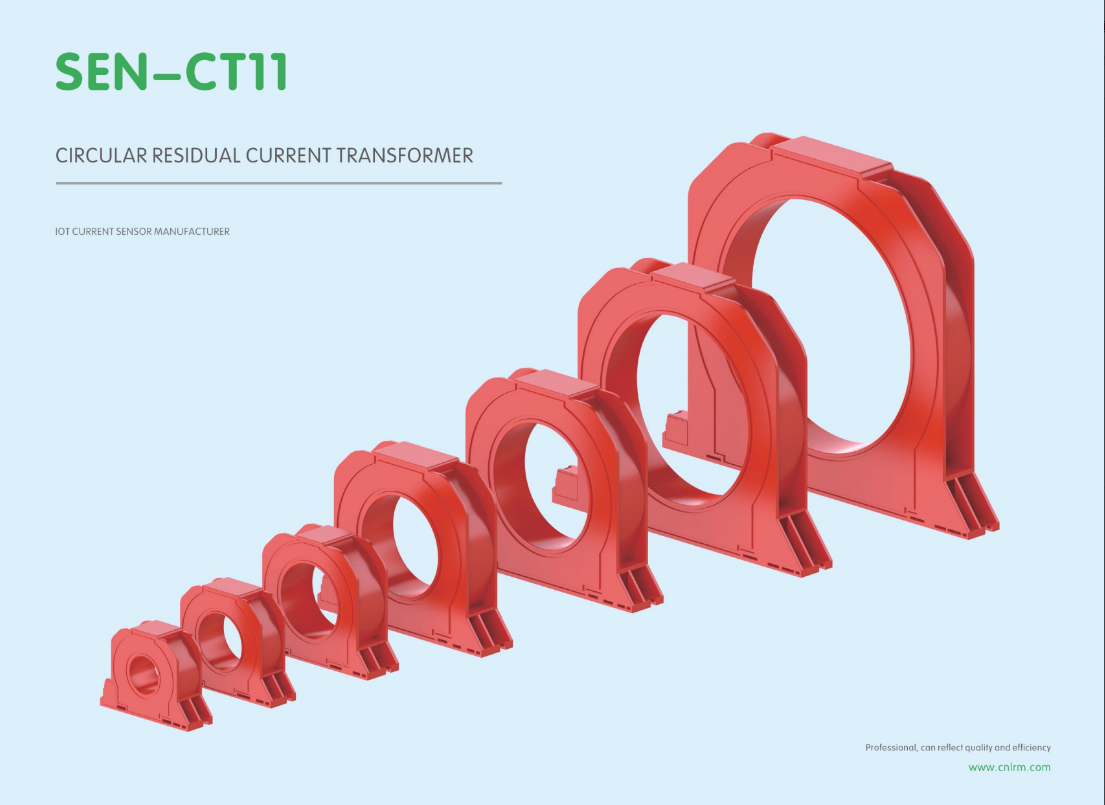
If you've ever sourced private label residual current transformers, you know the gap between 'good enough' and genuinely reliable can be wide. Xiasen has spent years narrowing that gap—combining engineering precision with the branding flexibility your customers expect. This post breaks down what actually matters when choosing a private label RCT partner: from magnetic core consistency and trip accuracy to custom housing, labeling, and compliance support. No fluff, just the practical insights you need before your next procurement decision.
When Generic Residual Current Transformers Put Your Brand at Risk
A batch of off-the-shelf residual current transformers can look flawless on a datasheet, but put them inside a real panel near busbars or variable-frequency drives and their magnetic cores start to drift. The result is rarely a clean failure. It’s a slow loss of sensitivity, an occasional nuisance trip at 3 a.m., or a protection relay that reads 28 mA when the actual leakage is 40. Your customer doesn’t see an anonymous component; they see your product misbehaving.
Brand damage rarely comes from the transformer that fails on the test bench. It comes from the one that passes every incoming inspection, then misbehaves months later in a building where temperature swings 30 degrees between day and night. A facility manager who resets a breaker three times in a week won’t remember the component vendor. They’ll remember the logo on your panel enclosure and the service call they had to make.
Application-matched residual current transformers can be tuned for burden, saturation point, and temperature compensation. That engineering margin is invisible in a spec sheet, but it changes how the device survives real electrical noise. Without it, you’re one field recall or quiet warranty thread away from having a distributor’s trust disappear without a single formal complaint.
Specifying Magnetizing Inductance for Reliable Trip Thresholds
Magnetizing inductance is not a parameter to leave as an afterthought when the goal is a trip threshold that behaves the same on a cold Monday morning as it does after a fault transient. In a current transformer, the magnetizing branch sits directly across the secondary winding, and any secondary voltage needed to push current through the relay burden must also drive that branch. If the magnetizing inductance is too low, the excitation current becomes a meaningful share of the total secondary current, which means the relay sees a diminished and distorted waveform. At the pick-up setting, that error can be the difference between a clean trip and a contact that chatters without ever asserting a solid trip signal.
A more dependable way to specify this is to tie the required magnetizing inductance to the minimum secondary voltage that must appear at the trip threshold. Start with the relay burden and the lowest primary current that should cause a trip, then calculate the secondary current and the voltage that must be developed across the burden plus any lead resistance. From that voltage, the magnetizing inductance must be high enough that the excitation current remains below the accuracy limit required by the relay—usually a few percent of rated secondary current. For a 5 A secondary CT with a 0.2 Ω total burden and a threshold of 1 A secondary, the relay needs about 0.2 V at 50 or 60 Hz; to keep excitation current under 5% of 1 A, the magnetizing inductance should not drop below roughly 12.7 mH at 50 Hz. This is not a universal constant, but it shows how quickly the number becomes a design input rather than a datasheet curiosity.
Field verification benefits from a direct check rather than trusting a nameplate value that may have been measured at a different voltage or frequency. Inject a known low-level current into the secondary with the primary open and measure the terminal voltage; the ratio of voltage to current slope gives the unsaturated magnetizing inductance. If the measured value is significantly below the specified minimum, the trip threshold will shift upward in practice, because the CT can no longer deliver the expected secondary current without excessive excitation loss. That kind of silent threshold drift is exactly what leads to nuisance failures during commissioning or, worse, a protection scheme that fails to clear a low-magnitude fault when it matters most.
Private Label Doesn't Mean Invisible: Marking, Housing, and Traceability
A private label product can disappear on a crowded shelf if its marking stops at a small, forgettable logo. Sharp manufacturers treat marking as a physical signature: embossed batch numbers, laser-etched QR codes, or a subtle pattern molded into the housing itself. These details don't just decorate the item; they give it a quiet authority that separates a deliberate product from an anonymous one. The housing, too, plays a bigger role than most buyers assume. A custom enclosure with thoughtful seam placement or a matte finish can make a generic circuit board or pump feel like a branded instrument, not a white-label afterthought.
Traceability is where private label work either earns trust or falls apart. Marking each unit with a unique serial, date code, and line identifier lets a retailer trace a single failed sensor back to its reel of components or its molding cavity. That kind of granular record shortens recall windows from months to days and keeps a quiet quality issue from becoming a public one. It also changes how distributors talk about the product: instead of apologizing for a no-name part, they can show a scan trail that proves exactly when and where it was built.
The combination of clear marking, intentional housing, and usable trace data turns an invisible private label item into something closer to a house brand with a memory. A technician who can scan a code, read a molded revision number, and see a clean, purposeful enclosure is far more likely to reorder than one handed a blank plastic box. Private label does not have to mean faceless; it just needs the same kind of physical and digital accountability that bigger brands often take for granted.
The Winding Tolerance That Separates Consistent Tripping From Nuisance Trips
In the world of electromagnetic circuit breakers, the winding isn't just a coil of copper—it's the muscle that decides when to act. Too tight a tolerance, and the breaker starts tripping on every minor inrush, turning a sturdy protection device into a hair-trigger nuisance. Too loose, and it yawns through genuine overloads until the wiring pays the price. The sweet spot lives in microns: a few turns more or less, a subtle shift in tension, and suddenly the difference between a dependable guard and a false alarm becomes painfully obvious.
What makes this tolerance so unforgiving is the way current behaves under real-world conditions. A motor starting up pulls five to eight times its running current for a fraction of a second. The winding must distinguish that burst from a sustained fault—and it does so by relying on precise magnetic saturation points. If the winding is wound even slightly off spec, the saturation curve skews. The magnetic field either saturates too early, which causes premature tripping on harmless spikes, or too late, allowing dangerous heat to build. Field technicians see this all the time: one breaker from the same batch holds steady through a compressor start, while another trips the moment a vacuum cleaner kicks on. That variance rarely traces back to a defective component—it traces back to a winding that wandered outside its designed window.
Getting the tolerance right isn't about chasing perfection for its own sake. It's about predictability. When every winding meets the same narrow band, the trip curve becomes a known quantity—something engineers can plan around and troubleshoot against. The breakers don't just work; they behave. And that consistency is what separates a system that trips when it should from one that trips when it shouldn't, leaving maintenance crews chasing phantom faults and operators losing trust in their protection scheme.
Balancing Cost Per Core With Long-Term Field Failure Rates
The conversation around processor pricing usually stops at the invoice. Buyers compare dollars per core across vendors and assume the cheaper part is the better deal. That assumption breaks down once field failure rates enter the picture. A lower price often reflects relaxed test coverage, skipped burn-in cycles, or wider acceptance limits on leakage and voltage. The savings show up immediately, but the problems surface months later as intermittent faults, silent data corruption, or hard failures. Each field return carries a cost that never appears on the original purchase order: labor for replacement, system downtime, and damage to customer trust. A silicon component that saves three dollars per socket but generates one extra service event per hundred units can easily erase the entire margin.
Manufacturers face the same tension from the supply side. Extended burn-in, high-temperature operating life testing, and tighter binning all improve long-term reliability but add direct cost to every core. Low-cost alternatives often trim these steps, accepting a higher early-life failure rate in exchange for a lower test cost. The result is not simply a worse part; it is a different risk profile. A 300 FIT increase may look negligible in a datasheet, but across 50,000 deployed units that translates into dozens of additional failures within the first year. The shape of the failure curve matters as much as the average. Parts with weak screening tend to show a steeper infant mortality drop-off, while well-screened parts shift the burden toward wear-out mechanisms that are easier to predict and schedule around.
The right balance depends on how much a field failure actually costs, not just the price per core on the invoice. A short-lived consumer device may tolerate a higher early failure rate if the warranty period is brief and the replacement is cheap. A data center or automotive system cannot absorb the same risk because every unplanned service event multiplies into lost revenue or safety exposure. The practical approach is to multiply the failure probability by the cost of a single field failure and add that expected expense to the upfront unit price. That arithmetic often reveals that the cheapest per-core option is not the least expensive over the product's useful life.
From Prototype to Production: Keeping Your Residual Current CT Supplier Honest
The transition from prototype to volume production often reveals a supplier's true colors. Prototype units may be hand-wound with premium cores and meticulous attention to detail, but once orders scale up, cost-cutting can creep in. A residual current CT that performed flawlessly in bench tests might suddenly exhibit inconsistent trip thresholds or poor linearity when produced in batches. That's why you need a supplier who doesn't just promise quality, but proves it with every shipment.
Start by locking down a detailed specification sheet that covers not just turns ratio and accuracy class, but also core material grade, winding tension, insulation resistance, and thermal stability. Then require batch-level test reports—not just a certificate of conformity, but actual measured values for each production lot. Periodic third-party audits or unannounced sample testing from your side can further deter any temptation to swap in cheaper magnetic steel or reduce winding counts. A supplier that resists such scrutiny is likely hiding something.
Long-term honesty also depends on how you structure the relationship. Avoid sole-sourcing without a backup plan, and make it clear that any deviation from agreed specs will trigger immediate containment and financial penalties. Share your end-application failure data with the supplier so they understand why a 2% shift in core permeability matters for GFCI response time. When both sides treat residual current CTs as safety-critical components rather than commodity parts, the path from prototype to production becomes far less risky.
FAQ
It typically covers more than just putting your logo on a standard unit. A proper program includes design review, customer-specific electrical specs, housing or terminal customization, labeling and packaging, test reports, and often compliance support. You should receive a product that looks and performs as if it were built in-house.
Off-the-shelf units come with fixed ratios, accuracy classes, and dimensions. With private label, you can set the turns ratio, burden, mounting geometry, secondary lead length, and even the magnetic core material. This allows the transformer to fit directly into your product without compromises or external adapters.
The strongest demand comes from EV charging stations, photovoltaic inverters, industrial motor controls, and building automation panels. These systems often need specific window sizes, tripping thresholds, or busbar mounting that generic parts cannot provide, plus a consistent brand appearance for field service teams.
Focus on rated residual operating current, accuracy class under real load conditions, maximum continuous primary current, insulation coordination, operating temperature range, and the required safety standard for your market. Do not overlook the response time if the transformer feeds a relay or trip unit.
Many established suppliers can arrange testing to UL, IEC, or EN standards and provide the necessary documentation. However, you need to clarify whether the certificate will list your company as the manufacturer of record or the supplier. This affects liability and market acceptance, so it should be agreed before tooling starts.
A frequent mistake is selecting a vendor based only on unit price. You should also evaluate their consistency between prototype and production, their ability to maintain core material supplies, whether they retain any design rights, and their minimum order quantities. A partner that disappears after the first batch will cost far more than a slightly higher initial quote.
If you can use an existing platform with only label and packaging changes, expect two to four weeks. Customizing the housing, connectors, or magnetic specs usually takes six to twelve weeks including sample verification. A fully new design with compliance testing can run three to six months, so plan that into your product timeline.
Yes, most serious suppliers offer either a stock sample with your branding or a pre-production sample built to your exact specifications. Some may charge for tooling or engineering time upfront, which is often credited against the first order. Always test the sample in your actual circuit and environment before signing off on production.
Conclusion
Choosing a private label residual current transformer is not simply about slapping your logo on a generic core. Off-the-shelf units often hide dangerous variations: a loosely specified magnetizing inductance can shift trip thresholds enough to either fail to disconnect under fault conditions or cause repeated nuisance tripping. Even when the datasheet looks acceptable, small winding tolerance drift between batches turns a product that tripped reliably in the lab into one that misbehaves in the field. For any brand that depends on predictable residual current detection, these are not minor quality issues—they are direct threats to your reputation and your customers' safety.
That is why private label work demands tighter control than most buyers expect. Housing, marking, and traceability must be treated as part of the design, not an afterthought, so every unit can be traced back to a specific production lot and winding setup. Cost per core matters, but chasing the lowest quote usually means accepting cores that will fail early and generate expensive field returns. The practical path is to hold your supplier to measurable limits from the first prototype through full production: verify magnetizing inductance, winding tolerance, and long-term reliability data instead of trusting a verbal promise. A consistent residual current transformer is built on those checks, not on brand visibility alone.
Contact Us
Contact Person: Liu Mengyang
Email: [email protected]
Tel/WhatsApp: 8618727589233
Website: https://www.cnlrm.com/en/