

Polyurethane Flame Retardant Dealer Explains Key Factors for Fire-Resistant Polyurethane Products
2026-11-16
Ask any contractor who’s watched a fire test go sideways: flame-retardant polyurethane is never just a spec-sheet promise. In an industry where compliance can mask weak real-world performance, Fortune dealers cut through the noise. Here’s what actually separates a reliably fire-resistant polyurethane product from one that only passes on paper.
The Hidden Chemistry Behind a Slow Burn
Most people think a slow burn is just about pacing—waiting longer for the explosion. But the real engine runs on chemistry that never announces itself. It's in the way two characters mirror each other's silences, how a glance held a second too long rewires the scene's tension. That unspoken exchange isn't filler; it's a reaction building heat below the surface.
The trick is in the small asymmetries. One person leans in while the other deflects with a joke. A shared task forces proximity, but the dialogue stays on the task, not the touch. These mismatched rhythms create a charge that feels earned precisely because nothing is said. The audience becomes the third reactant, filling gaps with their own longing.
Eventually the payoff arrives, but it lands differently than a sudden spark. The slow burn's climax isn't a detonation—it's a solvent finally turning clear. All those withheld moments dissolve into a single, inevitable shift. The chemistry was never hidden in the plot; it was hidden in the restraint, and that's why the afterglow lasts far longer than any flash.
Why Some 'Fire-Resistant' Foams Still Fail Field Tests
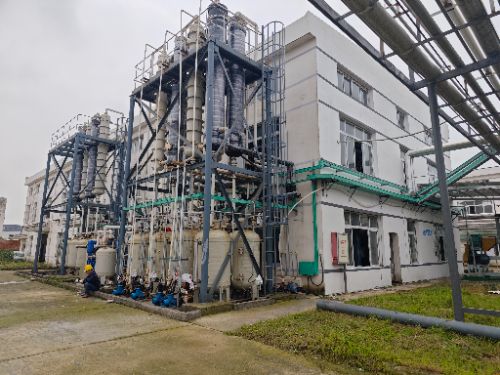
Lab certifications tell one story, but real fire conditions write a different one. The gap often comes down to installation details that never show up in a test report. Foam applied slightly thinner than specified, missed corners around pipe penetrations, or uneven substrate preparation can silently compromise the system. In a controlled furnace test, the sample is perfectly mounted and cured. On a construction site, dust, moisture, or rushed schedules leave microscopic voids that become highways for heat.
Another overlooked factor is long-term physical stress. Foam that passes a fresh fire test may crack or delaminate after months of thermal cycling, vibration from nearby equipment, or building settlement. Intumescent coatings rely on a tight bond to expand and form char; once that bond weakens, the protective layer peels away under fire exposure. Field failures often trace back to hairline fissures that no one noticed during a visual walkthrough.
Finally, product substitutions and repairs play a bigger role than many assume. A contractor might use a compatible but lower-grade foam for touch-ups, or mix two brands because a spec item was out of stock. Even small patches of the wrong chemistry can create weak zones. During an actual blaze, fire finds those inconsistencies quickly. The result is a system that looked compliant on paper but behaves nothing like the tested assembly.
Additive Choices That Change the Smoke Profile
The smoke profile shifts dramatically with certain additives, and few understand how deeply they alter the experience. Glycerin, for instance, can smooth out harsh edges but often mutes the more volatile aromatics that give a blend its character. Meanwhile, a touch of natural fruit pectin can introduce a subtle sweetness that lingers on the palate without overpowering the base leaf.
Some producers lean on calcium carbonate to reduce tongue bite, yet this same compound can flatten the mid-range notes that serious smokers seek. Others experiment with food-grade acids like citric or malic, which brighten the top end but may shorten the finish. The key is balancing these choices so the additive enhances rather than masks the original leaf's identity.
At the far end, herbal extracts such as licorice root or chamomile are making quiet inroads. They don't just change the taste; they shift the perceived temperature and mouthfeel, creating a smoke that feels rounder and less aggressive. It's a subtle art, one where a fraction of a percent can mean the difference between a blend that sings and one that simply smolders.
Balancing Density, Cost, and Real-World Ignition Sources
Finding the sweet spot between battery energy density and production cost has never been a straightforward engineering exercise. High-nickel cathodes and silicon-heavy anodes can push watt-hours per kilogram to impressive levels, but they often demand exotic materials, tighter manufacturing tolerances, and more aggressive thermal management. The challenge intensifies when you step out of the lab and into actual vehicles or grid storage, where real-world ignition sources—overheated connectors, punctured cells from road debris, or faulty wiring—don't care about your spec sheet. Achieving a workable balance means accepting that the densest cell isn't always the smartest choice; sometimes a slightly lower specific energy with a more forgiving chemistry and simpler cooling loop ends up being both cheaper and safer over the product's lifespan.
Cost pressure adds another layer to this balancing act. Automakers and storage developers constantly weigh the bill of materials against the probability and severity of thermal events. A pack built around ultra-high-density cells may look great in marketing, but if it requires redundant fire barriers, dedicated liquid cooling circuits, and expensive cell-level fusing to keep real-world ignition sources at bay, the total system cost can erase the initial energy advantage. More mature chemistries with lower energy density often allow for passive cooling, simpler module designs, and wider tolerance for manufacturing variation—all of which shave dollars per kilowatt-hour off the final installation. In many applications, especially commercial fleets and stationary storage, that trade-off makes perfect sense.
Designers also have to account for the messy reality of daily operation. Real-world ignition sources are rarely the dramatic single-cell thermal runaway shown in safety videos; they're usually cumulative: a corroded busbar here, a vibrating wire harness there, a slightly over-torqued bolt that damages an isolation layer. A pack optimized purely for density and initial cost may leave no margin for that kind of wear. Building in slightly more spacing between cells, choosing thicker busbars, or adding a conformal coating can seem like wasted volume and expense—until they prevent a short circuit or arc that would otherwise cascade. The best designs treat safety margin not as a penalty on density or cost, but as a necessary feature for surviving the unglamorous, real-world conditions where ignition sources actually occur.
What Dealers Wish OEMs Knew About Accelerated Aging
Accelerated aging has its place in the design cycle, but dealers know it rarely tells the whole story. A component can survive a thousand hours in a controlled chamber and still crack after a single winter of salt spray and potholes. The combined stress of heat, vibration, and chemical exposure is what actually breaks parts, and that combination is hard to reproduce on a test bench.
Dealers wish OEMs would treat accelerated aging as a baseline rather than a final verdict. When a part passes the test but fails in the field, the dealership absorbs the customer's anger and the warranty claim. More open channels for reporting early failures—and actually feeding that data back into the test protocols—would save everyone time and money.
The most useful change would be inviting dealers into the validation process before a design is locked. Nobody sees how owners actually use vehicles or equipment more clearly than the people fixing them every day. That practical feedback, combined with accelerated aging data, would lead to parts that hold up under real conditions, not just under lab conditions.
Reading Between the Lines of a UL 94 Rating
A UL 94 rating tells you how a plastic behaves in a specific small-scale flame test, but the fine print matters just as much as the letter grade. A V-0 on a 3 mm plaque doesn't automatically mean the same material will pass at 1.5 mm or in a thin-walled enclosure. The rating is tied to the exact thickness tested, and materials often drop from V-0 to V-2 or even HB as sections get thinner.
Beyond thickness, additives like colorants, fillers, and plasticizers can shift performance without changing the base resin's published rating. A black part may behave differently from a natural one, and regrind content or processing conditions can introduce variability. The small, vertical burn test also ignores real-world factors like oxygen availability, part orientation, and proximity to other components.
Smart engineers treat the UL 94 rating as a starting filter, not a final guarantee. When a design pushes the limits of a material's listed rating, it's worth running internal flame tests on the actual part geometry, in the final color, at production thickness. That's where the real story hides.
FAQ
It usually comes down to the specific flame retardant package, how evenly it's dispersed through the foam, and whether the product has been tested under realistic fire conditions rather than just small-scale lab checks. A dealer who works with these materials daily will look at the full datasheet, not just the marketing bullet points.
For rigid foams, halogenated phosphate esters are common because they balance thermal stability with char formation. However, some manufacturers are shifting toward phosphorus-based non-halogen options to meet stricter smoke toxicity rules, so the best choice depends on the end-use environment and local codes.
Density plays a surprising role. Higher-density foam generally contains more material per unit volume, which can slow flame spread and reduce dripping, but it won't compensate for a poor flame retardant system. You need both the right density and the right additive loading.
Ask for results aligned with ASTM E84 for surface burning, UL 94 for small-scale flammability, and possibly NFPA 286 or similar room-corner tests for products used in occupied spaces. If a supplier can't provide third-party test reports, treat the fire-resistance claims with skepticism.
Yes, and this is becoming more common. Non-halogen approaches include expandable graphite, intumescent coatings, and phosphorus-nitrogen synergists. They often produce less smoke and fewer toxic byproducts, though they may require higher loadings or slightly different processing conditions.
The biggest mistake is focusing only on the flame spread index while ignoring smoke development, which is often the real killer in fires. Another is buying based on a single additive name without checking whether the formulation was actually tested as a complete system.
Keep them away from ignition sources and high heat, certainly, but also protect them from prolonged UV exposure and moisture, which can degrade some flame retardant additives over time. Sealed, climate-controlled storage is ideal, and don't stack products in ways that compress or damage their surface.
Ask about the specific test reports for the exact product, not a similar one. Request details on the flame retardant loading, whether the formulation has changed in the last year, and what happens to fire performance after aging or exposure to humidity. A knowledgeable dealer will welcome these questions rather than deflect them.
Conclusion
Flame retardancy in polyurethane is rarely about a single magic additive; it's a negotiated compromise between chemistry, processing, and real-world fire scenarios. Dealers often see formulations that pass a small-scale lab test but fail spectacularly in the field because the chosen retardant only works under narrow heating rates or degrades the foam's cell structure. For instance, halogenated additives can delay ignition, but they shift the smoke profile toward denser, more toxic particulates—something a UL 94 V-0 rating won't tell you. Smart suppliers increasingly push for phosphorus-nitrogen synergies or mineral fillers that promote char formation, but these alter density and cost curves, forcing OEMs to decide whether they're optimizing for a controlled vertical burn or an actual wastebasket fire.
Accelerated aging data is another sore point: a foam that passes a flame test after two weeks at 70°C can lose half its retardant efficacy after six months of humidity cycling, because the additive migrates or hydrolyzes. Dealers recommend reading beyond the UL 94 rating—checking for afterglow time, dripping behavior, and whether the test was done on a skived surface versus a molded skin. In practice, fire-resistant polyurethane isn't a product you buy off a spec sheet; it's a dynamic material whose performance hinges on additive compatibility, foam density, and the specific ignition source your application will actually face.
Contact Us
Contact Person: WANG SIHAI
Email: [email protected]
Tel/WhatsApp: +86-13815295628
Website: https://www.fortunechemtech.com/index_en.html