

Good Quality Slip Ring: How to Choose the Right One for Reliable Performance
2026-07-28
When it comes to ensuring uninterrupted signal or power transmission in rotating systems, the quality of a slip ring can make or break your equipment's performance. But not all slip rings are created equal—choosing the right one demands a keen eye for design, materials, and application-specific requirements. In this guide, we'll walk you through the critical factors that define a good quality slip ring and how to avoid common pitfalls. As a leader in the field, MOFLON has seen firsthand how the right component can elevate reliability, and we're here to share that expertise with you.
Beyond the Spec Sheet: What Truly Separates a Top-Tier Slip Ring
Numbers and materials lists can only tell you so much. A top-tier slip ring distinguishes itself through the invisible architecture of its design—how precisely the contact geometries are engineered to maintain consistent pressure across millions of rotations, the way thermal expansion coefficients are balanced so that performance stays stable from frigid cold to scorching heat, or the subtle damping of micro-vibrations that would otherwise degrade signal integrity in sensitive instruments. These aren't highlights you'll find in a glossy brochure, but they are the difference between a component that merely functions and one that becomes the trusted backbone of your system for a decade or more.
Beyond raw durability, there's an almost artisanal aspect to how top manufacturers manage the transition from static to rotating interfaces. It's in the seamless integration of fiber-optic rotary joints with traditional electrical channels without introducing cross-talk, or the ability to pass gigabit Ethernet signals while simultaneously handling high-current power lines—all within a footprint that doesn't force compromises on surrounding equipment. The real craftsmanship shows up in edge cases: emergency stop scenarios where the slip ring must survive sudden torque spikes, or applications where it's exposed to washdown chemicals and still needs to deliver noise-free signals to delicate sensors.
Perhaps the most telling separator is how these units behave over time. A high-quality slip ring doesn't just start strong; it maintains its original electrical noise floor year after year, with minimal change in contact resistance. This kind of longevity comes from an obsessive focus on tribology and surface science that rarely makes it into marketing materials—think proprietary brush alloys run against precisely grooved rings, paired with lubrication strategies that are actively metered rather than simply slathered on during assembly. When you look past the spec sheet, you begin to see a world of nuanced engineering decisions that collectively define what makes the best units worth their premium, long after the purchase order is forgotten.
The Hidden Costs of Overlooking Your Rotational Speed and Current Needs
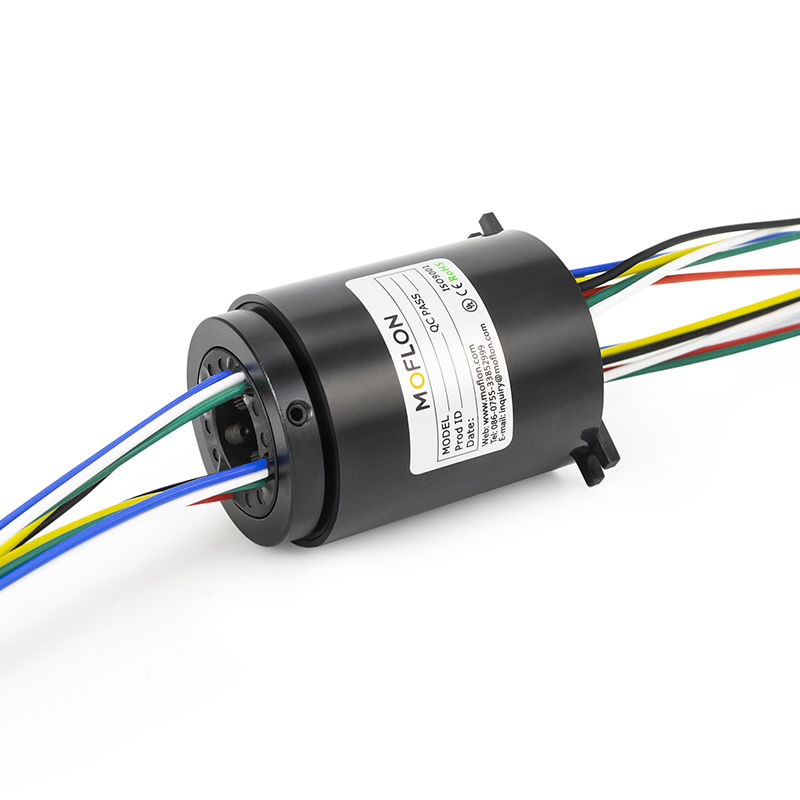
When rotational speed and current requirements are brushed aside, equipment starts operating outside its comfort zone. Motors strain under mismatched loads, generating excessive heat that degrades windings far earlier than expected. This thermal stress doesn’t just shorten component life—it quietly chips away at efficiency, turning what should be a predictable operating cost into a mounting expense that catches teams off guard.
The ripple effects extend well beyond the motor itself. Inconsistent speeds lead to erratic process outcomes, forcing rework or scrapping of materials that don’t meet spec. Meanwhile, oversized or undersized drives compensating for the mismatch draw needlessly high currents, inflating energy bills month after month. These are the kind of losses that never make a headline but steadily erode margins, hidden in plain sight until someone connects the dots.
Perhaps the most insidious toll is on uptime. The accumulated strain invites nuisance trips and unplanned downtime, disrupting production schedules and eroding trust in the system’s reliability. By the time the root cause is traced back to a neglected speed-current profile, the business has already paid in overtime labor, missed deadlines, and a tarnished reputation for consistency—all avoidable with a more thoughtful upfront match.
How a Slip Ring’s Internal Design Can Make or Break Signal Integrity
Inside every slip ring, the physical arrangement of brushes and rings directly shapes how cleanly signals pass through. A design that prioritizes minimal contact resistance and consistent brush pressure helps maintain signal amplitude and prevents intermittent drops. When those elements are poorly matched or misaligned, even minor vibrations can introduce micro-interruptions that corrupt data streams.
Beyond mechanical contact, the choice of materials and shielding determines how well the assembly rejects electromagnetic interference. Conductive rings that are spaced too closely or lack proper insulation allow crosstalk between adjacent channels, while unshielded paths act like antennas, picking up motor noise or RF from nearby equipment. Careful impedance matching throughout the rotational interface keeps high-frequency signals stable instead of reflecting energy back toward the source.
Finally, the internal geometry influences how heat and debris affect long-term reliability. Slip rings with open structures may collect dust that wears down contacts over time, gradually increasing resistance until signals degrade. Sealed designs with smooth, self-cleaning contact surfaces and adequate heat dissipation pathways preserve signal fidelity across millions of revolutions, effectively making the difference between a robust data link and a failing one.
Why Most Premature Failures Start with the Wrong Choice of Contacts and Housing
It’s easy to underestimate the role that contacts and housing play in the long-term reliability of electrical systems. But the truth is, many early breakdowns can be traced back to a simple mismatch—using contacts with insufficient plating thickness for corrosive environments, or housing materials that warp under moderate heat cycles. When these components aren’t specified with the actual operating conditions in mind, degradation starts silently, often long before any visible sign of trouble appears.
The problem gets worse when cost-cutting drives decisions. A contact with a thin flash of gold might look fine on paper, but in a high-vibration setting, fretting corrosion can eat through that layer in months, leading to intermittent connections that are maddening to diagnose. Similarly, a housing made from standard nylon instead of a high-temperature variant might soften and deform, allowing moisture ingress that accelerates corrosion. These aren’t dramatic failures—they’re slow, creeping ones that eventually trigger shutdowns at the worst possible time.
Another overlooked aspect is the mechanical relationship between the contact and the housing. Even the best-designed contact can’t save a system if the housing doesn’t keep it properly seated. Tolerance stack-ups, creep over time, and mismatched thermal expansion rates can all undermine the connection, creating micro-fretting and resistance spikes. By the time the failure is obvious, the root cause is buried under layers of symptoms, and the simple truth remains: it all started with a choice that didn’t account for how these two components work together in the real world.
When the Environment Fights Back: Sealing, Corrosion, and Temperature Realities
In the real world, industrial systems don’t just sit in calm isolation—they’re plunged into aggressive environments that push back hard. Sealing elements meant to contain pressure or exclude contaminants can degrade in unexpected ways, turning a reliable barrier into a slow leak. Corrosion doesn’t wait for a convenient maintenance window; it creeps along metal surfaces, often hidden beneath insulation or gaskets, quietly eating away structural integrity. Meanwhile, temperature swings expand materials, crack brittle seals, and accelerate chemical reactions, testing every assumption made during design.
Consider a pump seal exposed to intermittent hot condensate and cold washdown cycles. The elastomer faces thermal shock, losing elasticity and developing micro-cracks that invite fluid penetration. Simultaneously, acidic process fluids condense on cooler metal parts, triggering pitting corrosion in stainless steels that were supposed to resist it. These failures intertwine: a corroded shaft surface rips apart a seal lip, and the resulting leak drenches nearby components, sparking a wider corrosion cell. It’s not a single failure mode but a cascade, driven by the environment’s relentless feedback.
Addressing this requires ditching idealized lab conditions and embracing the messy synergies of the field. Material selection must account for worst-case temperature excursions, not just averages. Coatings and surface treatments become critical armor against chemical attacks, while design geometry influences how condensation drains or heat dissipates. Monitoring sealing integrity and corrosion rates in real time—through embedded sensors or regular inspections—shifts the approach from reactive to predictive, allowing operators to intervene before the environment wins another battle.
Decoding Manufacturer Claims: Questions That Reveal Actual Reliability
When a manufacturer touts their product's durability with phrases like "built to last" or "engineered for endurance," the real test lies in the specific questions you can ask that cut through the marketing fluff. For example, instead of accepting broad statements, inquire about the exact testing protocols: How many continuous hours did this motor run during accelerated life testing? What specific failure modes were observed, and at what frequency? Genuine reliability claims are backed by transparent data—mean time between failures (MTBF) figures, documented test conditions, and a clear explanation of how the product handles edge-case stressors rather than just ideal scenarios.
Another powerful way to decode claims is to probe the warranty's fine print and the company's history with similar components. A long warranty period might look reassuring, but what does it actually cover? Does it include labor for replacement, or are there hidden exclusions for wear-and-tear that typically occur beyond a certain threshold? Also, ask about field failure rates: manufacturers that are serious about reliability track real-world performance and can share failure rate trends over the product's lifecycle. If they can't provide this information or hesitate to discuss failure modes openly, it often signals that the reliability story is more marketing than engineering.
Finally, look beyond the spec sheet to the supply chain and design philosophy. Reliability isn't just about a single component; it emerges from the entire ecosystem—supplier quality controls, tolerances in manufacturing, and how the design anticipates human error. A question like "What design margins did you incorporate for voltage spikes or temperature extremes?" reveals whether the engineering team prioritized robustness over cost-cutting. Similarly, understanding if they perform ongoing reliability growth testing on production units—not just prototypes—can separate the truly dependable products from those that only perform well in a lab. The best manufacturers welcome these deep-dive questions because their claims are rooted in verifiable practice, not just persuasive language.
FAQ
A slip ring is an electromechanical device that transfers power and signals from a stationary structure to a rotating one. It enables continuous rotation without tangled wires. Quality matters immensely because even minor signal dropouts or power fluctuations can lead to data loss, equipment shutdowns, or safety hazards in applications like wind turbines, medical imaging, or robotics.
Start by listing every circuit that will pass through the slip ring—power, signals, data—and their individual current requirements. Include a reasonable safety margin, usually 20–30% above maximum expected current. Voltage rating should comfortably exceed your operating voltage to handle transients. Matching these specs precisely avoids overheating and premature failure.
Gold-on-gold contacts are excellent for low-current signals because of their corrosion resistance and low electrical noise. For higher power circuits, silver-graphite or silver-alloy brushes against coin silver rings offer good conductivity and durability. The key is balancing conductivity, wear resistance, and environmental susceptibility for your specific operating conditions.
The IP rating tells you how well the slip ring resists dust and moisture. In dusty factories or outdoor settings, a higher IP rating, like IP65 or IP67, prevents contaminants from degrading the internal contacts. Proper sealing ensures consistent performance and extends service intervals, but it may also affect heat dissipation, so consider both the environment and duty cycle.
Rotational speed influences brush heating, vibration, and mechanical stability. Standard slip rings handle tens to a few hundred RPM. For high-speed applications like test stands or centrifuges, you need specially balanced rotors, low-inertia brush systems, and possibly liquid metal or fiber optic rotary joints. Always check the manufacturer’s maximum speed rating and derate as needed for continuous operation.
A catalog slip ring works well if your requirements—circuit count, size, speed, environment—align with common offerings. Custom designs become worthwhile when you need non-standard form factors, integrated fluid passages, very high circuit counts, or specific signal shielding. Custom solutions often save space and reduce assembly complexity, but lead times and cost are higher, so evaluate holistically.
Conclusion
The best slip rings aren’t just about matching specs—they’re about how well the unit handles real-world stress. A top-tier model goes beyond electrical ratings and boasts an internal design that preserves signal integrity even at high rotational speeds. When contacts and housing materials aren’t chosen with care, tiny arcs and wear particles degrade performance long before any datasheet would suggest. Look for manufacturers who openly discuss brush composition, plating thickness, and contact geometry—these details separate equipment that lasts from equipment that merely meets the brochure numbers.
Many hidden costs trace back to overlooked rotational speed and current demands. Exceeding a slip ring’s actual dynamic limits can cause microscopic welding or overheating, leading to intermittent failures that are expensive to diagnose. Equally critical is the operating environment: sealing against moisture, corrosion resistance in harsh atmospheres, and wide temperature tolerance aren’t optional extras—they’re what keep a unit running year after year. When assessing manufacturers, press beyond glossy claims. Ask concrete questions about lifespan testing protocols, bearing ratings, and how they verify channel-to-channel isolation under load. A reliable slip ring isn’t sold; it’s engineered, and the right choice reveals itself in those uncomfortable technical discussions.
Contact Us
Contact Person: Xiangpin Li
Email: [email protected]
Tel/WhatsApp: 86 186 1706 8578
Website: https://www.moflon.com