
Flange Penstock Gate Factory: Your Trusted Source for Durable Water Control Solutions
2026-07-03
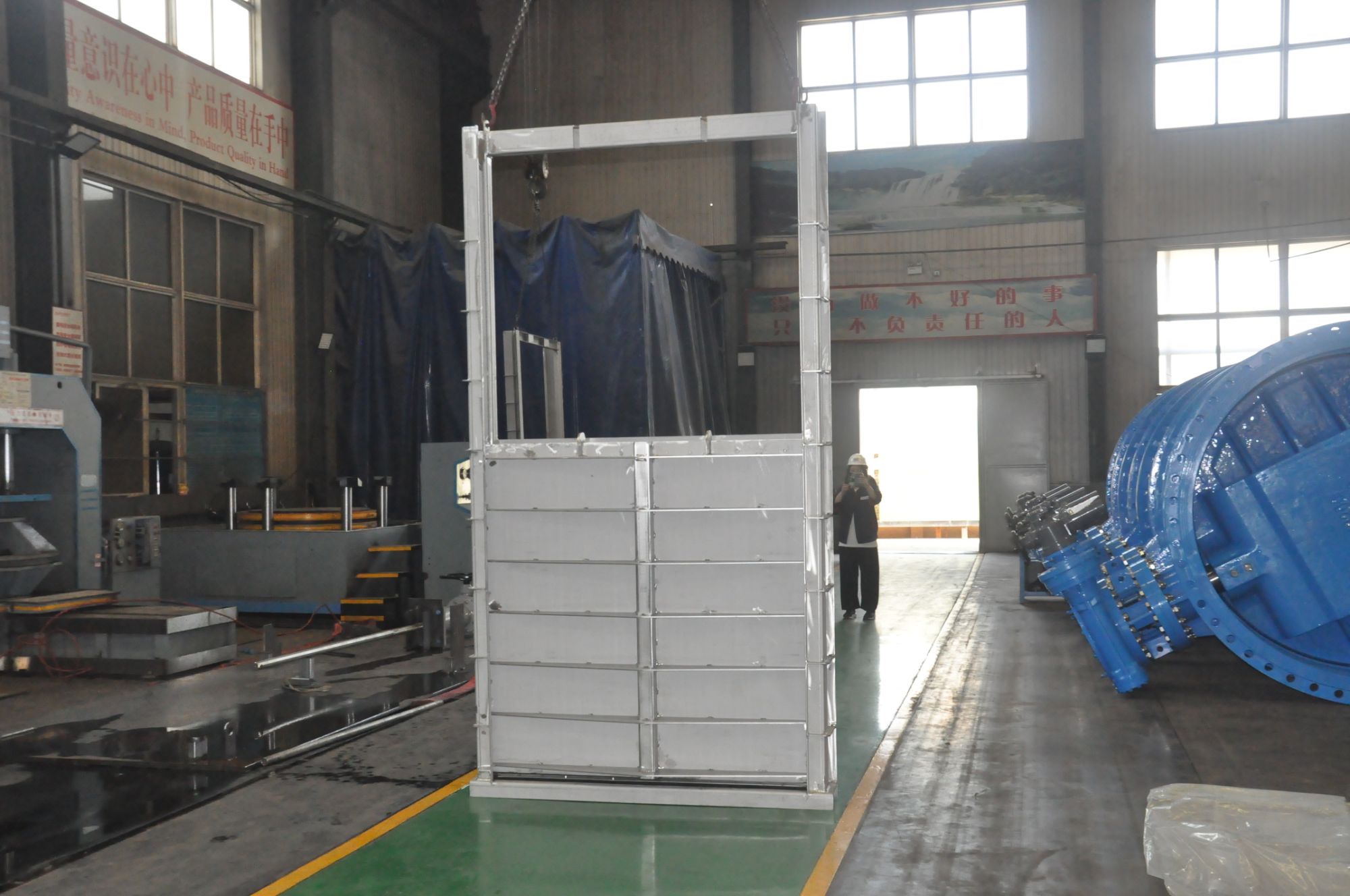
Water control demands more than just a gate—it demands a solution that lasts. At THT, our flange penstock gates are forged for resilience, trusted by engineers who refuse to compromise. Step inside our factory and see how we turn precision engineering into your most reliable line of defense against the unexpected.
Built to Last: The Engineering Behind Our Flanged Penstocks
Precision begins long before the first weld. We spec our steel plates from mills that maintain tight control over carbon equivalency, ensuring consistent weldability across every batch. For the flanges themselves, we've moved beyond simple raised-face designs—our proprietary double-containment groove incorporates a self-centering geometry that distributes gasket compression evenly, even in installations where pipe alignment isn't perfect. It's a small detail, but it means the difference between a joint that holds for decades and one that becomes a maintenance headache after the first pressure cycle.
Welding isn't just a process here; it's a discipline. Every circumferential seam on our penstock sections undergoes submerged arc welding with heat input strictly monitored to avoid grain growth in the heat-affected zone. For the flange-to-pipe connections, we use a full-penetration J-bevel that eliminates hidden root cracks—a common failure point in cheaper fabricated units. Post-weld, each assembly is subjected to a localized stress-relief heat treatment that realigns the crystalline structure without distorting the machined flange faces. The result? A monolithic joint that behaves like a single forging under load.
But the real proof comes in testing. We don't just run standard hydrostatic checks. Every finished penstock is pressurized to 150% of its rated head—and held there while our engineers map strain gauges across the flange planes. We've seen what happens when you skip this step: elastic deformation that relaxes bolt tension over time, leading to weepage. By capturing real-time deflection data, we validate not just today's seal, but the expected creep performance twenty years down the line. It's an extra day in the schedule, but it's why our penstocks earn their place in projects where access for repair means draining a reservoir.
Custom Solutions for Complex Water Management Challenges
Every water system presents its own set of hurdles—aging infrastructure, shifting regulations, unpredictable climate patterns, or the need to balance industrial demands with ecological sensitivity. Off-the-shelf approaches often fall short when dealing with these layered realities. That’s where deep diagnostic work and adaptive engineering come in, shaping strategies that don’t just patch symptoms but build lasting resilience into the system.
A tailored method begins by listening closely to the operational context, not just the technical specs. It might involve blending modular treatment technologies with real-time data analytics to adjust for seasonal fluctuations, or redesigning conveyance networks to reduce energy footprints without compromising capacity. The goal is always the same: a fit-for-purpose design that serves both immediate needs and long-term objectives, without unnecessary complexity.
Beyond the physical components, smart water management includes the people and processes around the infrastructure. Training local teams, integrating maintenance-friendly controls, and building in scalability from day one ensure that solutions stay effective as conditions change. This kind of partnership-driven thinking turns a one-time project into an enduring asset, capable of weathering the unknowns ahead.
Materials Matter: Why We Choose Premium-Grade Metals
In our workshop, the feel of a component in your hands tells you more than any spec sheet ever could. That’s why we reach for premium-grade metals with a near-obsessive attention to grain structure and purity. It’s not just about strength on paper—it’s about how a alloy responds to heat, how it ages under load, and whether it will still hold its character after a decade of hard use. We’ve learned that compromising on metallurgy early on always comes back as a quiet failure in the field, so we choose materials that let our designs live up to their promise without excuses.
The difference between ordinary stock and the metals we select often starts in the melt. By specifying tighter tolerances on inclusions and trace elements, we keep fatigue cracks from getting the tiny head starts that plague mass-produced counterparts. This matters most in parts that see fluctuating stress—the kind you don’t think about until they’re still running smoothly years later. Our suppliers know we’ll send a batch back if the mill certification doesn’t match the performance we expect, because good enough simply isn’t when reliability is built into the grain.
Beyond laboratory numbers, working with top-tier alloys changes the entire manufacturing conversation. Premium stainless steels don’t fight the cutting tool as unpredictably, and high-integrity aluminum forgings yield a surface finish that’s more than cosmetic—it resists corrosion from the inside out. This consistency lets us push geometry closer to theoretical ideals without the fear of hidden flaws. In the end, the choice of metal is never just a line item; it’s the baseline for everything we trust our products to do, and we’d rather build that foundation with materials that earn their keep from day one.
From Design to Delivery: Our Manufacturing Journey
Every product begins with a spark—an idea sketched on a napkin or debated over coffee. Our design phase isn’t about chasing trends; it’s about solving real problems. We pull apart assumptions and test them against lived experience, inviting input from engineers, end users, and even the people who’ll one day assemble the final piece. The goal isn’t just a blueprint. It’s a shared vision that balances form, function, and feasibility—long before anything hits the production floor.
That vision then travels to a space where precision matters more than speed. Our prototyping workshop is a playground of iteration, where CNC machines hum beside hand-filed adjustments. We build, break, and rebuild—sometimes a dozen times over—until every tolerance feels right. Materials are chosen not just for durability, but for how they age in the hands of a user. The process is deliberately slow because we’ve learned that patience at this stage prevents compromises later. When a prototype finally earns a collective nod, it’s not perfect—but it’s honest.
Then comes the shift from craft to consistency. Scaling up isn’t a matter of pressing a button; it’s a choreography of people and machines learning to move together. Our production line was shaped by the very makers who stood at workstations, refining jigs and workflows until the process felt less like assembly and more like choreography. Quality isn’t inspected in at the end—it’s built into each station, checked in real time by those who know the product intimately. And when a finished unit leaves our loading dock, it carries more than utility. It carries the fingerprints of everyone who argued over that first sketch, refined a curve, or paused a line just to make sure something was right. Delivery isn’t just a handoff—it’s the final beat in a longer rhythm.
Trusted by Projects Worldwide: Real-World Applications
From smart city infrastructure in Singapore to agricultural drones in Kenya, our technology has been deployed in over 40 countries across six continents. One standout implementation comes from a logistics firm in Germany that cut delivery times by 30% after integrating our route optimization toolkit. They process 2 million parcels daily, and the accuracy jump was measurable within the first week.
In healthcare, a network of clinics in rural India uses our diagnostic support system to screen for diabetic retinopathy. Without on-site specialists, nurses capture retinal images and receive AI-assisted grading in under a minute—something that used to require days of manual review. The false-positive rate dropped by half compared to their previous triage method.
Smaller teams benefit too. A startup in Brazil built a voice-controlled home automation assistant for the elderly using our open-source speech models, reaching 50,000 active users within six months. They didn’t have a machine learning team in-house; they simply adapted our pre-trained pipeline and focused on localization for Portuguese dialects.
Beyond the Product: Comprehensive Support and Service
A great product solves a problem, but lasting value comes from what surrounds it. Every interaction, every question, every unexpected hurdle—these moments define the real relationship between a tool and its user. That’s why we’ve woven a fabric of support that extends far beyond a manual or a help desk. It’s about being present when plans shift, when ambitions grow, and when things simply don’t go as expected.
Our teams bring more than technical know-how; they bring context. From tailored onboarding that respects your pace, to proactive health checks that catch hiccups before they escalate, we treat your success as a shared mission. And when you need a human voice, you’ll find one that listens first and solves fast—no scripted loops, no endless transfers. Real expertise, delivered with a genuine desire to see you thrive.
The result is a quiet confidence that lets you focus on what you do best. Whether you're scaling operations, entering new markets, or simply refining a daily workflow, you know there’s a partner in your corner. That’s the difference between buying a product and gaining a foundation. It’s not just support; it’s reassurance, built into every layer of our relationship.
FAQ
Our gates are built with heavy-duty cast iron or stainless steel, depending on the application. We focus on reinforced flange connections and corrosion-resistant coatings, so they handle constant water exposure and pressure changes without warping or leaking over time.
Absolutely. We regularly adapt designs for non-standard channel sizes, special sealing needs, or integration with existing infrastructure. Just share your specs and we’ll work out a tailored solution that fits right in.
We use precision-machined wedges and robust sealing systems that maintain tight shut-off even when back pressure spikes. Each gate is pressure-tested at our facility before shipping, so you know exactly how it’ll perform on site.
Most often we use ductile iron for the body and bronze for the seating surfaces, because that combination gives excellent strength and natural corrosion resistance. For aggressive water conditions, we can switch to 316 stainless steel or add protective epoxy finishes.
Yes, we can send an experienced technician to assist with the first few units or complex installations. We also provide detailed drawings and step-by-step manuals so your crew can handle straightforward setups confidently.
It depends on the size and complexity, but for standard designs we usually deliver in 8 to 12 weeks. If you’re on a tight schedule, let us know early and we’ll shuffle production slots to meet your deadline.
Every gate goes through dimensional checks, weld inspections, and a full hydraulic test before it leaves the shop. We also document each step, so you can trace materials and test results back to the specific order if needed.
Conclusion
At Flange Penstock Gate Factory, we engineer water control solutions that stand the test of time. Our flanged penstocks are built with precision, incorporating robust design principles and premium-grade metals that resist corrosion and wear. We understand that every project comes with unique challenges, which is why we offer fully customizable options tailored to specific hydraulic conditions and operational requirements. From initial site assessment to detailed design, our team works closely with clients to ensure each gate delivers reliable performance under the most demanding conditions. The engineering behind our penstocks focuses on longevity, featuring reinforced sealing systems and rugged construction that minimize maintenance needs and maximize operational lifespan.
Our commitment extends far beyond the manufacturing floor. With decades of experience in water infrastructure, we have supplied penstocks for dams, treatment plants, and flood control projects across the globe, earning trust through proven reliability. We oversee every stage of production—from material sourcing and precision fabrication to rigorous testing—ensuring each unit meets stringent international standards. But our partnership doesn’t end at delivery; we provide comprehensive after-sales support, including on-site installation guidance, technical training, and responsive maintenance services. This holistic approach positions us not just as a supplier, but as a dedicated partner in achieving long-term water management success.
Contact Us
Contact Person: Su Zhang
Email: [email protected]
Tel/WhatsApp: +86-25219206
Website: https://www.tht-valve.com/