

Discover the Top Ground Mount Solar Racking Suppliers in China
2026-08-05
China has emerged as a global hub for solar energy innovation, and ground mount racking systems are at the heart of large-scale solar installations. Choosing the right supplier can make or break your project’s efficiency and long-term reliability. In this guide, we spotlight the most trusted names in the industry, including Topfencesolar, a standout for its engineering excellence and custom solutions. Read on to discover which partners can help you harvest the sun’s power with confidence.
Behind the Scenes: Why China Powers the Global Ground Mount Market
Walk through any major solar installation site these days, and the racks holding those panels probably trace back to a handful of factories in Jiangsu or Zhejiang. It’s not just about low labor costs anymore. Chinese manufacturers have quietly built a supply chain so vertically integrated that from raw aluminum extrusion to the final bolt, everything happens within a day’s drive. That speed lets them respond to sudden demand shifts—like when Europe scrambled for solar after the energy crisis—while Western competitors struggled with six-month lead times.
There’s also an engineering pragmatism that gets overlooked. While European firms focused on sleek aesthetics or niche certifications, Chinese teams optimized for the messy realities of installers: brackets that adjust for uneven terrain without extra tools, coatings that survive coastal salt spray for a decade, and mounting systems designed to squeeze the last watt out of bifacial panels. Field failures get dissected openly on WeChat groups, and design tweaks hit production lines within weeks, not quarters.
Finally, the financial ecosystem can’t be ignored. Local governments compete to host ground mount factories, offering tax breaks and pre-built infrastructure. That, paired with domestic banks that understand the solar hardware cycle, means a new 5 GW line can be approved and funded in the time it takes a European developer to finalize a land lease. The result is a relentless improvement in cost-per-watt—not by cutting corners, but by turning solar mounting systems into a high-volume, low-margin product that few others can replicate at scale.
Cutting Through the Noise: How to Spot a Supplier You Can Trust
The first sign of a dependable supplier isn't always a glossy website or a packed product catalog. It's how fast and honestly they reply when you ask a straightforward question. A partner worth trusting won't dodge direct inquiries about lead times, material sourcing, or past production hiccups. They'll offer clear, concise answers—sometimes even volunteering trade-offs you hadn't considered—before you ever sign a contract.
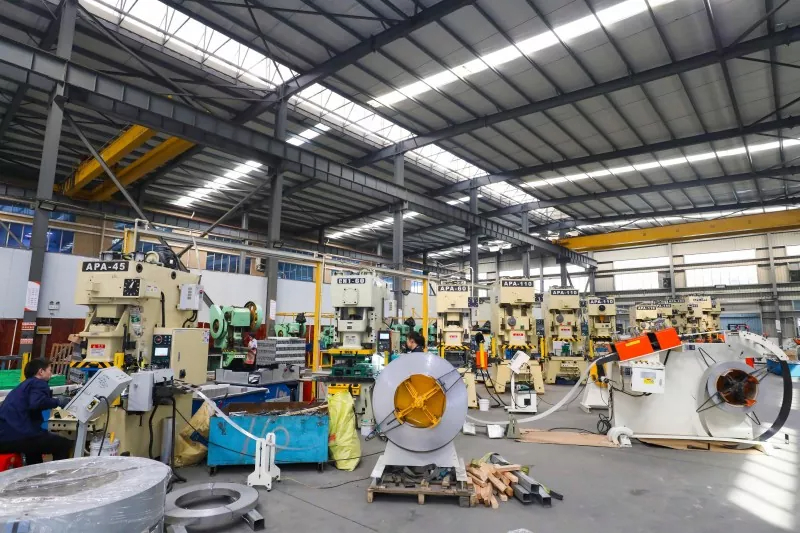
Beyond words, look for evidence of consistent delivery in their track record. Ask for references from clients similar to your size, not just big names that might have gotten special treatment. A short video call walking through their facility often reveals more than a dozen audit reports: the organization of the floor, how staff interact, even the condition of packaging materials in the background. Trust gets built in those unscripted details.
Finally, move past the pitch deck and into a trial run. Place a manageable order—perhaps with a slightly custom twist—and watch how they handle the unexpected. A reliable supplier treats small buyers with the same attentiveness as large accounts, communicates proactively about delays, and owns mistakes without deflection. That real-world consistency, not a polished sales narrative, is what separates a lasting partnership from a transaction you'll regret.
The Names You’ll Keep Hearing in Ground Mount Manufacturing
In the ground mount manufacturing space, a handful of names have become impossible to ignore. Companies like Array Technologies, NEXTracker, and Soltec consistently surface in conversations about utility-scale solar tracking systems. Their dominance isn't just about market share—it's about the way they've shaped expectations around structural resilience, installation speed, and long-term reliability in harsh environments. You'll hear their names in project planning meetings, on construction sites, and in supply chain discussions, often as the benchmark against which newer entrants are measured.
Beyond the tracking giants, structural specialists like Schletter, RBI Solar, and SunModo keep cropping up, particularly in fixed-tilt and challenging terrain projects. These firms have carved out reputations for adapting quickly to unique soil conditions and permitting requirements, making them go-to partners for EPCs navigating tricky geotechnical reports. Their engineering teams are frequently mentioned alongside innovative foundation solutions, from ground screws to ballasted systems, that reduce concrete use and speed up deployment.
Lately, the chatter has expanded to include vertically integrated manufacturers and newer players from Asia and Europe, such as Arctech and PV Hardware. Their aggressive pricing and growing local content capabilities are reshaping procurement strategies, and you'll often hear their names in the same breath as discussions about supply chain diversification. Whether it's a 500-megawatt tracker order or a custom fixed-tilt design for a landfill site, these are the companies whose names get scribbled on whiteboards during the early stages of project development.
Game-Changing Designs Reshaping Solar Foundations
Solar foundations are undergoing a radical transformation, moving beyond the heavy concrete blocks that once defined the industry. Designers now harness geodesic principles and biomimicry to create structures that distribute weight more efficiently, minimizing ground penetration while maximizing stability. These innovations allow installations on slopes, floodplains, and even floating platforms, breaking free from the flat-land constraint that limited earlier projects. The shift isn't just about strength—it's about adaptability, with modular components that click together like industrial-scale building blocks, slashing installation time and enabling rapid reconfiguration as site conditions evolve.
Material science has unlocked a new palette of possibilities, replacing rust-prone steel and resource-heavy concrete with compressed earth blocks, recycled polymer matrices, and self-healing composites. Some foundations now embed sensors that monitor stress, moisture, and seismic activity in real time, turning passive supports into active data networks. One standout approach uses helical piles shaped like spiral roots, which twist into the ground with minimal vibration—perfect for sensitive habitats. These aren't your grandfather's footings; they're living systems that blend load-bearing function with ecological integration, often doubling as microhabitats for local fauna.
The most disruptive shift comes from rethinking the very role of a foundation. Instead of merely anchoring hardware, emerging designs integrate energy storage, wiring conduits, and even vegetative layers that boost panel efficiency through evaporative cooling. Some prototypes dispense with ground contact altogether, using tensioned cable nets suspended between masts to float panels above the terrain—ideal for agricultural dual-use scenarios where crops thrive beneath the dappled light. By merging structural engineering with ecological and energy systems, these foundations transform from hidden footnotes into central players in the solar story, redefining what it means to build on the land.
Walking the Tightrope: Where Affordability Meets Reliability
Balancing cost and dependability feels less like a strategic choice and more like a daily high-wire act. Every decision pulls you toward cheaper options, yet the hidden price of failure looms large. You can't simply slash budgets and hope for the best—because when systems break, the fallout isn't just financial, it's a blow to the trust you've built.
The sweet spot isn't about picking one over the other. It's about rethinking what reliability really costs. Sometimes, a modest upfront investment in robust infrastructure pays for itself ten times over by sidestepping outages. Other times, clever redundancy and smart monitoring let you run lean without sacrificing peace of mind. The trick is knowing which corner can be cut and which one can't.
In the end, walking this tightrope demands more than spreadsheets and SLAs. It calls for a mindset that treats affordability and reliability as partners, not rivals. The organisations that get it right don't just survive the balancing act—they turn it into an edge, delivering steady service without bleeding dry.
Peeking Over the Horizon: What’s Next for Ground Mounts
Ground-mount systems are quietly undergoing a transformation that promises to reshape solar deployment in the coming decade. While rooftop arrays have grabbed headlines, the next leap in ground mounts lies in smarter, lighter, and more adaptive designs. Engineers are moving away from heavy concrete foundations toward earth-friendly anchoring methods like ground screws and ballasted trays that preserve soil integrity and slash installation time. These innovations aren’t just incremental—they’re opening up marginal lands, from uneven terrain to capped landfills, making solar farms viable where they never were before.
Materials science is also rewriting the playbook. High-strength steel alloys and corrosion-resistant coatings are extending the lifespan of mounting structures well beyond typical panel warranties. At the same time, integrated mechatronics are creeping into the field—think actuators that subtly tweak panel tilt in response to real-time weather and sun-path data. Such dynamic adjustments can squeeze out double-digit gains in energy yield without the bulk of traditional trackers. And because these systems are often pre-assembled or snap-lock, they’re reducing labor costs in an industry that’s chronically short on skilled installers.
Perhaps the most intriguing shift is the blurring line between mounting hardware and grid services. Early trials show bi-facial panel mounts being coupled with on-site storage and smart inverters, creating self-contained power blocks that can island during outages or sell ancillary services to the grid. Meanwhile, carbon-conscious developers are starting to demand mounts with embodied-carbon labels, pushing manufacturers to source recycled aluminum and adopt low-CO₂ supply chains. None of this is science fiction—it’s already emerging in pilot projects across Europe and Australia, hinting that the humble ground mount is about to become a strategic piece of the clean-energy puzzle.
FAQ
Some well-established names include Arctech Solar, Antaisolar, and Versolsolar. These companies have strong track records in large-scale utility projects and offer a range of fixed-tilt and tracking systems.
They combine competitive pricing with rapid production scalability. Many have invested heavily in automated manufacturing lines and in-house R&D, enabling them to deliver customized solutions quickly while meeting international certifications like UL and IEC.
Look beyond price alone. Evaluate their project portfolio, financial stability, and after-sales support. A supplier with experience in similar terrain and climate conditions, and a local service team or partner, will reduce project risk significantly.
Yes, leading manufacturers have matured their single-axis tracker technology over the past decade. They now offer robust designs with smart backtracking algorithms and wind stow features, proven in gigawatt-scale installations worldwide.
Reputable suppliers adhere to ISO 9001 and have products tested to UL 3703, IEC 62817 (for trackers), and various wind tunnel protocols. Many also provide bankability reports from independent labs to satisfy project financiers.
Absolutely. Companies like Arctech and Antaisolar have engineered solutions for mountainous regions, deserts, and coastal areas. They often perform detailed site-specific geotechnical and structural analysis before finalizing the design.
Lead times vary but generally range from 4 to 8 weeks for standard products, depending on order size and customization. Having a local inventory or logistics hub can shorten this, which some major suppliers offer through overseas warehouses.
Conclusion
Behind China’s dominance in the ground mount market lies a deep-rooted ecosystem of advanced manufacturing, cost efficiency, and logistical prowess—factors that have made the country the go-to source for solar racking solutions worldwide. But with such scale comes the challenge of separating dependable partners from the crowd. True credibility is revealed not in glossy brochures but through rigorous scrutiny of engineering depth, material certifications, and a track record of successful installations across diverse terrains. For project developers, this due diligence is non-negotiable, and it often leads to a shortlist of names that consistently deliver—firms whose components withstand decades of weather extremes and whose engineering teams co-create solutions rather than just pushing products.
Meanwhile, the very foundations of ground mount systems are being rethought. Innovations like tilt-adjustable structures, ultra-light yet resilient alloys, and quick-fit anchoring systems are slashing installation times and long-term maintenance headaches. The industry is walking a tightrope between upfront affordability and lasting reliability, a balance that Chinese suppliers are addressing through value-engineered designs that don’t cut corners on corrosion resistance or structural integrity. Looking ahead, the integration of smart tracking, drone-based site analysis, and modular, factory-preassembled units points to a future where ground mounts are smarter, faster to deploy, and more adaptive to project needs—solidifying China’s role not just as a manufacturing hub but as an innovation engine for the global solar ground mount landscape.
Contact Us
Contact Person: Nancy
Email: [email protected]
Tel/WhatsApp: +86-13365923720
Website: https://www.topfencesolar.com/