

Chinese Fanfold Cardboard Essential Guide for Packaging and Crafts
2026-09-22
Chances are you’ve handled plenty of cardboard, but have you met its smarter, space-saving cousin? Chinese fanfold cardboard flips the script on traditional sheets—pre-creased, endlessly flexible, and ready to shape itself to whatever you’re packing or crafting. From protecting fragile shipments to building DIY projects that actually hold up, this material quietly outperforms the flat sheets gathering dust in your workshop. At ShiTeng Packaging, we’ve watched it solve problems customers didn’t know they had. In this guide, you’ll learn why fanfold cardboard deserves a permanent spot on your supply shelf, how to choose the right grade, and a few craft tricks that’ll make you wonder why you didn’t switch sooner.
How Fanfold Cardboard Compares to Rigid Sheets in Daily Use
When you grab a piece of fanfold cardboard for a quick shipping job, the first thing you notice is how easily it bends and folds along the pre-scored lines. Rigid sheets, by contrast, fight back unless you score them yourself. That might sound like a small difference, but in a busy packing area it changes everything. You can wrap oddly shaped items, tuck edges around corners, and build a snug cushion without reaching for a knife or a straightedge. Rigid sheets tend to work best when you need a flat, stiff surface—like a backing board or a divider that stays put. Fanfold, on the other hand, gives you flexibility on demand, which means less wasted material when you're dealing with mixed box sizes.
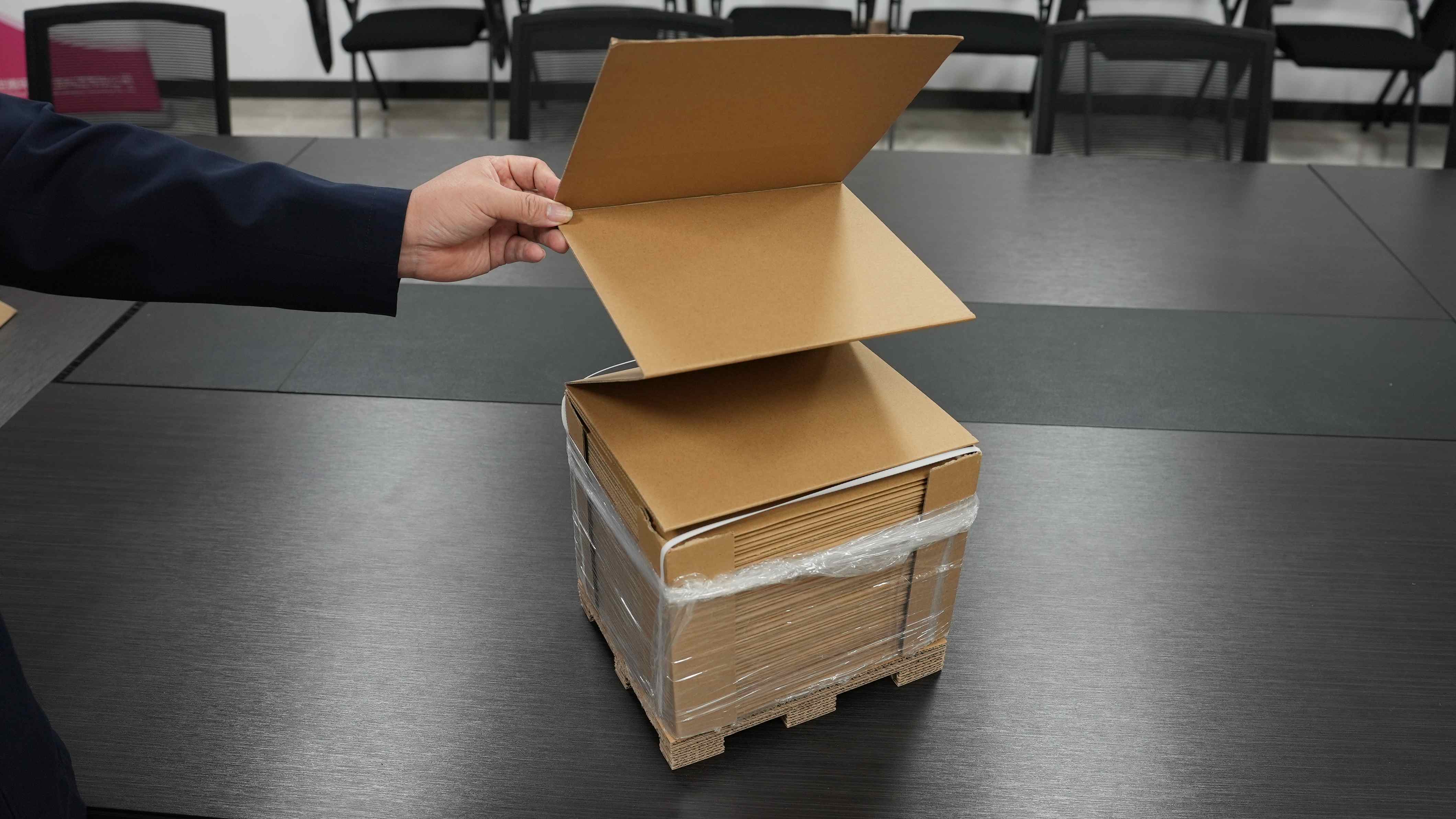
Storage is another place where the two types part ways. Fanfold cardboard arrives in a neat, compressed stack that unfolds like an accordion, so it tucks into a corner or against a wall without hogging floor space. Rigid sheets are flat and fixed, which often means you need a dedicated rack or a large horizontal shelf to keep them from warping. If you're working in a smaller shop or a home office, that extra footprint can feel like a real tax. And because fanfold is lighter to move around, pulling a few sheets for a job doesn't turn into a minor workout. You're more likely to grab what you need and get on with the actual task, instead of dreading the supply closet.
Durability in daily use isn't about raw thickness—it's about how the material survives being handled, bumped, and occasionally stepped on. Rigid sheets hold their shape under a stack of books or as a temporary shelf liner, but they can crack if you try to fold them. Fanfold cardboard is designed to be creased repeatedly along the same lines, so it shrugs off the kind of folding and unfolding that would wreck a rigid sheet. For everyday jobs like separating layers in a box, wrapping a fragile item quickly, or making a quick improvised funnel, fanfold tends to feel more forgiving. That said, if you need something that will stay perfectly flat over time, a rigid sheet still earns its place. The real comparison comes down to whether you value adaptability or stiffness more in the moment.
Choosing Flute Profiles and Wall Thickness for Real Jobs
Selecting the right flute profile for a router bit goes beyond simply counting cutting edges. The actual job conditions—material density, chip evacuation needs, and surface finish expectations—drive the choice. For dense hardwoods or abrasive composites, a single or double flute with a deeper gullet helps prevent chip packing and heat buildup, while a triple or multi-flute design often delivers a cleaner edge on thin laminates or plastics where tear-out is a concern. Matching the helix angle to the material's brittleness also matters: a steep helix shears fibers cleanly, whereas a lower angle works better for soft, gummy materials that might clog aggressive spirals.
Wall thickness in the tool body is rarely talked about in hobbyist guides, yet it directly influences vibration control and tool life on real jobs. Thin-walled bits can flex under heavy side loads, producing chatter marks on deep profiles or when cutting dense stock at high feed rates. Conversely, overly thick walls reduce chip space and increase cutting resistance. The practical approach is to balance core strength with flute depth: for profiling thick hardwoods, choose a bit with a slightly thicker core and fewer flutes to maintain rigidity without sacrificing chip clearance, while for delicate edge work on plywood or MDF, a thinner wall with more flutes can provide a smoother finish.
Real-world testing often reveals that the "ideal" flute profile and wall thickness depend on your specific machine's horsepower and the clamping setup. A bit that works beautifully on a heavy industrial shaper might stall or burn on a lightweight CNC router. Start with a mid-range option—say, a two-flute bit with moderate wall thickness—and run a small test cut. Listen for harmonics, watch for chip ejection, and inspect the edge for burning or fuzzing. Adjust from there; sometimes switching from an up-cut to a down-cut or compression profile solves more issues than changing wall thickness alone.
Packaging Workflows Where Fanfold Saves Time and Space
Switching to fanfold labels removes the constant reloading that eats into packaging shifts. A single tall stack keeps printers fed for hours, so operators stay at the sealing or labeling station instead of walking back and forth to swap rolls. That uninterrupted flow is especially visible on lines running smaller cartons or polybags, where roll changes used to happen two or three times per shift.
The space side is just as practical. Fanfold stacks sit upright in a narrow tray or hang from a dispenser, taking up a fraction of the floor footprint that multiple spare rolls require. Warehouses with tight packing benches or mobile carts end up with more room for boxes, tape, and order paperwork, without sacrificing label capacity.
Another quiet advantage shows up in changeover. Because the stack folds flat, you can store more label formats in the same cabinet and switch between SKU runs without hunting for the right roll size. It turns a messy, time-draining corner of the packing area into a neat, single-stack workflow.
Craft Projects That Use Fanfold Offcuts Without Waste
Fanfold offcuts often end up in the bin because their thin, pleated edges seem too awkward for anything except the recycling pile. Yet with a little patience, those zigzag strips become surprisingly useful for small paper crafts. One simple project is a set of origami-style gift boxes—just score along the fold lines, snip away the uneven ends, and you have pre-creased panels that hold their shape without extra glue. The ridges add texture, so a plain kraft offcut turns into a tactile little container for jewelry or loose change.
For something more decorative, try weaving offcuts into a colorful coaster or mat. Cut the fanfold into narrow ribbons, then over-and-under them on a cardboard loom made from another scrap. Because the paper is already folded, the finished weave has a springy, almost fabric-like quality that flat paper can't match. It’s a low-stakes way to practice pattern-making, and you can mix shades from different print jobs to create a patchwork effect that looks intentional rather than leftover.
If you’re into bookbinding or journaling, fanfold offcuts make excellent accordion-page inserts. Trim them to a uniform width, then glue the ends onto the inside cover of a notebook. The natural fold structure lets pages expand outward without tearing, and you can tuck photos, ticket stubs, or pressed flowers between the pleats. Even the offcut’s imperfections—slight misalignments from the cutting machine—give the final piece a handmade charm that store-bought paper lacks.
Storage Habits That Keep Large Boards Flat and Clean
Flat storage starts with the rack itself. Build or buy a horizontal unit with supports every 18 to 24 inches, not just at the ends, because long boards sag in the middle when left unsupported. Place the heaviest sheets at the bottom and use thin, clean wood strips as spacers so air moves between layers. If you only have wall space, lean boards at a slight angle against a full back panel, never against a few narrow rails, and check every couple of weeks for bowing.
Dust and trapped moisture do more damage than most people realize. Keep boards off bare concrete floors and cover the stack with a canvas drop cloth rather than plastic sheeting, which can sweat and hold humidity. A quick wipe with a dry microfiber cloth before stacking removes grit that would otherwise scratch the surface. In damp basements or garages, add a small desiccant pack near the stack and swap it out monthly.
Finally, treat the stack like a working inventory. Label the exposed edge of each board with painter's tape and the thickness or material, so you can pull what you need without shifting the whole pile. Rotate older boards to the top and avoid sliding one sheet across another when loading or unloading. Lift the board, set it down flat, and you will notice fewer dents, edge chips, and mystery stains.
Questions to Ask Suppliers Before Ordering Fanfold Stock
Before placing an order, get granular about the paper itself. Ask the supplier for exact basis weight, caliper, ply count, and whether the sheet is uncoated, matte-coated, or glossy. Fanfold stock can range from lightweight 15# register bond to heavy 100# tag, and that single variable changes how your printer's tractor feed and printhead behave. Request a physical sample swatch book rather than just a PDF spec sheet—run it through your actual equipment if possible, because nominal specs rarely tell you how the paper will curl, absorb ink, or sit in the input tray.
Next, pin down dimensions, perforation, and hole punching at the proofing stage. Suppliers can often customize fold length, overall width, and the spacing of tractor-feed holes, but their default tolerances may be looser than your job requires. Ask what deviation they allow on fold accuracy—half a millimeter across a 12-inch run can cause stacking problems. Also confirm perforation type: micro-perf, standard perf, or no perf, and whether the tear strength is balanced for both machine feeding and end-user separation. Too strong and your operators will fight the snap; too weak and pages separate mid-print.
Finally, ask about consistency over time and how they package for shipment. A sample roll or ream may look perfect, but batch-to-batch variation in caliper or moisture content will show up as jams or poor toner adhesion three orders later. Ask the supplier how they control that variation—do they test every run, and will they hold a specific lot for reorders? Get clear on minimum order quantity, lead time, and carton configuration (how many sheets per carton, pallet weight, and whether boxes are moisture-sealed). Then ask about their damage claim process: if a truckload arrives with crushed corners or water-stained edges, you want to know who pays for the reprint, not just the paper.
FAQ
Chinese fanfold cardboard is a continuous, pre-scored corrugated sheet that folds back and forth like an accordion. Unlike flat sheets that you have to score by hand, this material arrives with even creases already pressed in, so you can tear off exactly the panel size you need. Most Chinese mills make it from recycled paper with a lower flute height than heavy shipping boxes, which keeps it light and easy to handle while still offering decent cushioning.
It leans toward lightweight to medium-duty uses. The flutes are usually fine or micro, so it won't replace a double-wall box for machinery or dense metal parts. For wrapping glassware, filling voids, layering between ceramics, or making custom inserts, it works well. If you need to ship something over about 20 kilograms, you'd be better off combining it with a rigid outer carton or switching to a heavier board.
You'll typically see thicknesses from 1.5 mm up to 5 mm, with 2 mm and 3 mm being the sweet spot for crafts and general wrapping. Sheet widths often run from 800 mm to 1600 mm, and lengths are sold by the roll or stack, sometimes 50 or 100 meters per bundle. Some suppliers also offer custom scoring intervals, like every 300 mm or 600 mm, so you can snap off uniform panels without measuring.
Use a sharp utility knife and a metal straightedge for long cuts, and score the face side first with light pressure. Then fold along your cut line and run the blade through the back side. If you're working along the pre-scored folds, just bend the panel back and forth a couple of times and it'll separate cleanly. Avoid using scissors for long runs because they crush the flutes and leave a wavy edge.
Yes, but the surface is kraft paper, so it's thirsty. Acrylic paint and spray paint adhere well once you give it a light sanding or a coat of gesso. For gluing, white PVA or hot glue both work; hot glue sets faster but can create lumps under thin paper. If you want to print on it, stick to screen printing or simple stamping, because inkjet printing often soaks in and looks blurry unless you seal the surface first.
People use it to make modular shelving, drawer dividers, geometric wall art, and even cosplay armor prototypes. Because the folds are already even, you can build collapsible storage cubes or accordion-style display stands without measuring a single line. It also works as a base for paper mache, a painting surface for large murals, or a protective layer under rugs during renovation work.
Keep it flat or standing upright against a wall, never leaning at an angle for weeks, because that will set a permanent curve. Store it in a dry place, since high humidity makes the kraft paper swell and the flutes soften. If you buy a large stack, put a flat board on top and a light weight to keep everything pressed. Avoid placing it directly on concrete floors, which can wick moisture into the edges.
Most Chinese fanfold cardboard is already made from 100% recycled fibre, often from old corrugated containers collected locally. If you want extra assurance, ask for a mill certificate showing post-consumer content or FSC chain-of-custody. Some factories also produce a water-based starch adhesive version with no wax or plastic coating, which makes the whole sheet compostable in a home pile after you shred it.
Conclusion
Chinese fanfold cardboard earns its keep the moment you stop treating it as a cheaper stand-in for rigid sheets. The z-fold format lets one stack replace a pile of single boards, which alone changes how a cramped packing table feels. For daily use, the question isn't whether it matches rigid board strength—it's about picking the right flute and wall thickness. A single-wall B-flute handles most box inserts and void fill with less bulk, while double-wall BC-flute takes over when corners need real crush resistance. Ordering a few mixed profiles is smarter than committing to one thickness for every job. The folding pattern also means you can tear off exactly what a label, divider, or layer pad needs without trimming waste. That's the first real workflow win: less cutting, fewer offcuts, and a cleaner station before the tape gun even comes out.
Offcuts from fanfold board don't have to end up in the baler. Short strips become project templates, drawer dividers, paint shields, or test pieces for craft cutting machines. Because the board stores flat in a fanfold stack, you avoid the warped corners and curled edges that plague loose sheets leaned against a wall. Keep stacks on a pallet, off concrete, with a cover sheet on top, and they'll stay flat and clean for weeks. Before ordering, ask suppliers how many sheets per bundle, what flute profiles they run, and whether they can cut to a custom width. Also confirm whether the fanfold is scored at regular intervals or meant to be cut freely. Getting those details right means the cardboard shows up ready for real jobs—not just as a generic brown stack in the corner.
Contact Us
Contact Person: Mr. Ge Man
Email: [email protected]
Tel/WhatsApp: 8613710506492
Website: https://www.shitengzx.com