
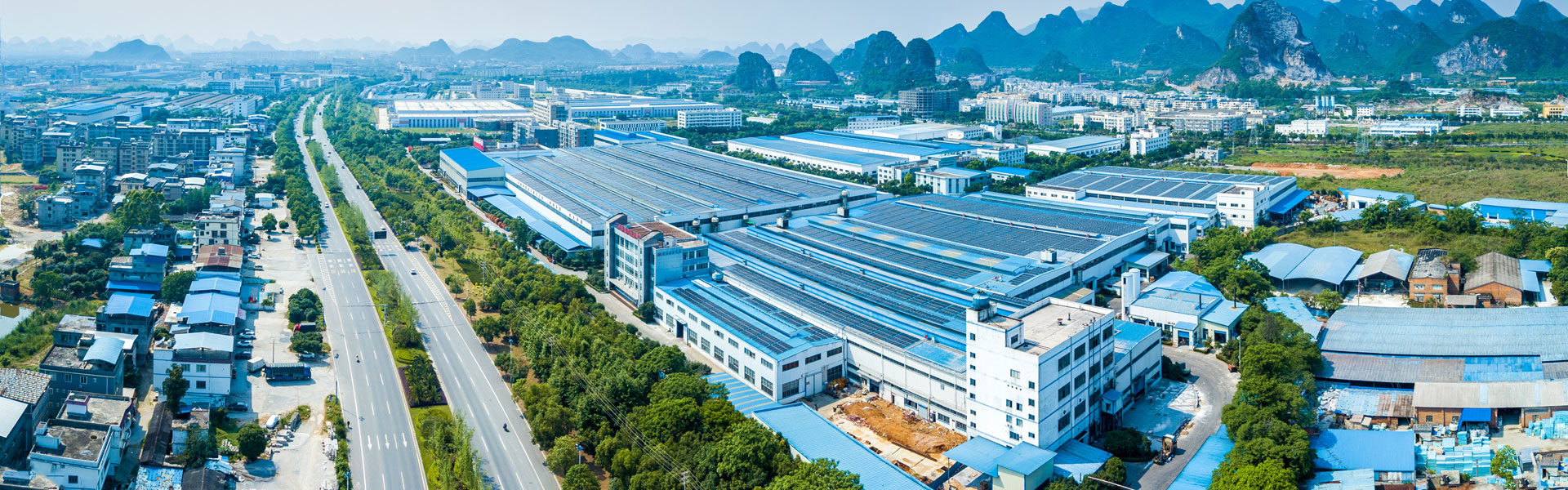
China's Concrete Laser Screed Factories: Driving Precision in Global Construction
2026-06-20
As global construction demands flatter, stronger floors, China's concrete laser screed factories have emerged as pivotal players. These facilities ship advanced machinery worldwide, yet few know the innovation happening inside them. From high-speed leveling to pinpoint accuracy, brands like Dynamic are rewriting the rules of efficiency. What makes these Chinese factories the new backbone of precision flooring? The answer lies in a blend of technology and scale that's reshaping job sites everywhere.
How China’s Laser Screeds Turn Rough Concrete into Flawless Surfaces
Chinese manufacturers have redefined concrete leveling by integrating high-precision laser control with rugged, job-site-ready designs. Unlike manual screeding that leaves low spots and ridges, these machines use a rotating laser transmitter to establish a continuous elevation benchmark across the slab. Onboard receivers constantly adjust the screed head’s height and tilt, responding to changes in grade in real time. This allows operators to pour whole floors in a single pass, hitting tolerances within a millimeter or two regardless of the base conditions.
The process begins with the laser screed’s self-leveling system projecting a 360-degree beam over the pour area. A mast-mounted sensor captures the signal and relays corrections to hydraulic rams that raise or lower the auger and scraper. As the machine advances, vibrations consolidate the fresh concrete while the screed plate irons the surface. The result is a dense, smooth slab with minimal imperfections. Even in large industrial halls with expansive, fast-track schedules, the technique drastically cuts the need for rework and reduces labor costs compared to traditional rod-and-bull-float methods.
What sets many Chinese-built laser screeds apart is their adaptation to diverse site conditions and operator skill levels. Engineers have simplified calibration routines and added rugged frames that withstand dusty, high-impact environments common in emerging markets. Some models now offer assisted steering and dynamic slope control, letting less experienced crews produce floors that meet strict flatness standards such as FF/FL numbers demanded by automated warehousing. By merging practical toughness with sensing precision, these machines have become a quiet force behind the rapid construction of logistics centers, factories, and commercial pavements worldwide.
The Secret Behind World-Record Warehouse Floors: Chinese Laser Screed Technology
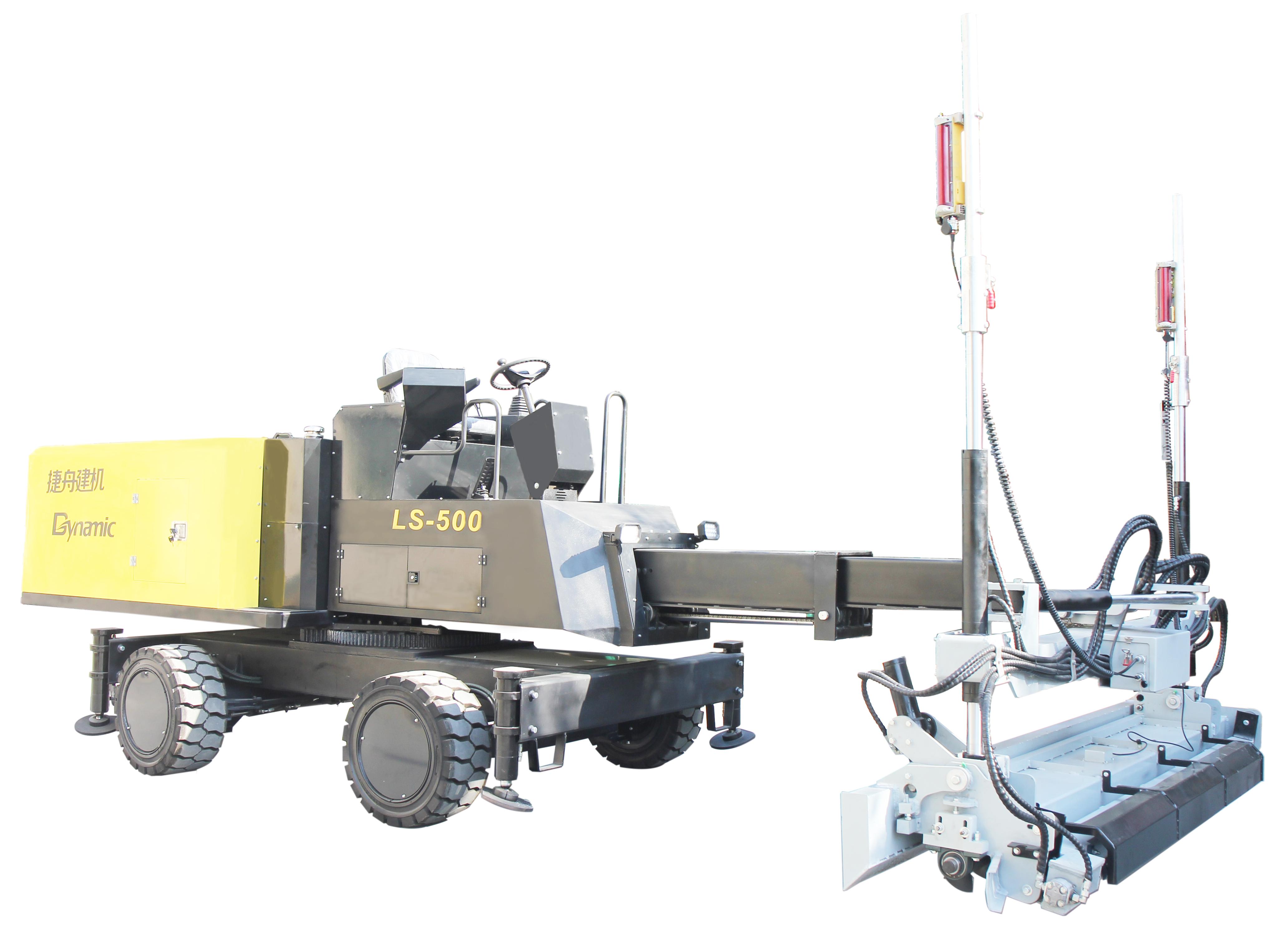
Achieving a floor flatness measured in just a few millimeters across an entire warehouse span requires overcoming a host of physical forces as concrete sets and shrinks. Conventional laser screeds use a rotating head and a receiver to cut a surface to a preset grade, but deviations add up over long distances, thermal changes, and the subtle dance of hydration. Chinese manufacturers have reimagined this core mechanisation by coupling it with digital terrain modeling fed by high-speed laser sensors that sample the surface hundreds of times per second. The result is an adaptive screed that corrects itself mid-pass, smoothing not just the obvious bumps but the microscopic undulations that cause forklift sway and rack misalignment years later.
Behind that mechanical precision sits a less visible layer of control software that predicts creep and curl based on mix design and ambient conditions logged from on-site weather stations. This isn't generic floor-laying; technicians dial in a dynamic compensation profile that shifts the target elevation as the slab cures, effectively “pre‑doming” the surface so that when it finishes shrinking, it lands on true zero. The technology also synchronises multiple screed units working in adjacent bays, eliminating cold-joint ridges that fall outside international flatness tolerances. What sets Chinese teams apart isn’t just the hardware—it’s the relentless calibration loop between the data captured during each pour and the next day’s recipe, turning what was once a craft into a controllable engineering process capable of delivering floors that sustain world-record logistics throughput.
Why Top Contractors Are Switching to Chinese Laser Screeds
The construction landscape has shifted noticeably in the last few years, with tighter budgets and faster project timelines becoming the norm. For many top contractors, traditional laser screed options simply don’t align with today’s razor-thin margins. Chinese laser screeds have stepped into this gap, offering a blend of precision and affordability that was hard to find a decade ago. These machines now rival the performance of established brands while cutting the initial investment by a significant margin, freeing up capital for other critical equipment.
But it’s not just about the price tag. Contractors who’ve made the switch often point to the surprising build quality and the ease of integrating these screeds into their existing workflows. The technology has matured rapidly, with features like automatic leveling and user-friendly diagnostics that reduce reliance on specialized technicians. Spare parts are more readily available, and the support networks have improved drastically, making downtime less of a headache. In a field where reliability and precision are non-negotiable, these screeds are proving they can deliver day in and day out, without the premium markup.
From Factory to Foundation: The Journey of a Chinese Laser Screed
Inside a bustling factory in Shandong, rows of laser screeds take shape under the glare of welding torches and the hum of CNC machines. Each machine begins as raw steel, cut and shaped by hands that have honed their craft over decades, yet now guided by digital blueprints that ensure tolerances within fractions of a millimeter. The assembly line is a blend of old-world diligence and new-age precision—workers pause to hand-check alignments while automated arms apply flawless welds. It’s not just about building equipment; it’s about embedding a quiet pride into every bolt and circuit board, knowing these machines will soon flatten concrete on foundations half a world away.
Once shipped across oceans, the screed arrives at a construction site, often in a booming metropolis where timelines are tight and standards unforgiving. Unloaded from a container, it’s fired up for the first time on foreign soil, its laser receivers blinking awake to guide the screed head over a freshly poured slab. The operator, maybe a veteran who’s seen simpler tools, now maneuvers with surprising ease as the machine self-levels, correcting slope and flatness in real time. What was forged in a Chinese factory now becomes the silent backbone of a skyscraper’s base, turning liquid concrete into a mirror-smooth canvas that will support towering glass and steel. The journey from factory to foundation is less about distance and more about transformation—from raw metal to reliable precision, from workshop intention to architectural reality.
Precision Without Compromise: The Engineering Marvel of Laser Screeds
Laser screeds operate on a principle that seems almost simple, yet its execution borders on the miraculous. A rotating laser transmitter, perched on a tripod at a known elevation, casts a continuous 360-degree plane of light across the entire work area. Mounted on the screed machine, a receiver reads this plane hundreds of times per second, translating it into hydraulic adjustments that keep the screed head level to within a fraction of an inch. No string lines, no guesswork—just a silent, invisible datum that guides every pass.
The real genius lies not just in flatness, but in the consistency of flatness. Traditional methods might give you a floor that looks smooth to the eye, but a laser screed delivers a surface that is globally planar, eliminating the subtle waves and dips that accumulate over large pours. This level of precision directly impacts the operational lifespan of industrial floors, reducing the wear on automated guided vehicles and mitigating the costly repairs that come from uneven stress distribution.
What often goes unmentioned is the collaborative choreography these machines demand. The operator becomes less of a laborer and more of a conductor, coordinating concrete delivery with the screed’s methodical advance. The laser plane is relentless—it won’t accept shortcuts—but it also unlocks a pace that manual crews can’t match. The result is a monolithic slab poured and leveled in half the time, with tolerances that meet the strictest F-number specifications without ever sacrificing the long-term integrity of the structure.
Global Construction’s Quiet Revolution: China’s Laser Screed Dominance
On job sites from Dubai to Dallas, a subtle shift is underway. The floor flatness that once demanded weeks of skilled hand troweling now emerges in hours, thanks to machines that seem to read the concrete itself. At the heart of this transformation are laser screeds — self-leveling pavers guided by precision optics — and no country has pushed them further than China. What began as cost-driven imitation has matured into technological leadership, with Chinese manufacturers now setting benchmarks in acceleration speed, rotary head design, and on-board control systems that rival established Western brands.
This isn't just about cheaper hardware. Chinese firms have reimagined the entire workflow around these machines, pairing them with 3D scanning, automated slump monitoring, and predictive maintenance algorithms. On mega-projects like the Sichuan Tianfu International Airport, fleets of Chinese-made screeds cover vast areas with millimeter-grade accuracy, slashing labor costs and construction timelines. The result is a quiet dominance: by some estimates, Chinese brands account for over 60% of the global laser screed market, moving from anonymous suppliers to preferred partners in markets that once relied solely on American or European equipment.
What makes this revolution particularly intriguing is its bottom-up character. There were no government mandates or flagship R&D programs; instead, hundreds of small and medium enterprises iterated rapidly, soaking up front-line feedback from concrete crews. Their machines grew more robust, more intuitive, and strikingly more affordable — often priced at half the equivalent Western model. As global contractors wake up to the performance parity, the old stigma of 'Chinese quality' is crumbling. In Australia, Mainland Southeast Asia, and even parts of North America, you now see construction firms quietly swapping out their legacy screeds for nimble, sensor-rich Chinese units, driven not just by cost but by a genuine leap in everyday reliability. The floors may look the same when finished, but the way they're made has changed for good.
FAQ
A concrete laser screed is a machine that uses a rotating laser transmitter and receiver to set a perfectly level reference plane across a large concrete pour. As the screed head travels, it receives signals from the laser to automatically adjust its height, ensuring the concrete surface matches the required grade within millimeters. This replaces manual methods like guide rails or string lines, which often lead to uneven floors. The result is a much flatter, more level slab with far fewer high and low spots, critical for warehouses, factories, and any space where forklifts or automated systems need smooth floors.
Chinese manufacturers have pushed laser screed technology in several practical directions. They've integrated GPS and total station guidance for large outdoor slabs, removing the need for a physical laser generator in some cases. Electric and hybrid powertrains are becoming common, cutting both emissions and operating costs on enclosed job sites. Many factories now equip screeds with telematics, so contractors can monitor machine parameters and schedule maintenance remotely. There's also been a focus on adapting screeds for smaller, more complex pours—like upper-floor decks or tight urban spaces—where traditional large ride-on units couldn't go.
By offering high-precision screeding equipment at a much lower price point than legacy Western brands, Chinese factories have made the technology accessible to mid-sized contractors in developing markets. This broader adoption is slowly shifting the baseline expectation for floor flatness on commercial and industrial projects in regions like Southeast Asia, Africa, and South America. It’s not unusual now to see FF/FL numbers—the standard floor flatness and levelness metrics—specified in project bids where they were previously ignored. Essentially, the availability of affordable screeds is raising the bar for concrete finishing quality worldwide.
The immediate benefit is time: a laser screed can level and consolidate concrete in a single pass across hundreds of square meters per hour, whereas manual screeding is slow and labor-intensive. Precision is another—it eliminates guesswork and rework. Chinese units often come with features like self-leveling hydraulics and simple one-button calibration, making them easier to train operators on. Lower purchase and maintenance costs mean even smaller regional contractors can justify the investment, instead of relying on rented equipment or outdated methods. And since many Chinese models are designed with universal parts, spare availability hardly causes downtime.
Southeast Asia, especially Vietnam, Indonesia, and the Philippines, has been a major growth area due to booming warehouse and infrastructure construction. The Middle East and parts of Africa are also strong markets because large-scale industrial and airport projects demand high speed and precision. In Latin America, contractors in Brazil and Mexico increasingly import these machines for both floor slabs and road paving. Even in Australia, smaller builders are trying them for house slabs and industrial parks, attracted by the cost-performance balance.
Most reputable factories now operate under ISO 9001 and export-oriented quality control processes. They run each unit through a multi-hour load test and laser calibration check before shipping. Engines and hydraulics often come from well-known global suppliers like Kubota, Deutz, or Eaton, which builds confidence. Warranty terms have improved—some offer up to two years with local dealer support in key export countries. Inspection bureaus like SGS or TÜV routinely oversee production for buyers, and many manufacturers hold CE, EAC, or even ANSI certifications, depending on the destination market.
One standout is the spreader-auger design that distributes concrete into low spots without an extra machine pass. Another is the integrated vibrator array that can be adjusted in frequency and amplitude from the operator’s seat, matching slump conditions on the fly. Some factories now offer 360-degree swiveling screed frames that reduce turning time and let the machine screed in curved patterns. On the sustainability side, a few companies have all-electric compact screeds tailored for indoor epoxy-ready slabs, with zero exhaust and much lower noise—these are directly appealing to green building projects in Europe and urban North America.
Brand perception is perhaps the biggest barrier—there's still skepticism about long-term durability and after-sales support. To counter that, leading factories are setting up regional parts warehouses and training local technicians. Technical regulations also vary: meeting Europe’s EN standard for floor tolerances or North America’s ACI specs requires ongoing engineering adaptation. Trade restrictions and shipping costs have pushed some manufacturers to consider overseas assembly plants or partnerships. On the product side, they’re building more robust documentation and remote diagnostics into the machines so that international buyers feel supported even where dealerships are sparse.
Conclusion
Across construction sites worldwide, a quiet transformation is underway, driven by China's concrete laser screed factories. These machines, born from advanced manufacturing hubs, turn freshly poured rough concrete into flawlessly level surfaces with astonishing speed and accuracy. The engineering behind them is a marvel of precision—laser-guided controls and hydraulic systems work in concert to eliminate human error, ensuring flatness tolerances that meet the strictest international standards. The journey from a bustling factory floor in China to the foundation of a mega-warehouse or airport tarmac is a testament to meticulous design and rigorous quality checks. It’s this seamless integration of innovation and reliability that has made Chinese laser screeds the secret ingredient behind world-record warehouse floors, where even a millimeter of variance can disrupt high-density racking systems.
Leading contractors, once loyal to legacy brands, are now making the switch, drawn by the compelling balance of performance and value that Chinese manufacturers offer. The technology delivers consistent, high-quality finishes without the premium price tag, allowing firms to bid more competitively on large-scale projects. This shift is more than a cost-saving measure; it reflects a deeper trust in the durability and support behind these machines. As logistics and industrial construction boom globally, China’s laser screed dominance quietly reshapes how floors are built—bringing precision, efficiency, and a new standard of excellence to job sites from Southeast Asia to North America. It’s a revolution built not on hype, but on the concrete results laid down every day.
Contact Us
Contact Person: Annie
Email: [email protected]
Tel/WhatsApp: 8613391442963
Website: https://www.dynamic-eq.com