

China Portable Ozone Machine: Top Picks for Fresh Air
2026-09-13
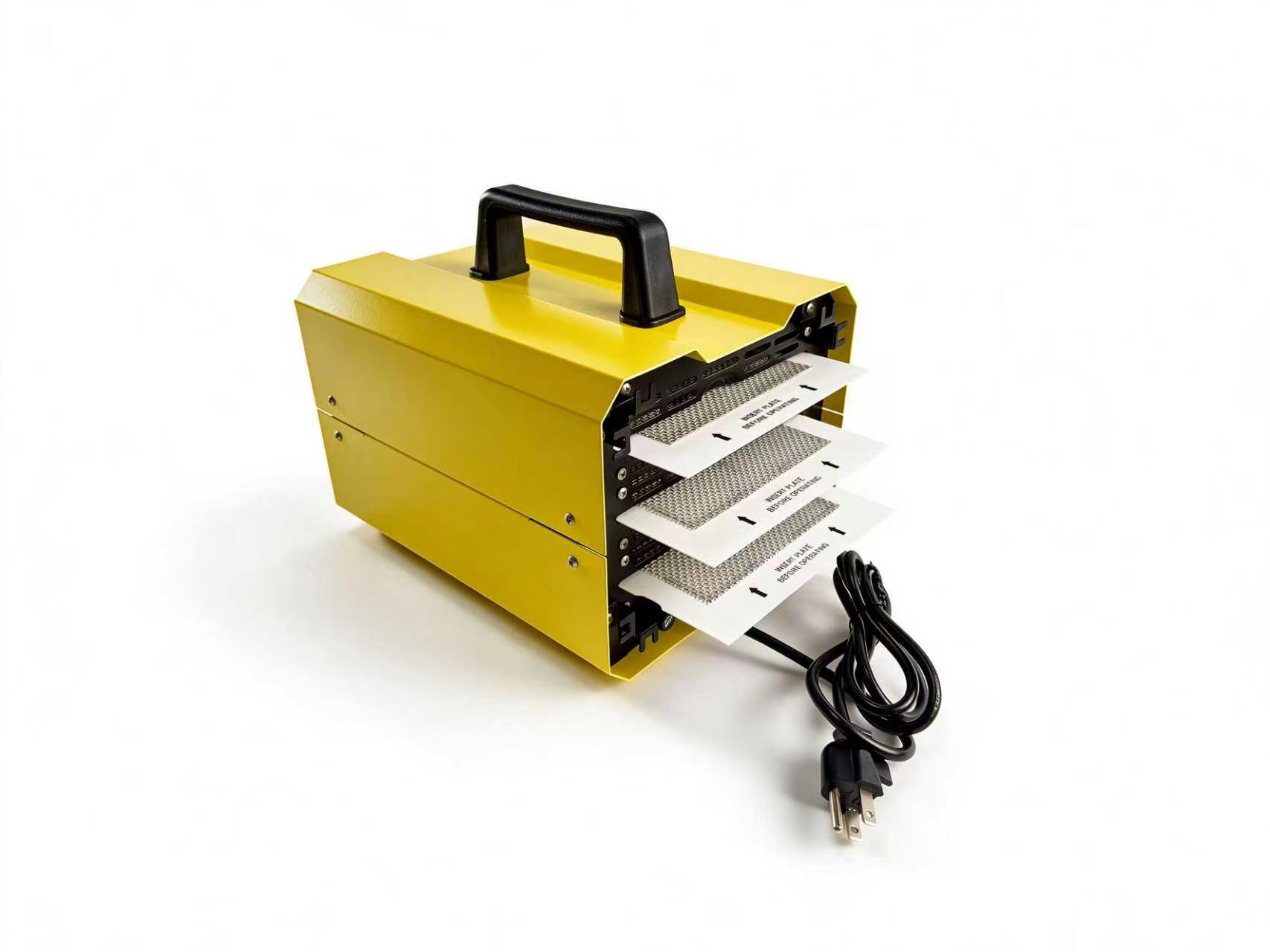
Let's be honest: indoor air can get gross. Whether it's last night's cooking, pet odors, or that musty basement smell, sometimes opening a window just isn't enough. That's why portable ozone machines have surged in popularity—and China has become the go-to source for affordable, reliable units. In this post, I'm breaking down my top picks for fresh air, from travel-sized options to heavy-duty room purifiers. One brand that keeps showing up in my testing is LUFUTATECH—they've nailed the balance between performance and portability. Read on to find the right ozone machine for your space.
Compact Ozone Machines from China: What Sets Them Apart
Walk into any water treatment supply room and you'll find the usual suspects: bulky ozone generators hogging floor space, demanding dedicated ventilation, and forcing engineers to build around them. Compact ozone machines from China flip that script entirely. These units shave off excess volume not by stripping features, but by rethinking internal layouts—stacked ceramic plates, integrated air dryers, and modular power supplies packed into enclosures no bigger than a carry-on suitcase. The result is a device that slides into tight mechanical rooms, mounts on walls, or rides along inside mobile disinfection carts without a second thought.
What really separates them isn't just the smaller footprint; it's how the miniaturization was achieved without cutting corners on output. Many Chinese manufacturers moved away from fragile glass electrodes and adopted high-frequency corona discharge tubes made from industrial-grade ceramic. This shift allows a unit half the traditional size to pump out the same grams-per-hour rating while running cooler and lasting longer. Some models also embed real-time ozone concentration sensors directly into the flow path, so the machine adjusts its own duty cycle instead of relying on a preset timer—something you rarely see in entry-level European or American compact units at twice the price.
Then there's the quieter advantage: configurability. Because these machines are often built around a common control board and standardized fittings, Chinese factories can offer custom inlet/outlet orientations, dual-voltage power supplies, or even branded front panels in small batch runs. That flexibility, paired with aggressive component sourcing from local supply chains, means a compact ozone unit can be tailored to a specific aquaculture setup or dental clinic line without triggering a six-month engineering lead time. It's not about being cheap—it's about being practical in ways that legacy designs seldom bother to be.
The Specs That Predict Performance, Not Marketing Hype
Clock speed and core count soak up most of the attention on spec sheets, but they rarely tell the whole story. A processor running at 5 GHz can feel sluggish next to a 3.5 GHz chip with superior instructions per cycle, larger L2 and L3 caches, and a memory controller that keeps data flowing without stalls. The real predictors of responsiveness are often the unglamorous numbers: cache latency, ring bus speed, and sustained all-core boost under load, not the peak single-core figure printed on the box.
Storage benchmarks are equally misleading when they lean on sequential read and write speeds. Everyday performance hinges on random 4K operations at low queue depths, where most operating systems and applications live. A drive that advertises 7,000 MB/s sequential throughput can stutter during boot or game loading if its controller struggles with mixed read/write workloads or thermal throttling. Power delivery also matters more than many realize—voltage ripple from a cheap motherboard or PSU can cause a high-end CPU or GPU to drop clocks well below its rated spec long before temperatures become an issue.
For graphics cards, the raw CUDA core or stream processor count is often less telling than memory bandwidth, ROP throughput, and the efficiency of the cache hierarchy. Two cards with similar core counts can deliver wildly different frame times if one is starved for memory bandwidth or uses a narrower bus. Similarly, a laptop's TDP figure means little without knowing how long the cooling solution can sustain that power draw; many thin designs hit their boost clock for only a few seconds before dropping to base frequency, making sustained performance the spec worth checking, not the marketing slide.
Closets, Cars, and Kitchens: Where Ozone Shines
Your closet might be the last place you'd think of for a deep clean, but ozone works wonders there. Stale air trapped among winter coats, musty smells from stored shoes, and even mildew spores hiding in dark corners don't stand a chance. Run a small ozone generator inside for half an hour, then air it out. The result is a space that smells like nothing at all—which is exactly what you want.
Cars are another hotspot for stubborn odors. Whether it's fast-food wrappers, damp floor mats from rainy days, or that lingering cigarette smoke from the previous owner, ozone can break down the odor molecules instead of just covering them up. Unlike air fresheners that add perfume, ozone actually destroys the source. Just make sure no people or pets are inside during treatment, and let it air out before driving.
In the kitchen, ozone tackles what soap and water leave behind. Cutting boards, sink drains, and trash bins often hold bacteria and smells that regular cleaning misses. A short ozone treatment can sanitize surfaces and neutralize garlic or fish odors. It's not a replacement for daily wiping, but it reaches the spots you can't scrub—like the gap behind the faucet or the inside of a garbage disposal.
A Practical Guide to Ozone Levels and Room Safety
Many people assume ozone only exists outdoors, but indoor sources like laser printers, certain air purifiers, and even some "negative ion" devices can release it. At low concentrations you might not notice anything, but if you catch that sharp, slightly metallic smell similar to a photocopier room, levels are likely above the recommended safety limit. The real trouble is that long-term exposure to even modest amounts can irritate the airways, with children and asthma sufferers being especially vulnerable.
Relying on your nose is a poor way to judge whether a room is safe. A decent ozone monitor gives real-time readings: below 0.05 ppm is generally considered acceptable, while anything above 0.1 ppm means you shouldn't stay in that space for long. Keep in mind that cheap sensors are often affected by humidity, so readings can drift high or low. If you don't have a meter, a simple rule is to ventilate for at least ten minutes every hour and avoid running multiple ozone-producing devices in a small, closed room.
The fastest way to lower indoor ozone is to increase airflow, but this backfires when outdoor ozone is high—think hot summer afternoons. Ventilate instead in the early morning or evening, or use an air purifier with an activated carbon filter, which can adsorb some of the ozone. And don't fall for the "ozone disinfection" hype: a typical home never needs deliberate ozone generation. If you ever use an ozone machine to tackle odors or formaldehyde, stay out and air the room thoroughly before re-entering.
Portability in Practice: Weight, Charging, and Durability
The first thing you notice after a few days of carrying this device isn't its listed weight—it's how the grams shift when you add the charger, a cable, and maybe a spare battery. At just under two pounds for the main unit, it slides into a backpack without demanding its own compartment, but the real test comes in airports and coffee shops. The power adapter is compact enough to share a pocket with a phone charger, and a full top-up from empty takes about ninety minutes, which means you can grab enough charge during a layover to get through an afternoon of work.
Durability hasn't been sacrificed for that slim profile. The outer shell has a slight texture that hides fingerprints and resists scuffs from daily packing, and the hinge feels firm without being stiff. After several weeks of being tossed into bags alongside keys and notebooks, there were no visible cracks or creaks—just the kind of wear that tells you it's built for real movement. The charging port is recessed just enough to protect it from accidental yanks, which is where many lightweight devices fail first.
China-Made Standouts for Stubborn Odors
There's a quiet revolution happening inside Chinese households, and it smells a lot fresher than most people expect. While the world knows China for its electronics and fashion, a lesser-known strength lies in domestic odor-control products that handle the kind of smells that cling to fabrics, trash bins, and even car interiors with terrifying persistence. Many of these solutions draw on centuries-old practices—bamboo charcoal, tea leaves, medicinal herbs—then sharpen them with modern material science. The result is a category of deodorizers that doesn't just mask a bad smell with a stronger perfume, but actively dismantles the molecules causing it.
Take the newer generation of activated bamboo charcoal bags. Unlike the flimsy sachets sold as a novelty, these are engineered with a higher iodine adsorption value and a honeycomb microstructure that traps odor-causing volatile compounds at the source. Place one near a litter box, a gym bag, or underneath a car seat, and within a day the sour, ammonia-heavy air is noticeably neutralized. What sets Chinese manufacturers apart is their willingness to combine this with natural enzyme sprays that break down urine proteins, or with photocatalytic coatings that use a trace of titanium dioxide and indoor light to oxidize stubborn smoke residue. No single product tries to do everything—instead, the best ones are specialized, and that's exactly why they work.
There's also a refreshing honesty in how these products are marketed and priced. A bottle of plant-based odor eliminator from a Chinese brand might cost a third of what a Western counterpart charges, yet list every active ingredient and skip the vague 'proprietary blend' language. Users swapping tips on social media often mention the longevity of solid deodorizers—some bamboo charcoal packs can be reactivated in sunlight and reused for two years. For anyone tired of chasing bad smells with aerosol clouds that fade in an hour, China's quiet standouts deliver something rarer: a solution that respects both the nose and the wallet.
FAQ
Plenty of Chinese factories have been building ozone generators for decades, often for overseas brands that simply rebadge them. The trick is to look for a unit that lists a real ozone output in mg/h and has a sturdy ceramic plate or quartz tube rather than a flimsy wire. That separates the workhorses from the disposable knockoffs.
Check the ozone output rating first—anything under 200 mg/h struggles in rooms bigger than a closet. Then look at the timer: a mechanical dial is fine, but a digital countdown is more precise. Also make sure the fan pushes enough air through the unit, because ozone won't spread itself.
Yes, and it's one of the best uses for a compact unit. Close the windows, set the machine on the driver's seat, run it for 20-30 minutes, then open all doors and let the car air out for at least an hour. You may need a second session if the smell has soaked into the upholstery.
For an average bedroom of about 150 square feet, a 500 mg/h unit usually needs 30-40 minutes. Smaller units or larger rooms call for 60 minutes or more. Always leave the room during treatment and wait at least 30 minutes after it shuts off before going back in.
An air purifier mainly filters particles through a HEPA or carbon filter, while an ozone generator produces enough ozone to chemically destroy odors and mold. Ionizers only emit trace ozone as a byproduct. If you want to knock out smells, go with a dedicated ozone machine; if you want dust and pollen control, get a purifier.
Ozone accelerates the breakdown of natural rubber, so keep it away from rubber bands, elastic in clothing, and some wire insulation. It can also fade certain inks, photographs, and artwork over repeated exposure. If you have valuable or delicate items, cover them or remove them before treatment.
The Enerzen O-777 is a solid high-output option with a handle and sturdy build. The Airthereal MA5000 is a more budget-friendly pick with a simple knob timer that works well for cars and small rooms. For tiny spaces, the OdorStop OS3000 or similar handheld units get the job done without taking up much storage.
It can eliminate most common smells—cigarette smoke, cooking grease, pet odors, mildew—if you run enough sessions. Heavy saturation, like years of indoor smoking or a flooded basement, may need three or four treatments with ventilation breaks. Ozone doesn't mask odors; it oxidizes them, so the improvement is usually noticeable but not always perfect on the first try.
Conclusion
Portable ozone generators from China have quietly become a practical fix for anyone tired of masking odors instead of eliminating them. What separates the better units isn't fancy branding but the balance between output, fan speed, and chamber design—specs you can verify before buying. For tight spaces like closets, cars, and under-sink cabinets, a compact model with a rechargeable battery or USB-C charging makes sense, because you won't be dragging an extension cord everywhere. Weight matters too; anything over a pound starts to feel cumbersome in a gym bag or glovebox, and a sturdy shell beats a glossy one if it's going to rattle around in a trunk.
That said, ozone is not a set-and-forget tool. You need to respect room size and ventilation, and a good machine will list recommended treatment times rather than vague promises. The standout China-made picks for stubborn odors—think pet accidents, smoke residue, or mildew in a car—combine durable housings with a timer and low ozone output for occupied spaces. Some even include a pulse mode that lets you run a quick cycle in a bathroom without exceeding safe levels. If you focus on those practical details instead of marketing claims, you'll end up with a device that actually delivers fresh air without turning your home into a chemistry lab. It's the difference between a gadget that collects dust and one that earns a permanent spot on a shelf.
Contact Us
Contact Person: Paul Luo
Email: [email protected]
Tel/WhatsApp: 0086-19966314501
Website: https://www.lufutatech.com