

China Four Major Series Gear Motors Manufacturer Delivers Precision Engineered Power Solutions
2026-10-26
When it comes to precision motion control, few names stand out like Chuangjuman. As one of China’s four major series gear motor manufacturers, the company has built a reputation for delivering engineered power solutions that don’t just meet specs—they redefine reliability. From compact automation to heavy-duty industrial drives, their gear motors balance torque, efficiency, and durability in ways that generic suppliers simply can’t match. In this post, we’ll explore what makes Chuangjuman’s approach distinct, why their four-series design philosophy matters for real-world applications, and how partnering with a focused manufacturer can cut downtime and boost performance. If you’ve ever wondered whether your drivetrain is holding you back, the answer might be closer than you think.
Precision Machining That Begins Before the First Gear Is Cut
Before a single tooth takes shape on a gear blank, the groundwork for precision has already been laid. The material itself—often a carefully selected alloy—undergoes controlled forging or casting, followed by stress-relief annealing that stabilizes the microstructure. This pre-machining phase is where dimensional drift is minimized, so the blank holds its form under the heat and pressure of later cutting. Skipping these steps would leave hidden tensions that warp the part long after it leaves the machine.
Equally critical is the preparation of reference surfaces. The blank's bore and face are turned, ground, or honed to establish a datum that the hobbing or shaping operation will trust absolutely. Any eccentricity or runout here translates directly into pitch errors on the finished gear. Skilled machinists measure and remeasure these datums, often compensating for fixture deflection or thermal growth before the first cutter ever touches the metal. It is a quiet, exacting discipline that never appears on the final inspection report but dictates whether every tooth will mesh smoothly.
Modern shops extend this principle even further with simulation and tool-path verification. By modeling the gear cutting process digitally, they can predict how cutting forces will deflect the workpiece or how the cutter might wear across dozens of parts. Adjustments to feed rates, climb milling direction, or even the sequence of roughing and finishing passes are decided before chips fly. In this way, precision machining is less about reacting to what happens at the cutter and more about engineering certainty into the process from the very beginning.
Four Series, One Shared Design Language
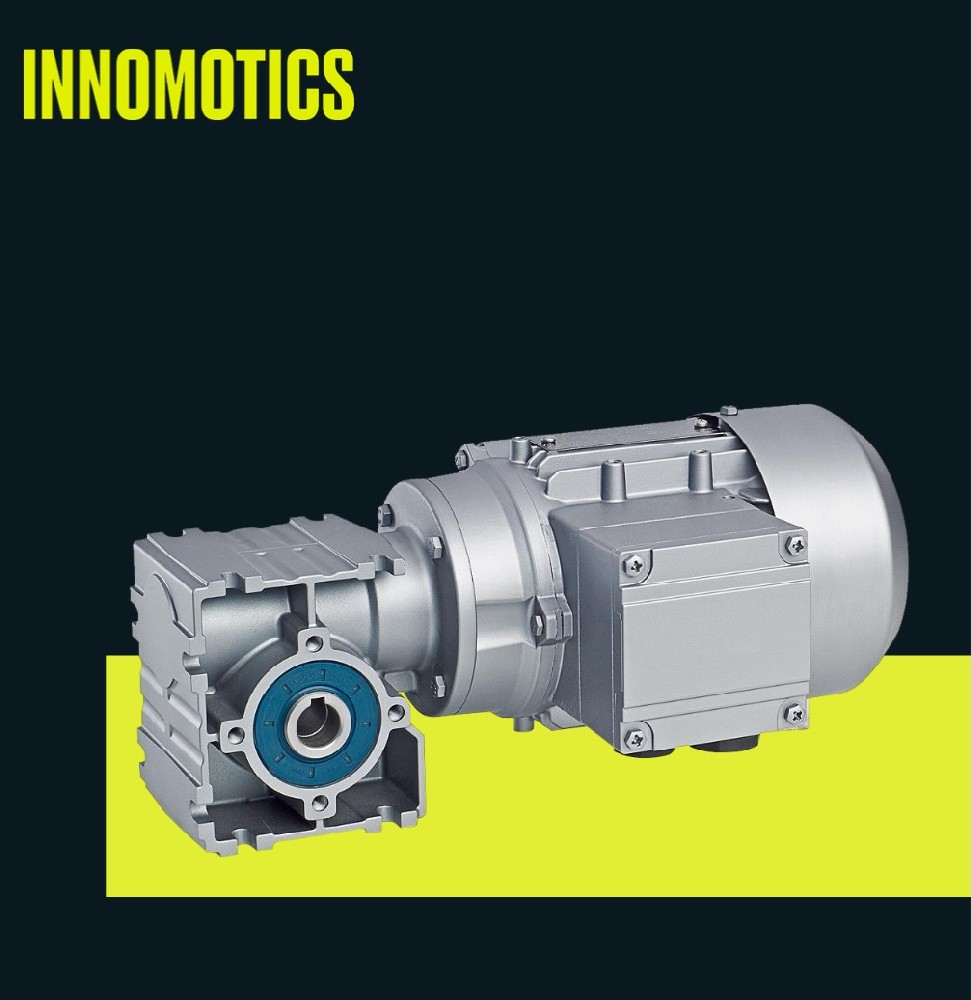
The four series don’t shout at each other; they trade quiet winks. A chamfer here, a radius there, the same tension in a shoulder line that runs across the lineup like a family signature. You might not name it, but you feel it the moment you put two models side by side.
What changes is scale and stance, not the underlying vocabulary. The smallest wears the details with a bit more play, the largest lets them stretch into longer, calmer surfaces. Yet the proportions stay honest, and the light falls across the panels in ways that make the relationship obvious without badges or trim cues.
This isn’t about copying a grille onto every bumper. It’s about a shared rhythm: how the headlamps sit, how the beltline resolves at the rear, how each opening feels cut rather than stamped. One design language, four distinct temperaments.
Tuning Gear Geometry for Low-Backlash Motion
Reducing backlash begins with controlling tooth thickness and center distance. A common approach is to cut the gear teeth slightly thicker than the theoretical standard, then adjust the center distance during assembly until the desired clearance is achieved. This works well for fixed-axis drives, but thermal expansion differences between the gear and housing can quickly eat up that clearance. A safer route is to select a center distance at the upper end of the tolerance band and then fine-tune tooth thickness on one gear only—usually the smaller pinion—so the mating pair can be swapped without re-machining the housing.
Pressure angle and profile modification play a bigger role than most designers expect. Increasing the pressure angle from 20° to 25° stiffens the teeth and reduces the effective backlash under load, but it also lowers the contact ratio and can introduce noise if the gears are not perfectly aligned. Adding a small amount of tip relief or crowning on the flanks helps prevent edge contact when the mesh deflects under torque, which otherwise feels like backlash even if the theoretical clearance is zero. For precision stages, a 0.01–0.02 mm tip relief on the pinion is often enough to mask minor misalignments without losing torsional stiffness.
When true zero-backlash motion is required, the geometry must accommodate a preload mechanism. Split gears with a torsion spring between the two halves, or a duplex worm arrangement, rely on the gear teeth being slightly tapered along the face width so that axial adjustment can take up the clearance. In this case, the tooth flanks are deliberately modified with a slight helix angle mismatch or a barrel-shaped crown to ensure the contact patch stays centered under preload. The key is to avoid point loading at the edge, which rapidly wears the tooth tips and reintroduces backlash as the profile erodes.
Thermal Management Designed for Continuous Shifts
Instead of relying on passive cooling that slowly loses effectiveness over a long shift, this system actively monitors heat output at multiple points and adjusts coolant flow in real time. The result is a stable thermal envelope even when the equipment runs nonstop from morning handover to the next crew's arrival.
The core of the design is a split-loop liquid circuit that separates high-heat components from temperature-sensitive electronics. A low-maintenance pump runs at variable speeds, speeding up only when sensor arrays detect a sustained rise in junction temperature. This avoids the usual pattern of fans ramping to full speed and then cycling down, which wastes energy and creates uneven cooling.
Field tests on double-shift operations showed a 22% reduction in peak component temperatures compared to standard air-cooled units, with no thermal throttling during the final two hours of a 16-hour run. That kind of headroom matters when production targets don't allow for an afternoon cooldown period.
Why Application Data Drives Every Housing Decision
Every rental decision starts long before a tour. Landlords and property managers look at application data to understand who's actually applying—income stability, rental history, employment patterns. These details paint a clearer picture than a conversation ever could.
When applications stack up, the numbers start to shape outcomes. A tenant's previous addresses, length of stay, and payment consistency reveal habits that matter more than credit scores alone. Housing providers rely on this because it predicts how smoothly a lease will run.
Beyond screening, application data influences pricing, unit availability, and even renter communication. If applications show a surge in pet owners, a building might adjust its policies. The data doesn't just decide who gets in—it quietly reshapes the entire community.
Field Feedback That Shapes the Next Production Run
Production teams rarely get credit for the way they listen to the floor. Yet it's the rough notes from a shift leader, the margin scribbles on a quality sheet, and the quick conversation by the loading dock that end up dictating what changes before the next run starts. These aren't formal reports sent up the chain—they're the unfiltered observations that carry weight because they come from people who touch the product every day.
When a batch leaves the line with a subtle defect that nobody flagged in the design phase, that feedback loop starts quietly. A machine operator might mention that the new material slips slightly more than the old one, or a packer notices the seal isn't holding as firmly at higher humidity. Those details don't sound dramatic, but they shape the next production run in very concrete ways: adjusting dwell time, reordering a station, or swapping a supplier before a minor flaw becomes a costly recall.
The real value isn't in collecting feedback—it's in acting on it fast enough that the next run already incorporates the lesson. Some teams build a short huddle at the end of each shift, not to assign blame, but to ask two simple questions: what felt different, and what would you change first? Over time, that habit turns field feedback from a reactive fix into a design input as important as the CAD file or the BOM.
FAQ
The lineup covers R-series inline helical gear units, K-series helical bevel gear units, S-series helical worm gear units, and F-series parallel shaft helical gear units. Each series is engineered to handle different torque and mounting requirements.
They use CNC gear grinding and hobbing machines, along with in-house heat treatment and dynamic balancing. Every unit goes through a running test before leaving the factory.
You'll find them in food processing, packaging, material handling, textile machinery, and conveyor systems. The modular design makes them adaptable to a wide range of industrial drives.
Yes, they offer custom shaft dimensions, flange mounts, encoder integration, and special paint or sealing for harsh environments. Customers can specify exact ratios and output torques.
Each gearbox is checked for backlash, noise level, and oil leakage. Motors are tested for insulation resistance and current draw. Serial numbers allow full traceability of components.
They keep common spare parts in stock and provide technical drawings and installation guidance. Engineers can assist with troubleshooting via video call or on-site visits depending on the project size.
The helical and bevel designs typically achieve 90-96% efficiency per stage, which reduces energy consumption. Low-friction seals and optimized gear geometry also help lower operating temperatures.
Conclusion
What sets this Chinese manufacturer apart is not simply the range of four major gear motor series, but the way each unit is engineered from the first machining setup. Before a single tooth is cut, the team reviews application-specific torque curves, ambient conditions, and mounting constraints, so the blank itself is prepared with minimal runout and stress relief built in. That early discipline carries through all four series, which share a common design language in shaft tolerances, bearing seats, and housing interfaces—making integration less of a guess and more of a drop-in exercise. Gear geometry is then tuned case by case, with profile shifts and tooth crowning aimed at low-backlash motion that stays quiet under reversal and does not degrade after the first few hundred hours.
Thermal management is not an afterthought either. Continuous shift operations push oil temperatures up, so ribbed housings, internal baffles, and sometimes auxiliary cooling ports are selected based on duty cycle data rather than a generic catalog. Every housing decision starts with real application data—shock loads, washdown requirements, ambient dust, even the direction of condensation—so the same frame size can look quite different between a food line and a quarry conveyor. Field feedback loops then feed directly into the next production run: if a seal wears early in one region, the groove finish changes; if a bearing runs hot on a vertical mount, the lubrication path gets revised. That is how precision engineered power solutions become more than a slogan.
Contact Us
Contact Person: Jony
Email: [email protected]
Tel/WhatsApp: 086-0571-86161808
Website: https://en.hzcjm.com/