

Best Shank Adapter Supplier: Key Factors for Quality and Reliability
2026-06-24
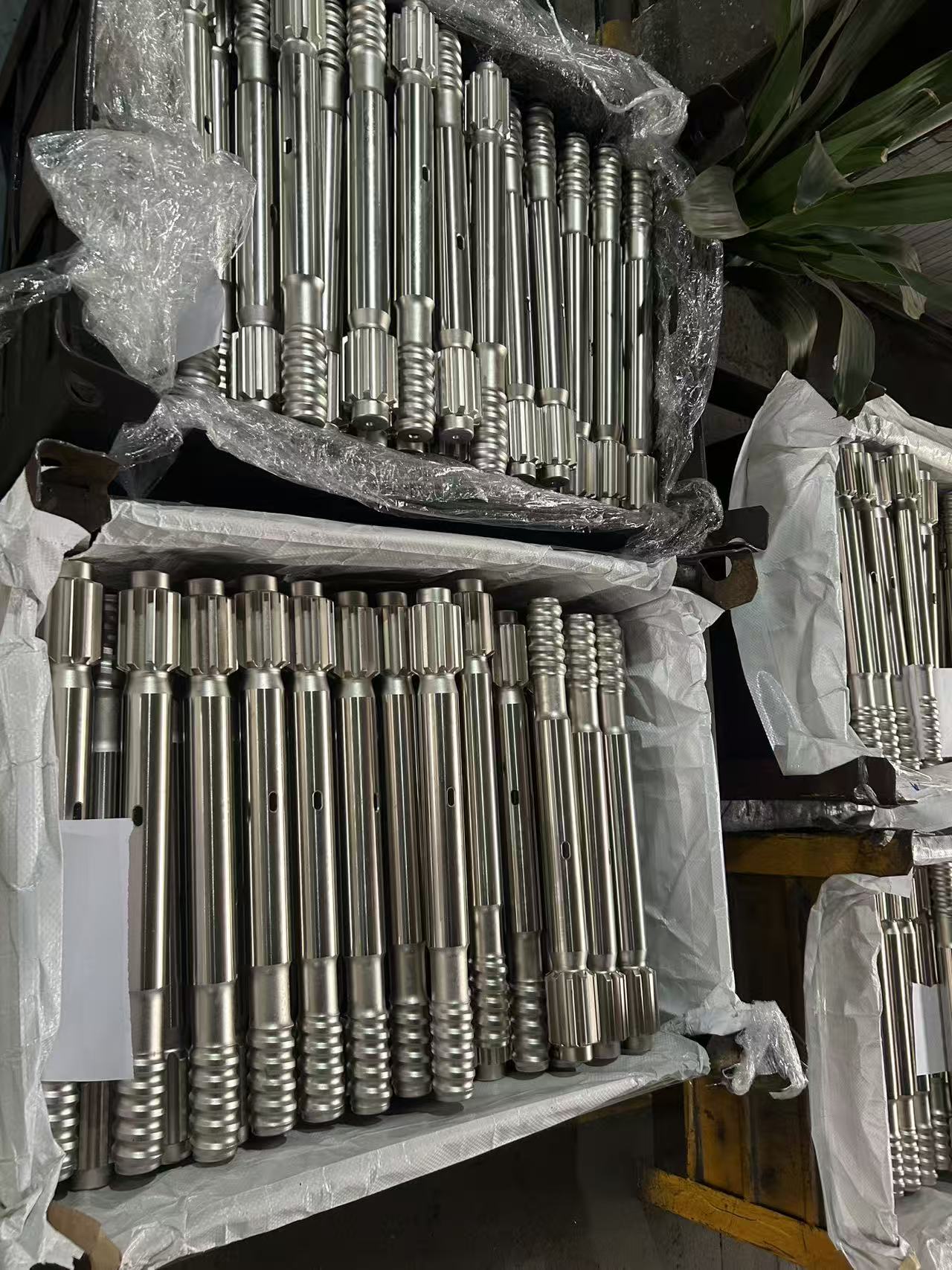
In mining and construction, a shank adapter isn't just a component—it's the critical link between hammer and bit, where failure means downtime you can't afford. Choosing the right supplier goes beyond specs and price; it's about trust in every blow. At PULANKA, we've seen how material integrity, heat treatment, and precision machining separate a reliable partner from a costly gamble. This guide unpacks the key factors that define quality and long-term reliability, so your next purchase keeps your operation breaking ground, not breaking down.
What Makes a Shank Adapter Last Longer?
The lifespan of a shank adapter really comes down to the materials and manufacturing precision. High-grade alloy steels with proper heat treatment can withstand countless hammering cycles without deforming. Look for adapters that use carbide-reinforced wear points—especially in the area where the bit locks in. A poorly machined shank will develop play quickly, which only accelerates failure. Coatings also matter; a quality anti-corrosion layer keeps rust from eating away the surface over time, especially if you work in damp conditions.
Beyond the build, how you treat it daily plays a huge role. Greasing the connection points regularly prevents metal-on-metal grinding that leads to premature wear. It's also crucial to clean out dust from the chuck before inserting the adapter—trapped debris acts like sandpaper. Avoid letting the tool run dry or overheating, because excessive heat softens the steel and ruins tempering. These aren't complicated habits, but they often make the difference between an adapter that lasts years and one that quits in months.
The Hidden Costs of Cutting Corners on Quality
When a business decides to relax quality standards to save a few dollars on production, the savings rarely tell the whole story. What looks like a short-term gain on a spreadsheet often transforms into a cascade of hidden expenses that erode profitability over time. These costs aren't always immediately visible—they show up in unexpected places, from warranty claims and rework to the subtle erosion of customer trust that takes years to rebuild.
Beyond the direct financial hits of returns and repairs, there's a deeper organizational toll. Teams end up spending disproportionate time firefighting issues that never should have existed, pulling focus from innovation and growth. The frustration of handling preventable problems seeps into company culture, chipping away at employee morale and leading to higher turnover rates. Every hour spent fixing a known flaw is an hour not spent building something better.
In the marketplace, the consequences become even more pronounced. A single quality lapse can trigger a chain reaction of negative reviews and word-of-mouth damage that overwhelms even robust marketing budgets. The irony is that businesses often end up spending far more to recover from quality failures than they ever would have invested in getting things right the first time, all while watching their hard-earned reputation slip away.
How the Right Supplier Can Boost Your Operation's Uptime
A supplier that truly understands your operational demands does more than just fill orders—they become a partner in reliability. When you work with the right team, you gain access to proactive support that spots potential failures before they escalate. This can mean expedited replacements during critical windows, precision-engineered parts that fit perfectly the first time, and inventory strategies that keep your shelves stocked without overburdening your budget. The result is a smoother production flow where unplanned downtime becomes a rarity rather than a recurring headache.
Deep integration with a responsive supplier transforms your approach to maintenance. Instead of reacting to breakdowns, you shift towards predictive planning. Think of regularly scheduled insights on wear patterns, customized component upgrades that extend equipment life, and on-site technical consultations that fine-tune performance. These subtle but powerful advantages keep your lines humming and your workforce focused on output, not repairs.
Beyond the tangible parts and services, the right supplier brings a mindset of continuous improvement. They track your machine histories, suggest subtle adjustments, and even help you phase out legacy components before they become liabilities. This quiet consistency chips away at the small, overlooked issues that often cause the biggest disruptions. Ultimately, it’s about building a rhythm of reliability where every link in your supply chain actually strengthens your uptime instead of just servicing it.
Beyond the Spec Sheet: Real-World Performance Indicators
Numbers on a brochure rarely tell the whole story. A processor’s clock speed might look impressive, but if it throttles after five minutes of heavy use, those specs become meaningless. Real-world performance is about how a device holds up under sustained workloads, not just peak benchmarks. It’s the difference between a snappy first impression and a reliable machine that stays responsive hour after hour.
Battery life is another area where lab tests often miss the mark. A “10-hour” rating from a controlled video loop doesn’t account for mixed usage—streaming, browsing, and background apps all drain power at different rates. What matters is whether you can get through a full day without hunting for a charger, and that varies wildly from person to person. Thermal design, app efficiency, and even screen brightness play bigger roles in day-to-day endurance than any spec sheet suggests.
Then there’s the intangible stuff: how a keyboard feels after thousands of words, or whether a trackpad remains precise when your fingers are slightly damp. Camera performance in dim, messy lighting often reveals more than controlled studio shots. These indicators can’t be captured by megapixels or gigabytes, yet they define the experience more than any number on a box. In the end, it’s about trusting your own workflow over marketing bullet points.
Why Material Selection Isn't Just About Hardness
When engineers default to hardness as the go-to metric for material selection, they're often solving yesterday's problem. A drill bit that resists deformation might shatter under vibration if it lacks toughness, while a gear optimized for surface durability could fail prematurely from inadequate fatigue strength. The reality is that hardness is just one chapter in a much larger story about how materials behave under real-world conditions.
Consider the interplay between hardness and other mechanical properties. A ceramic armor plate may boast extreme hardness to stop projectiles, but without sufficient fracture toughness, it shatters on first impact, rendering it useless. Similarly, a high-hardness tool steel that cuts beautifully under ideal conditions might micro-chip constantly if it can't handle the intermittent thermal shocks of interrupted cutting. It's the hidden harmony of toughness, corrosion resistance, and thermal stability that often decides whether a material succeeds, not its indentation number alone.
Beyond mechanics, the operational environment complicates the selection further. A stainless steel propeller shaft may have lower hardness than its high-carbon counterpart, but its corrosion resistance in seawater eliminates pitting and crevice corrosion failures that would sideline a harder material within months. Smart material selection doesn't chase single-property perfection—it balances hardness against the specific threats a component will face, from chemical attack to cyclic loading, ensuring performance across the entire lifecycle.
The Role of Precision Machining in Reducing Vibration
Precision machining directly impacts vibration by controlling the geometric accuracy of rotating components. When parts are manufactured with extremely tight tolerances, imbalance is nearly eliminated. Even microscopic deviations in a shaft or spindle can create centrifugal forces that grow exponentially with speed, introducing unwanted oscillations. Skilled machinists and advanced CNC equipment work together to hold dimensions within microns, ensuring that every surface and feature aligns perfectly with the intended design. This level of care prevents the subtle mass asymmetries that so often lead to destructive vibration in high-speed machinery.
Surface finish is another often overlooked factor. A finely machined surface reduces friction and wear, but it also minimizes the turbulent interactions that can excite vibration. When mating parts fit together seamlessly, there are no abrupt impacts or chatter-inducing gaps. Processes like precision grinding and honing create surfaces that not only move smoothly against one another but also distribute loads evenly. This even distribution prevents localized stress points that can deform components over time, keeping the entire assembly stable during operation. It’s a quiet, behind-the-scenes detail that separates reliable equipment from a maintenance headache.
Beyond individual components, precision machining enables exacting assembly practices. When every part is made to specification, the final put-together becomes a near-perfect union. Bearing seats, housing bores, and shaft journals all mate with the intended interference or clearance, leaving no room for looseness that amplifies resonance. This holistic approach means the machine structure itself contributes to damping rather than amplifying vibration. The result is smoother operation, longer tool life, and better hold on critical dimensions in the parts being produced—benefits that show up directly on the bottom line without ever needing a technical explanation.
FAQ
It comes down to the material and the hardening process. High-grade alloy steel, combined with precise heat treatment, ensures the adapter can handle constant impact and stress without cracking. You also want a supplier that tests every batch for fatigue resistance—not just spot checks.
Look at their certifications, but don't stop there. Ask for detailed material traceability records and third-party test reports. A trustworthy supplier won't hesitate to share this. You can also request performance data from their existing customers in similar applications.
Absolutely. A well-designed adapter has optimized thread relief and smooth transition zones to minimize stress concentrations. Some manufacturers add surface treatments like shot peening to boost fatigue life. Even small details, like the chamfer on the shank end, can prevent premature wear.
Often it's due to improper heat treatment or poor machining tolerances. If the hardness gradient isn't controlled correctly, you get brittle sections. Also, if the mating surfaces aren't perfectly aligned with the rock drill and the bit, uneven loading can quickly lead to fractures.
A lot. Even the best adapters wear over time. A supplier that offers technical guidance on correct installation, torque specifications, and maintenance schedules can significantly extend service life. Quick replacements and failure analysis reports when things go wrong are also signs of a partner, not just a seller.
Check if they use statistical process control in manufacturing. Consistent suppliers have tight process controls and produce adapters with minimal dimensional variation. You can ask for sample inspection data from previous batches. If they can't provide that, you're gambling with each order.
Usually, yes—if the brand has a proven track record. The premium goes toward better raw material sourcing, advanced manufacturing, and rigorous testing. Generic adapters might save money upfront, but unexpected downtime from a failed adapter can cost far more. It's about total cost of ownership.
Their ability to customise. Not all rock conditions or drilling rigs are the same. A supplier that can tweak the design—like adjusting the flushing hole pattern or modifying the shank length for your specific setup—can dramatically improve performance. Off-the-shelf solutions aren't always optimal.
Conclusion
Choosing the best shank adapter supplier goes far beyond a simple price comparison; it demands a keen eye for how design, materials, and precision interplay in the real world. A longer-lasting shank adapter isn't just about the hardness of the steel—it’s about selecting the right alloy and heat treatment to balance toughness with wear resistance, preventing micro-cracks that lead to early failure. Equally crucial is precision machining: when threads, tapers, and flushing holes are machined to tight tolerances, vibration drops dramatically, which not only protects the adapter but also extends the life of the entire drill string. Hidden costs emerge quickly when suppliers cut corners; a slightly cheaper adapter can cause accelerated wear on hammers and bits, unscheduled downtime, and even safety risks—expenses that far outweigh any initial savings.
The right supplier does more than deliver a part; it becomes a partner in boosting your operation’s uptime. Real-world performance indicators—like field failure rates, user feedback from tough geological conditions, and consistency from batch to batch—tell you far more than any polished spec sheet. Look for a supplier that maintains rigorous quality control, adapts material grades to your specific ground conditions, and stands behind its products with swift support. These factors collectively ensure that every shank adapter not only meets the nominal specs but performs reliably shift after shift, slashing downtime and maintenance costs. In the end, reliability isn’t a single feature—it’s the sum of material intelligence, precision manufacturing, and a supplier’s genuine commitment to your productivity.
Contact Us
Contact Person: Elma
Email: [email protected]
Tel/WhatsApp: +86 13738628777
Website: https://www.pulankagroup.com/