

Best Laser Pain Belt for Fast Pain Relief and Recovery
2026-10-27
When pain strikes, every second feels like an eternity. Whether it’s a nagging backache, stiff joints, or muscle soreness after a long day, relief can’t come fast enough. Imagine a solution that works while you rest, delivering targeted warmth and therapeutic laser light to soothe discomfort and speed up recovery. That’s exactly what the GUANG TAI laser pain belt offers—a smart, wearable approach to pain management. But does it truly live up to the promise of fast relief? Let’s take a closer look at why this device is gaining attention among those who refuse to let pain slow them down.
Why a Laser Belt Works Better When You Keep It Simple
Most people assume that adding more features to a laser belt makes it more effective. In reality, complexity often gets in the way. A simple design lets the light source sit closer to the skin, keeps the power delivery stable, and reduces the chance of something breaking mid-session. When there are fewer moving parts and fewer settings to fiddle with, the device does its one job well: delivering consistent energy to the target area.
There is also a practical side to this. A minimalist laser belt is easier to wear for longer periods, which matters because consistency beats intensity for many users. Instead of spending time adjusting straps, syncing apps, or cycling through modes, you put it on and let it work. That kind of hands-off experience encourages regular use, and regular use is what actually produces noticeable changes over time.
Simple doesn’t mean weak. It means the engineering effort goes into the quality of the diodes, the evenness of the coverage, and the durability of the materials rather than flashy extras. A well-made straightforward belt often outperforms a gadget-loaded one because it avoids the pitfalls of over-engineering: heat buildup, uneven output, and confusing controls. Sometimes the smartest design is the one that gets out of its own way.
The Setting Most People Ignore That Speeds Up Recovery
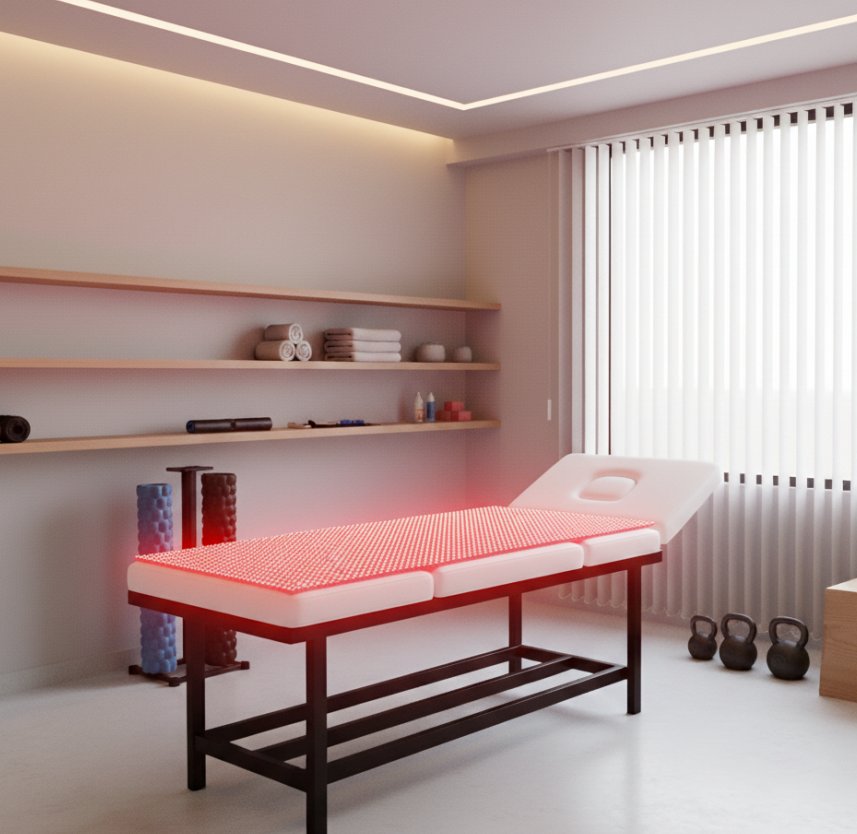
Most people tweak their training, diet, and supplements before they ever touch the one dial that quietly controls how well they bounce back: the thermostat. Sleeping in a room kept between 65 and 68 degrees Fahrenheit (roughly 18 to 20 Celsius) nudges your body toward the deep, slow-wave sleep where actual tissue repair happens. It’s not about being cold for the sake of it—your core temperature naturally drops at night, and a cooler room simply gives that drop room to happen without your body fighting the blankets.
When your bedroom stays too warm, you spend more time in lighter sleep stages, wake more often, and blunt the release of growth hormone that drives muscle and joint recovery. A lower ambient temperature, on the other hand, supports better heart-rate variability overnight and helps clear metabolic waste from the brain. It costs nothing to experiment: set the thermostat a few degrees lower for a week, keep the bedding breathable, and track how you feel the next morning. Most people are surprised that a small change in their sleep environment outperforms another recovery gadget.
How to Tell If Your Pain Responds to Light Therapy Within a Week
Tracking your pain before you even start light therapy gives you a baseline that's easy to forget once you're in the middle of treatment. Jot down your usual pain level on a zero-to-ten scale at the same times each day, along with what you were doing when it spiked or eased. After the first few sessions, you might notice the numbers shifting slightly—not a dramatic drop, but maybe a stubborn seven becomes a six on day three, or the evening ache that used to hit at 8 p.m. now holds off until 10. Those small delays matter more than a single low reading, because random good days happen to everyone.
Look beyond the raw intensity score. Does the pain feel less sharp or more diffuse, even if the number hasn't changed? Are you reaching for ibuprofen an hour later than usual, or skipping that second dose without thinking about it? Many people report that their sleep improves before the daytime pain drops—waking up fewer times at night or not needing to shift positions every twenty minutes. Pay attention to how long a flare lasts when it does come; if a typical three-hour spike now fades in ninety minutes, that's a response, even if the peak intensity feels identical.
If none of these shifts appear by day five or six, don't force it. Light therapy isn't a one-size-fits-all wavelength or dose, and sometimes the issue is timing—morning vs. evening exposure—or how close you sit to the device. Write down exactly what you did each day, then compare with a therapist if you can. A week of no change doesn't mean the method failed you; it means your body is telling you to adjust something, and that adjustment is usually smaller than you think.
Wearing It Under Clothes: The Practical Side of Daily Use
The real test of any wearable isn't how it looks on a shelf, but how it behaves when you're stuck in a meeting or running errands. Wearing it under clothes means thinking about fabric friction, waistband pressure, and the small shifts in posture that happen when you sit, stand, or reach for something on a high shelf. A design that stays flat and doesn't print through tighter shirts makes a noticeable difference by the end of the day.
Daily use also brings up questions about heat and moisture. Even breathable materials can feel different after eight hours against skin, so choosing undershirts with natural fibers or moisture-wicking blends helps keep irritation at bay. It's not about hiding something awkwardly; it's about forgetting it's there until you actually need it. That kind of invisible reliability is what turns a novelty into a routine.
There's also the matter of quick adjustments. Whether you're in a restroom stall or just shifting in your seat, being able to reposition it without drawing attention matters more than any spec sheet. Over time, you learn which outfits work best, which activities push the limits, and when to give your body a break. That's the practical side nobody talks about but everyone figures out.
Pairing the Belt With Movement for Longer-Lasting Relief
A belt on its own can quietly teach your back to lean on it instead of rebuilding strength. The trick is to add small, easy motions while you wear it, not just sit or stand still. A few minutes of gentle walking, slow hip circles, or shallow squats with the belt on gives your muscles a safer way to practice moving without the usual guarding. That combination turns support into feedback, so the relief doesn't vanish the moment you take it off.
Start with something almost too simple: put the belt on, stand tall, and shift your weight from heel to toe ten times. Then try a short walk around the room, letting the belt handle some of the load while your hips do the rest. The goal isn't a workout; it's to keep the area from stiffening up and to remind your spine that movement is allowed. Over time, these micro-sessions can loosen the deeper tension that a static belt never reaches.
Frequency matters more than effort here. A two-minute walk every hour with the belt on tends to beat a single long session because it prevents pain from pooling in one spot. When you're done, take the belt off and do one or two of the same moves without it. That final step helps your body keep the pattern without becoming dependent on the wrap.
What Separates a Quality Laser Belt From a Gimmick
Most cheap laser belts share the same flaw: they rely on a handful of static diodes pointed vaguely at the lower back, producing a weak, scattered beam that barely penetrates fabric, let alone tissue. A quality unit, by contrast, treats wavelength and irradiance as engineering targets, not marketing bullet points. You notice it the first time you use it—the warmth builds gradually under the skin rather than fading at the surface, and the treatment window feels deliberate instead of decorative.
The real separator shows up in the power source and pulse control. Gimmicks often run on undersized batteries that sag after five minutes, causing the output to flicker unpredictably. Solid builds use regulated drivers that hold a consistent optical dose across the entire session. That matters because tissue response depends on accumulated energy, not peak brightness. If the belt dims mid-session, you are no longer getting the intended dose, no matter how many red LEDs were crammed into the housing.
Finally, look at how the belt handles coverage and contact. A gimmick tends to have rigid plastic panels that leave air gaps against the back, so much of the light bounces off the skin. A well-designed belt uses flexible, densely spaced emitters and a snug but breathable wrap to maintain skin proximity. The result is not just better comfort; it is the difference between a device that looks like it is working and one that actually delivers energy where you expect it.
FAQ
A heating pad only warms the skin and underlying tissue, which can feel nice but doesn't address inflammation at the cellular level. A laser pain belt uses specific wavelengths of light to penetrate into muscles and joints, where it's believed to stimulate cellular repair and reduce oxidative stress. That's why the relief often lasts after you take the belt off, rather than fading as soon as the heat is gone.
Many people notice a reduction in stiffness within the first 10 to 15 minutes of a session, but the more meaningful improvement tends to build over several days of consistent use. For acute strains, you might feel a real difference after two or three sessions. For chronic issues like lower back pain, give it a week or two before judging the results.
Yes, in most cases daily use is fine. The light energy is non-ionizing, which means it doesn't carry the same risks as UV or X-ray exposure. The main things to watch are skin sensitivity and any open wounds in the treatment area. If you have a condition that makes you sensitive to light or you're pregnant, check with a healthcare provider first.
Absolutely. Despite the name, most laser pain belts are flexible enough to wrap around shoulders, knees, thighs, or even the neck. The key is to position the laser diodes directly over the area that hurts and keep the belt snug but not so tight that it restricts circulation. Some people also use them on their upper arms for repetitive strain discomfort.
Pain pills, especially NSAIDs, can upset the stomach or cause other side effects with long-term use. Laser therapy targets the pain locally without putting anything into your bloodstream. It's not a replacement for emergency care, but for everyday aches and recovery after exercise, it gives you a drug-free option that you can repeat as often as needed.
Pay attention to the wavelength range and the number of diodes. Look for devices that emit in the 650 to 850 nanometer range, because that's where tissue penetration is strongest. Also check the power output per diode — higher isn't always better for home use, but too low won't do much. A belt with adjustable intensity and an automatic shut-off is usually a good sign of a well-designed product.
It can help with some types of nerve-related discomfort, particularly when the pain is caused by inflammation pressing on a nerve. The light reduces local inflammation and improves blood flow, which can take pressure off the nerve. However, it's not a cure for conditions like severe neuropathy, so it works best as part of a broader management plan.
Conclusion
A laser pain belt shouldn't feel like a tech experiment. The best ones keep the interface almost boring—one button, steady output, no app required. That simplicity matters because pain already demands enough attention. When you strip away modes and timers, you're left with consistent near-infrared light that can actually do its job. Most people overlook the continuous setting, assuming pulsing must be better. Yet steady emission allows photons to reach deeper tissue without the start-stop interruption that confuses the body's repair response. Within a week, you'll know if it's working: the dull ache after standing too long should feel less sharp, and morning stiffness should ease within a few minutes instead of half an hour. If there's zero change by day seven, the wavelength or power density likely isn't right for your condition.
Daily use only works if the belt disappears under a hoodie or work shirt. A slim profile and flexible diodes mean you can wear it while answering emails or prepping dinner, not just lying on the couch. Pairing the belt with gentle movement—a short walk, shoulder rolls, light stretching—turns passive relief into active recovery. The light loosens tissue while movement flushes out waste and brings in fresh blood. Quality shows in the details: an even diode array without hot spots, a power output that doesn't fade after twenty minutes, and a strap that doesn't dig into your ribs. A gimmick promises miracles with flashing colors and vague "quantum" language. A real belt gives you measurable, boring, repeatable relief—and that's exactly what makes it worth wearing.
Contact Us
Contact Person: Manager Mei
Email: [email protected]
Tel/WhatsApp: +8618627866609
Website: https://zzgt.en.alibaba.com/